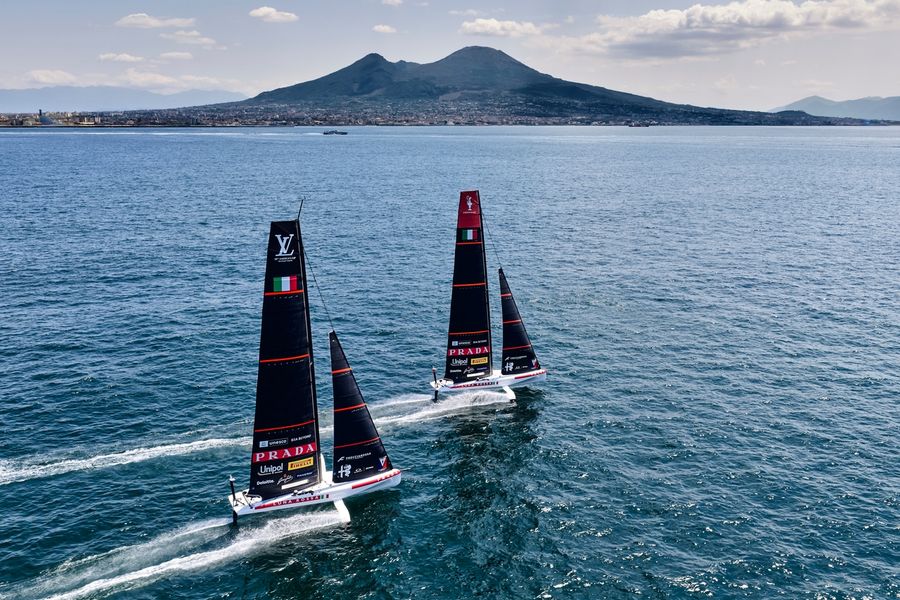
The view across the Bay of Naples makes clear this is no ordinary racecourse. Mount Vesuvius rises to the east, Castel dell'Ovo sits on the waterfront, the hillside of Posillipo climbs behind the city, Nisida lies to the west and the coastline extends towards Bagnoli. Each landmark carries centuries of history.
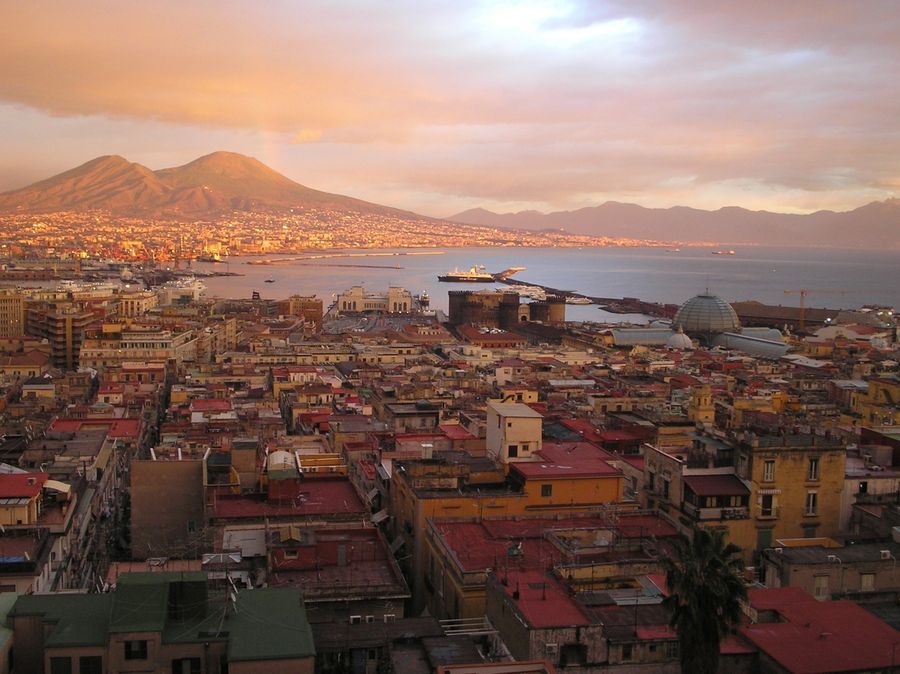
Vesuvius commands attention first. For centuries it has greeted everyone arriving by sea, and long before science explained its geology, the volcano belonged to the world of myth. Ancient mythology held that the Giant Alcyoneus was imprisoned beneath its slopes after being defeated by the Olympian gods, with eruptions and earthquakes believed to mark his attempts to break free. It remains the defining feature of the bay and one of the most recognisable backdrops in world sailing.
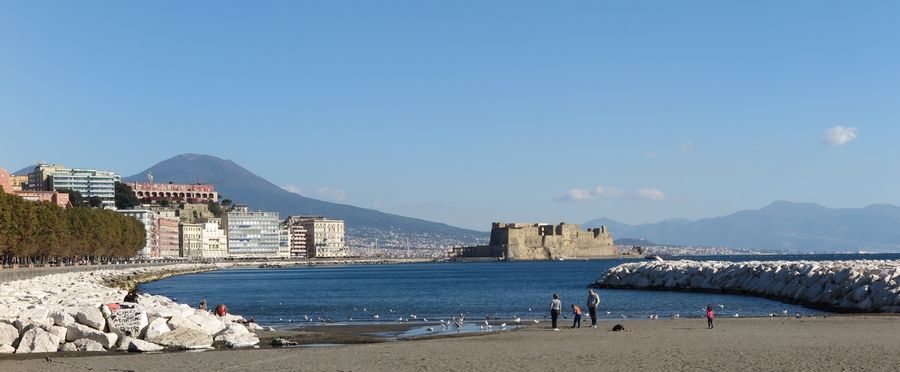
Tracing the coastline westwards, the hill of Posillipo takes its name from the Greek Pausilypon, meaning "the place where worries cease," a reminder that this stretch of water has been admired since antiquity. Just beyond lies Nisida, the remnant of an ancient volcanic crater within the Phlegraean Fields. From the 16th century it formed part of Naples' coastal defence network alongside Castel dell'Ovo and Castel Nuovo, together protecting one of the Mediterranean's most important natural harbours.
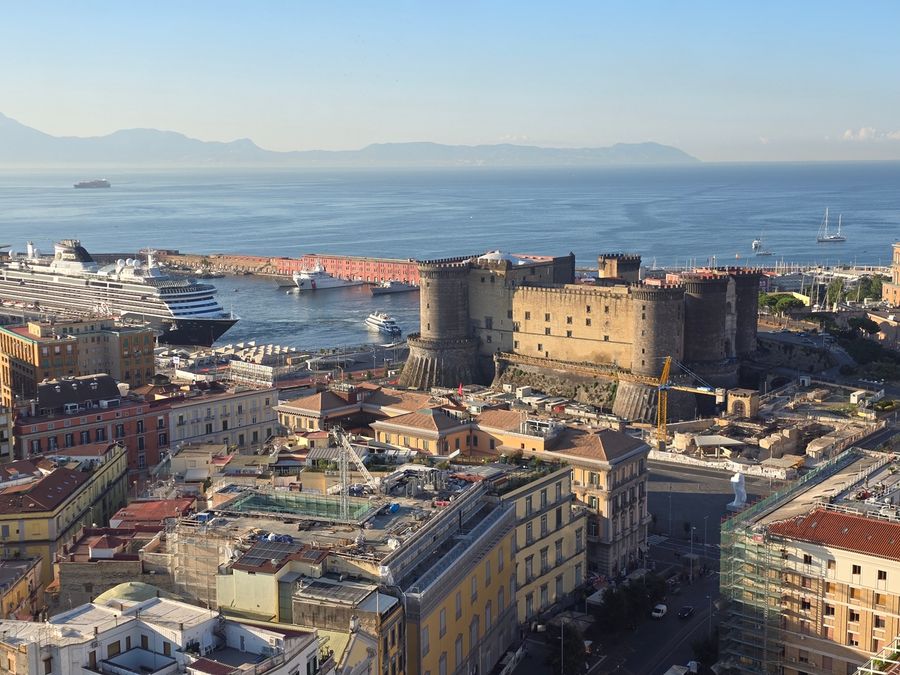
Naples owes much of its character to that harbour. From Greek and Roman times the sheltered bay served as a vital gateway for trade and navigation across the Mediterranean, and archaeological excavations beneath today's Piazza Municipio have uncovered ancient quays and vessels that confirm how central the port has always been to the city's story. Safeguarding it meant protecting one of southern Europe's most strategic points of connection between east and west.
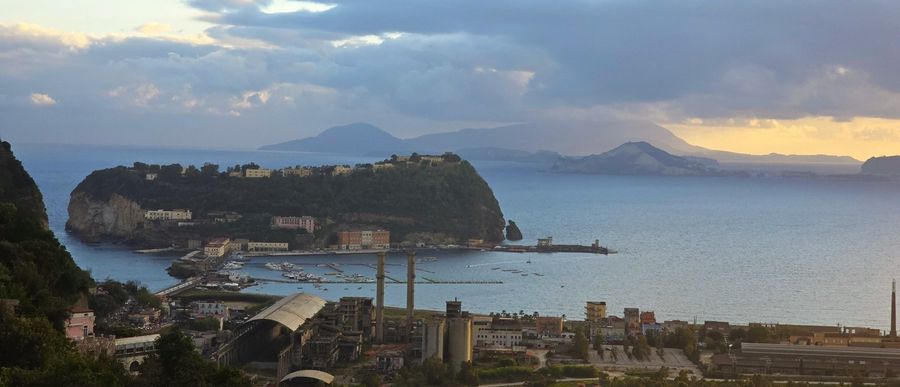
The harbour expanded over the centuries, the waterfront took the form recognised today, and the coastline between Posillipo and Bagnoli continued to shift while the relationship between the city and its bay held firm.
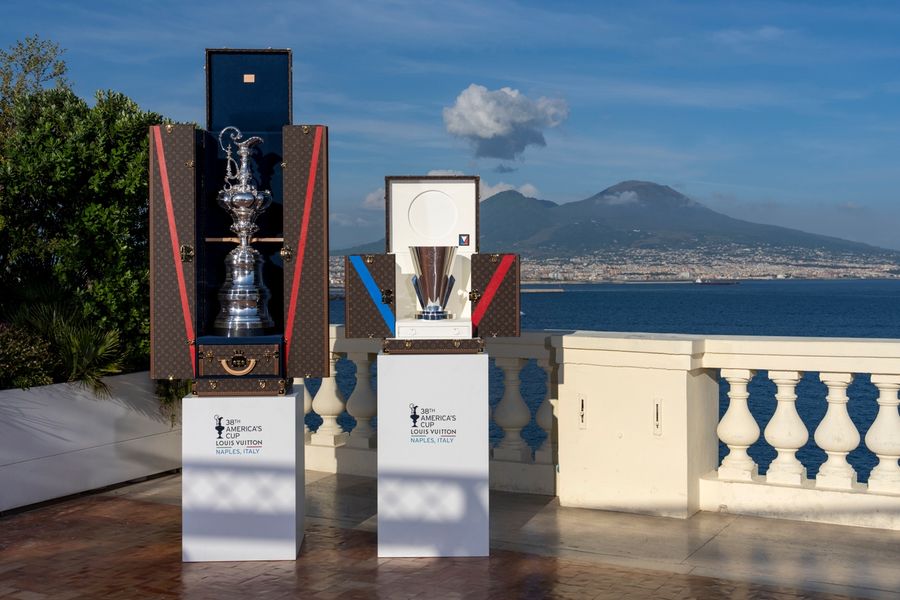
The Louis Vuitton 38th America's Cup now comes to these waters. The same bay that once welcomed merchants, explorers and Mediterranean fleets will host the world's leading sailing teams. Naples' maritime character is unchanged; sport, innovation and technology have simply replaced trade and strategy as the draw.
When racing begins, every landmark on the horizon takes on a different meaning. Vesuvius becomes more than the symbol of Naples, Nisida more than an island, the castles more than historic monuments. Together they frame an international sporting contest on waters that have connected people, cultures and nations for more than two thousand years.