In the America's Cup, nobody is chasing one big idea anymore. The rules have made sure of that.
With the Class Rules and Technical Regulations locking down many of the AC75's major parameters, teams preparing for the Louis Vuitton 38th America's Cup aren't trying to reinvent the boat. They're hunting for the small gains hiding in the foils, rudder, sails and control systems, places where tiny refinements still add up to something that matters on the water.
"I don't think there is any idea that's too small," says Dave Olsen, Structural Engineer at Emirates Team New Zealand. "We collect all of those ideas and sit down as a group and work out which ones we think actually have some potential."
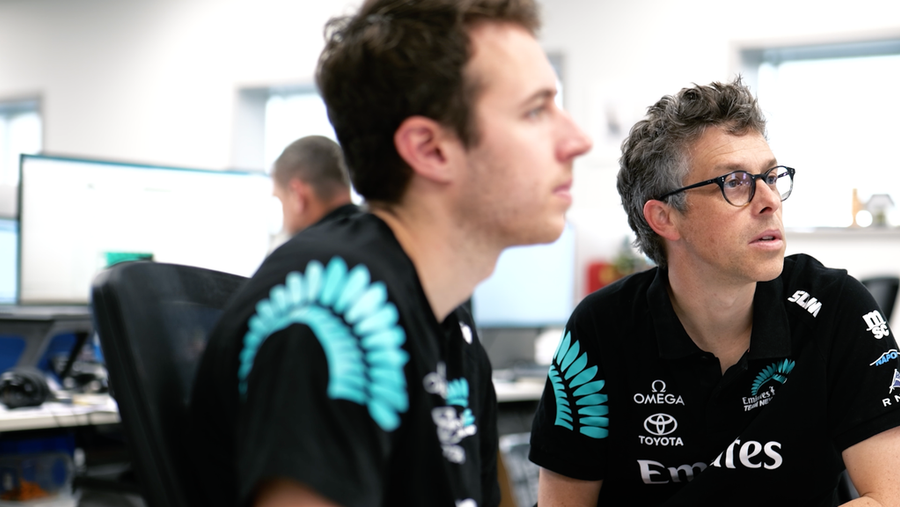
That mindset drives the whole design process. Ideas can come from anywhere: designers modelling new concepts, sailors feeling something on the water, or shore crew noticing a quirk while working in the shed. The hard part isn't generating ideas, it's working out which ones are worth chasing.
For foil and sail shapes, much of the work comes down to mathematical optimisation and computer simulation. Teams can explore enormous numbers of configurations, with computing power allowing potential designs to be iterated around the clock. What actually ends up on the race boat is only a fraction of that work.
"What you see in our race boat is the one per cent, or the point one per cent," says Dan Bernasconi, Head of Design.
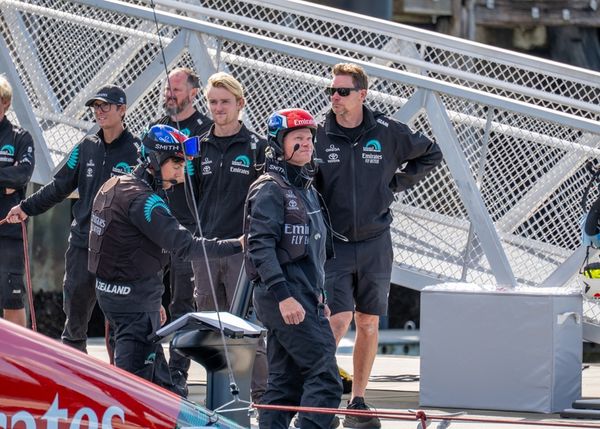
Picking the right solution isn't simple. So many variables are at play in modern high-performance sailing that working out which changes are having what effect is getting harder, and simulation gives the team a useful reference point in that process.
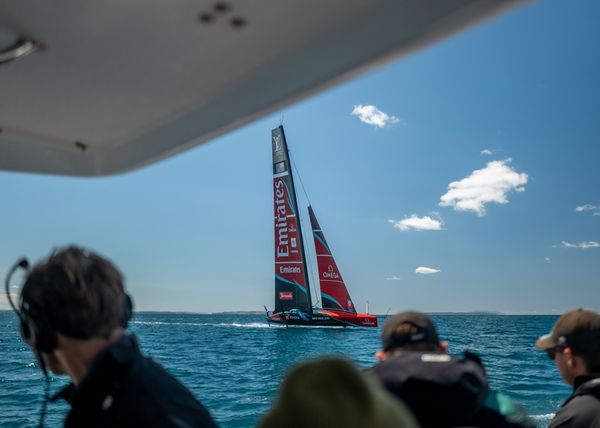
"The main word that we use a lot is 'trade-offs'," says Bobby Kleinschmit, Principal Naval Architect. He also points to the importance of experience, and this is where the relationship between the design team and the sailors really counts. Designers develop ideas and make predictions. Sailors test them in real conditions and bring back the feedback that helps sharpen the team's understanding.
"We try to keep a really tight feedback loop with the sailors, because that's the most efficient way to make progress," says Dave Olsen.
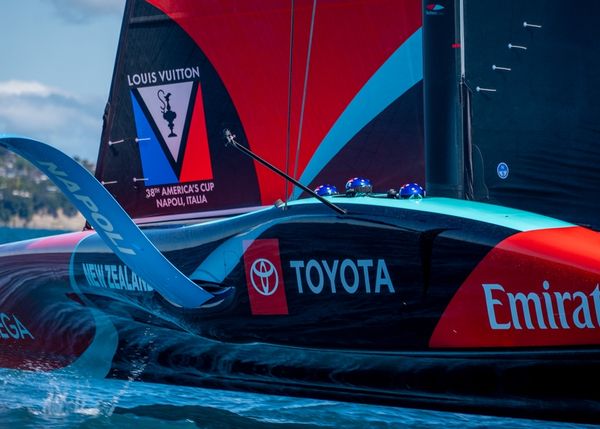
In many ways, the process mirrors other high-performance sports such as Formula 1, where specialised teams work across design, engineering, simulation and testing to find marginal gains, balancing performance, technical constraints and feedback from drivers, or in this case, the sailors.
Finding speed, in the end, is a collective effort. It takes curiosity to explore new ideas, discipline to narrow them down, the tools to test them, and the experience to understand what the results mean in practice.
Performance, in this campaign, is not one breakthrough but the sum of a thousand small ones.