Whitebaiters across the country have returned to their favourite tidal rivers and streams this week, marking the start of the two-month-long season for the sought-after "white gold."
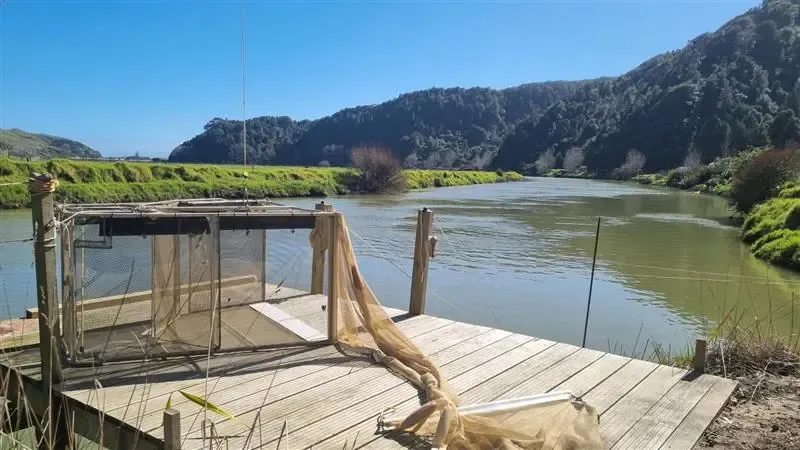
For many in Taranaki and Waikato, that journey led to the banks of the Mōkau and Awakino awa, where prized whitebait stands change hands for tens of thousands of dollars. Almost 850 stands line those two rivers, each positioned no less than 30 metres from its neighbour. Small jetties fitted with set-nets, and the huts clustered beside them, disappear into the flax as far as the eye can see.
[embed]https://images.boatingnz.online/wp-content/uploads/2025/09/05123728/annual_hunt_for_white_gold_underway.mp3[/embed]
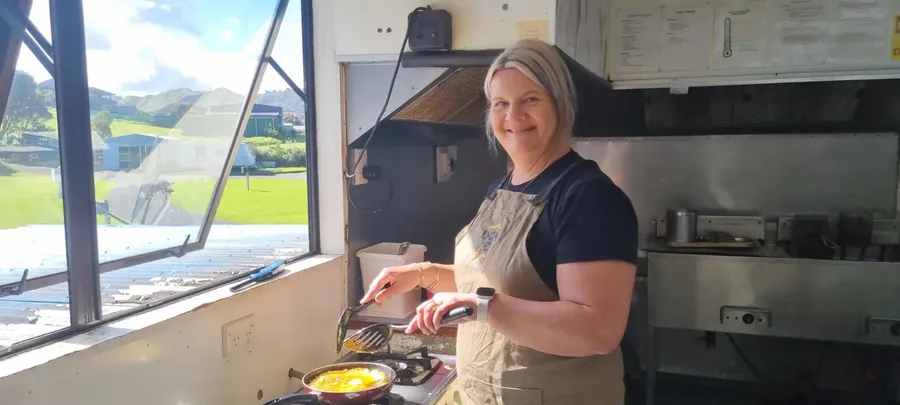
Among the regulars on those banks are retired Stratford farmers Karen and Kevin Walsh, who bought a stand next to Karen's mother's 32 years ago.
"[The previous owner] was getting elderly and my mother used to take him sultana cake all the time and one day he said, 'oh, would you like to buy my stand?'" Karen recalled. "And mum said, 'oh, I know somebody who'd love to buy your stand', so we bought it, Kevin and I bought it and we've been here ever since."
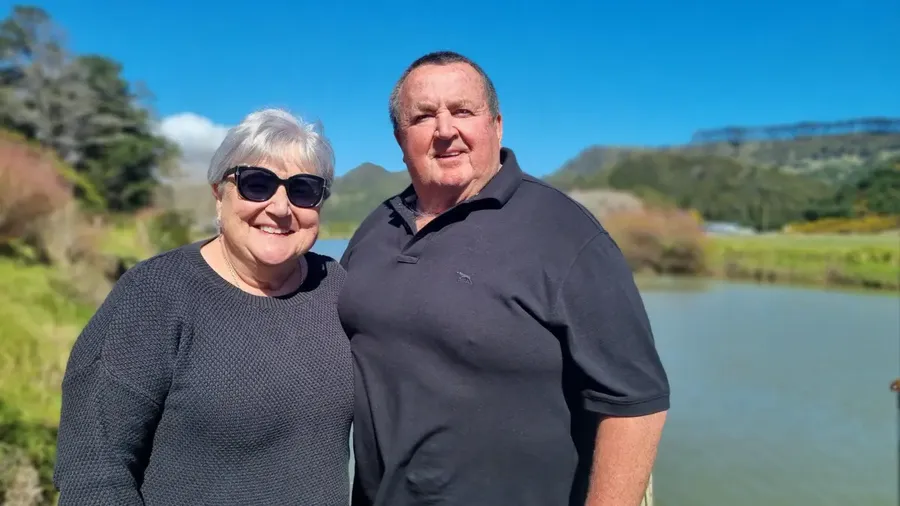
The couple, who now live in New Plymouth, got into the stand at a price that seems almost unimaginable today. "We bought this one for $600, but now they're mega-bucks," Kevin said. "They've got to be well in the thousands."
For Karen, the pull of the season goes beyond the catch itself. "The people. We love the community. We love coming up for a couple of months of the year and being a part of Mōkau and Awakino." Kevin had his own priorities to add. "Happy hour. Most nights from about 4.30pm to 5.30pm. The Awakino pub and we go there every Friday night and catch up with the locals."
The couple were eager for their first fritter of the season, though the river had not been generous on the day of the visit. "We are looking forward to our first fritter. We were hoping to have it for tea tonight, but it doesn't look good at the moment." When whitebait does make it into the kitchen, Karen's approach is unfussy. "Just mix them up with a bit of egg and a bit of salt and just whitebait, but it's got to be on white bread, definitely white bread."
Not far along the bank, John Coleman had set up beside his camper. A retired farmer from Bell Block on the outskirts of New Plymouth, Coleman has been working this stretch of river for a couple of decades. "It's the outdoors, it's the beautiful days like today. It's no use being stuck inside, you've got to be out in the open on a beautiful day."
He is also quietly confident about which river wears the crown. "They say Mōkau is the whitebait capital of the world, but I reckon Awakino is the whitebait capital of the world. We've got a service station and a shop right handy here. We've got a pub just down the road. We've got everything we need here. It's a marvellous spot and when the whitebait are running, we really catch them."
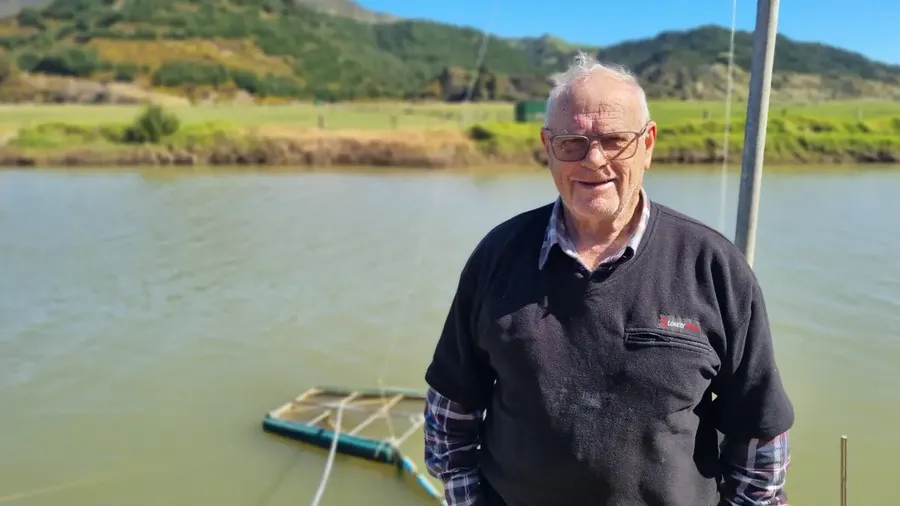
Ray Clough, who makes the trip from Matamata, offered a straightforward breakdown of what it takes to get started on the river. "The equipment? Well, you need that net and the screen and you need some rope and you need a pole. You need a hut to put it all in and lock it up and patience." At 85 years old, Clough catches upwards of 20 kilograms of whitebait in a season and has been giving thought to selling his stand. The figures he quoted reflect just how much the market has moved. "On this river here, along the road, maybe $20,000 and then further around that point where you leave the road and you're walking to your site maybe $15,000 or $16,000."
Bronwyn Brown of Waitara reached her stand via a track off State Highway 3, staying at the Seaview Motor Camp for the duration of the season.
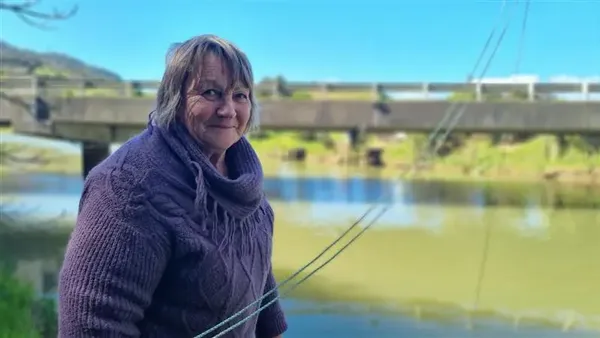
For Brown, whitebait occupies a category all its own. "They've got a flavour of their own and you can only get them for two months of the year, so they're sort of quite precious. You put them in the freezer and when someone visits you've got something different that they might not have had for a long time." Her cooking method, like those of her fellow whitebaiters, keeps things simple.
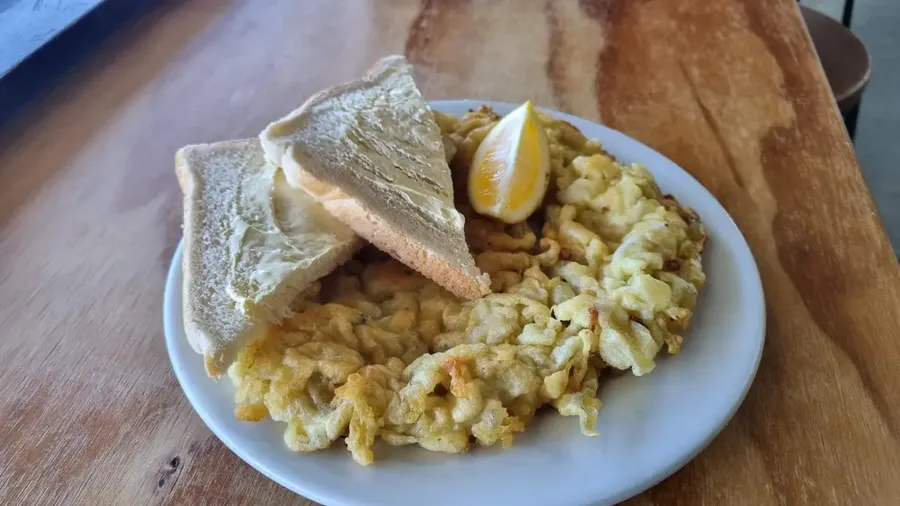
"I cook them in egg, I don't use flour or anything. Just whitebait and egg with salt and pepper."
Not everyone who encounters whitebait on these rivers is catching their own. Jodie Death, owner of the Whitebait Inn in Mōkau, turns out around 30 to 40 fritters a day at her business. Her approach leans on a secret batter, prepared fresh each morning. "So, we make up our batter in the morning and add all our whitebait to it because they are popular and we make a lot of them during the day.
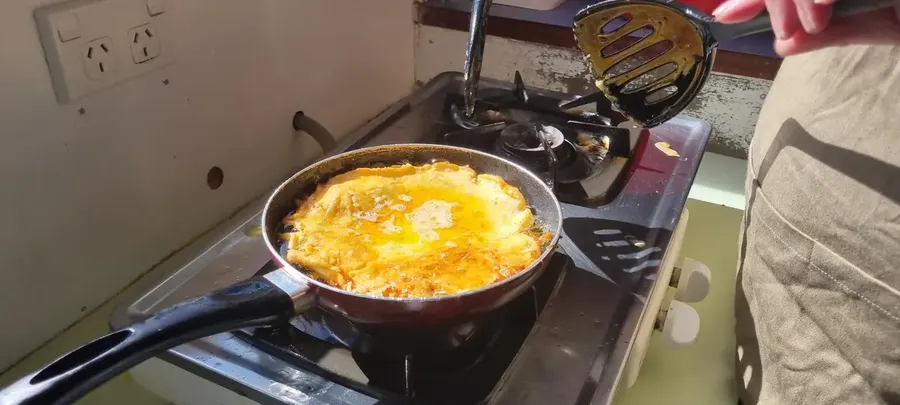
"So, also long as we've got a hot pan and a bit of butter in that pan to make it all sizzle we just add our batter mixture to it and it normally takes two to three minutes to cook a fritter."
The customers passing through her door come from a wide range of places. "Travellers, a lot of people from out of town, because all the locals catch their own, and a lot from China. I guess because they have their Chinese whitebait over there, so they come to have a look and see what our whitebait is all about." Death herself is partial to whitebait cooked in egg rather than batter, though she noted that whichever method you choose, it is the texture of the fish that keeps people coming back.
The whitebait season runs through to 30 October.