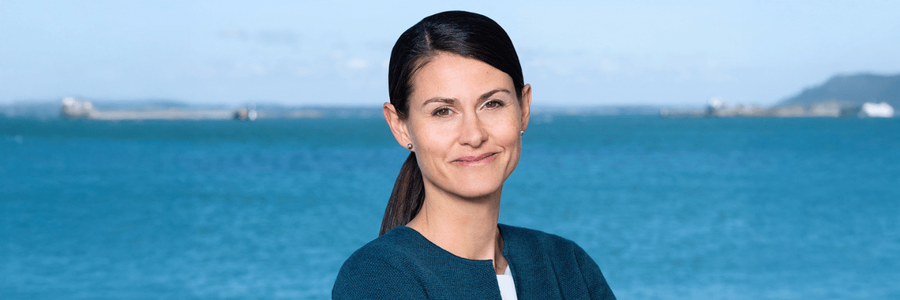
Volvo Penta's Hanna Ljungqvist has a clear philosophy on marine equipment design: technology, customer value, and business viability need to intersect before a product can succeed.
Ljungqvist was appointed Head of the Volvo Penta Marine Business unit last October, having risen through AB Volvo with a Masters in industrial design engineering from Chalmers University of Technology. Her career began in truck cab development at Volvo Group, designing exterior features and lighting with a focus on user experience, before she moved into the marine sector through product management and business development roles.
"There must be a matching intersection of technology, customer value, and business for a product to do well," she says. "If you don't create value for the customer with the technology, and if you don't make a good business out of it, you won't have a solution. That's really what gets me motivated, to find that sweet spot of where you successfully combine these factors."
Volvo Penta's scope has expanded well beyond its origins as an engine and outdrive manufacturer. The company has been building out a portfolio of integrated systems for both leisure and commercial applications, including its Assisted Docking System, which won the overall DAME Design Award in 2021. Later this year it is set to launch the first in a series of hybrid and full electric propulsion systems, with fully integrated batteries, power and temperature management.
Ljungqvist points to the company's Krossholmen Test Center in Sweden as central to the design validation process. Boat builders trial new Volvo Penta solutions during development, providing feedback before products reach the market. That external input, combined with an internal team largely made up of passionate boaters, helps ground product development in real-world use.
For those earlier in their careers, she sees systems integration as one of the most important areas to develop skills in. "Everything goes together now. Very few products will live their own life onboard a new vessel. Integrated systems which make it easier to both design and build a boat is a value that the marine equipment industry needs to provide its customers with."
Her advice for smaller businesses with limited resources is similarly grounded: start with the customer's pain point, establish the baseline features needed, and test concepts as early as possible before committing to major investment.