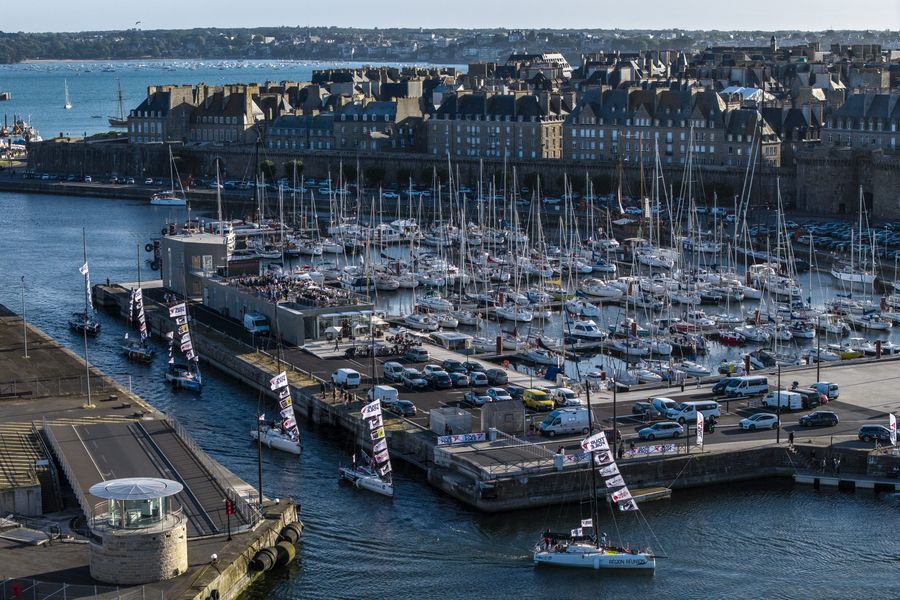
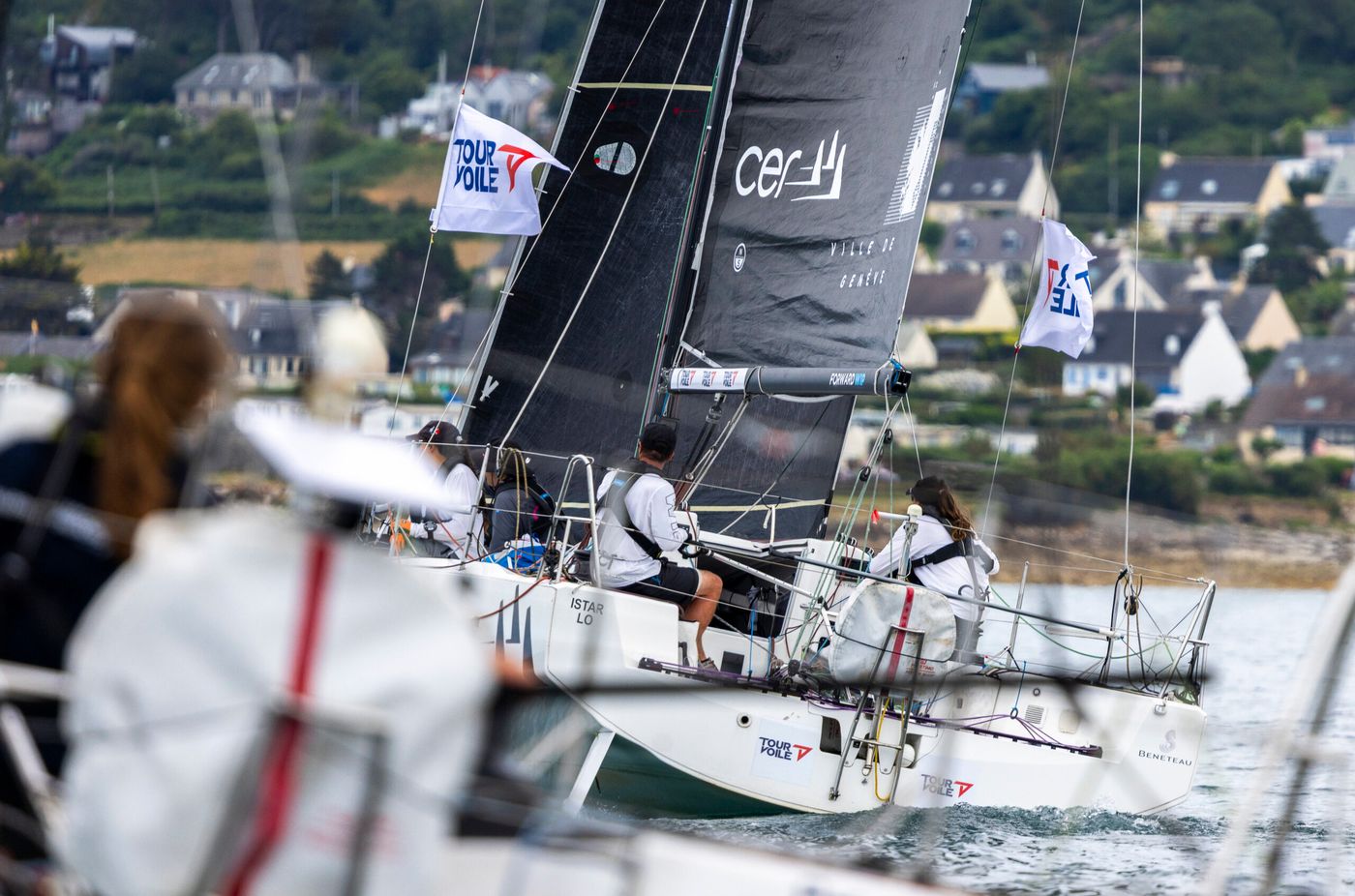
Two days of short-course competition around the Grand Prix de Cherbourg-en-Cotentin now behind them, the Tour Voile fleet is about to shift into a completely different mode. This Sunday all nine Figaro Beneteau 3 crews will slip their lines at 11 o'clock and start the first offshore leg of the 47th edition at noon, following a 226-nautical-mile route toward Saint-Malo that takes them past Needles Fairway near the western tip of the Isle of Wight.
Somewhere between 28 and 30 hours of racing lie ahead, and the skills that decide an offshore leg bear little resemblance to those that counted in the inshore rounds. The sharp, reactive tactics of short-course sailing give way to something more methodical and more punishing: reading tidal streams across a full night at sea, building a coherent strategy over real distance, and keeping the boat and crew functioning under sustained pressure.
Race director Yann Chateau has already mapped out where the leg will be decided. The opening beat should hold the fleet together reasonably well, he explained, with an eastward current working in the crews' favour as they head toward the English coast. Both Channel crossings may appear straightforward on paper, especially with a solid south-westerly in the forecast, but Chateau is direct about what will actually determine the outcome.
"The details matter enormously," he said. Reading the tidal picture early will shape each crew's routing choices, and even small misjudgements can open up significant gaps with surprising speed. Once a fleet is committed offshore and the hours are accumulating, there is little opportunity to correct a poor call.
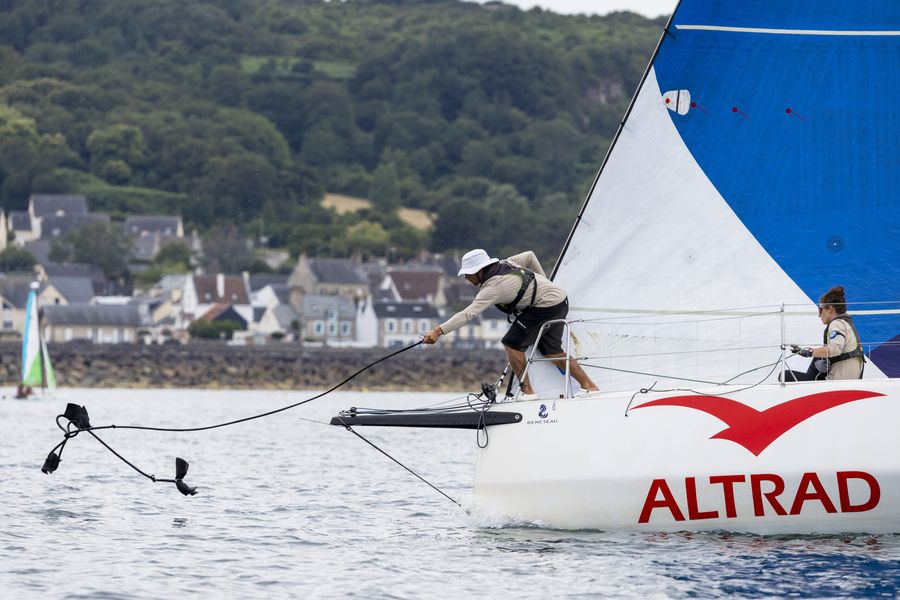
Raz Blanchard, one of the most powerful tidal gates anywhere on the French coast, shapes up as another defining moment in the leg. The fleet expects to carry a favourable tide through the passage, but a wind shift and easing breeze follow that transit, obliging crews to overhaul their sail plan and reset their thinking mid-race. That kind of abrupt transition is exactly the sort of thing that reshuffles the running order in ways no one can fully anticipate beforehand.
Beyond Raz Blanchard, the stretch along the west coast of the Cotentin peninsula becomes the most tactically demanding section of the entire course. Rocky plateaux and islands fracture the routing picture into a maze of possibilities, and Chateau expects this section to generate more decision-making pressure than anywhere else on the leg. Threading through it well requires holding wind, tide, and boat-handling demands in balance simultaneously, and it is precisely here that good sailing tends to separate itself from winning sailing.
The closing 30 miles present one final complication. The fleet will loop widely off Saint-Malo in light air, contending with strong tidal flow right through to the finish. "Anything is possible right up to the end," Chateau said, and the comment reflects genuine uncertainty rather than a diplomatic platitude. Conditions and relative positions can shift dramatically in those final hours.
Given how closely matched the nine crews were across the first two days of inshore competition, Chateau has little expectation that the offshore leg will scatter the fleet quickly. "I expect the crews to stay in contact with each other for a long time," he said. "Only the finest tactical choices will gradually create separation." Staying competitive over that distance and duration demands more than technical boathandling. It demands patience, composed decision-making under fatigue, and the nerve to keep trusting a strategy when certainty is hard to come by, right through to the final mile.