The Pacific Puddle Jump is unlike almost any other organised sailing event on the planet. There is no starting gun, no committee boat hovering at the line, and no marks to round. What it offers instead is something that many sailors find far more compelling: a shared adventure, undertaken entirely on one's own terms.
Every year, cruising boats depart from ports scattered along the western coastline of the Americas. Panama, Mexico's Bahía de Banderas, and California are the most popular departure points. From there, crews point their bows westward across the Pacific, bound for French Polynesia and, most commonly, the Marquesas Islands. That landfall, after roughly 3,800 nautical miles of open ocean, marks both an ending and a beginning: the end of a major offshore passage and the start of months exploring some of the finest cruising grounds anywhere on earth.
Timing is central to the whole enterprise. Departing after the South Pacific cyclone season closes in April gives sailors a safer weather window for the crossing itself, and enough season remaining to cruise extensively before pressing on to cyclone-safe anchorages further west. The route has earned itself a nickname that captures the mood perfectly. The "Coconut Milk Run" conjures steady trade winds, warm temperatures, and an absence of the heavy-weather dramas that define so many ocean passages.
Roots in community
The rally was founded in 1997 by Latitude 38, a San Francisco sailing magazine, and in the nearly three decades since, it has grown into a genuine institution. More than 4,000 yachts have made the crossing under its banner across its 28 years.
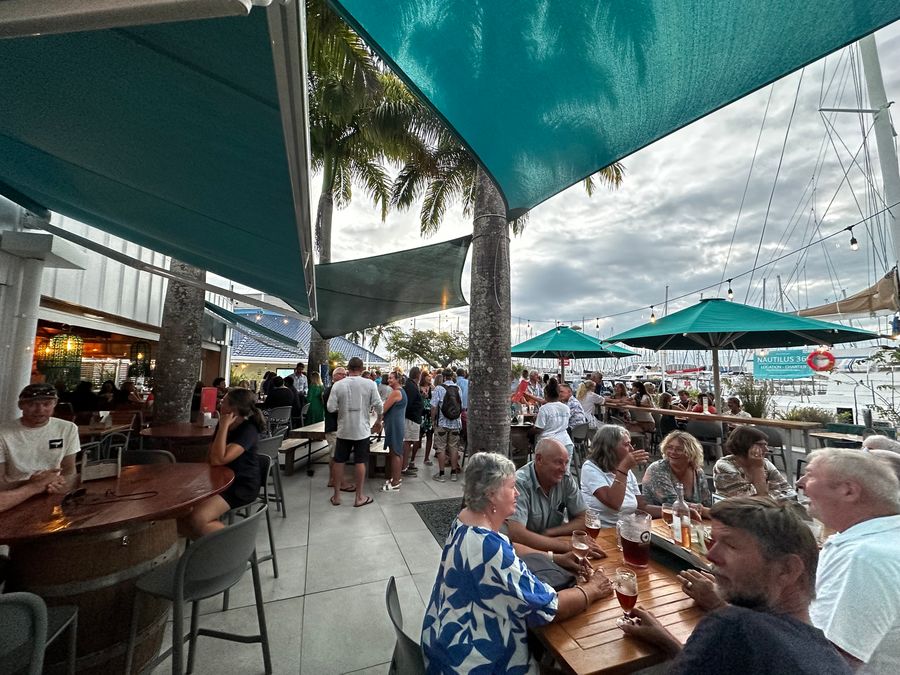
Each boat sails independently, yet there is a real sense of belonging to something larger. Participating vessels are listed in a fleet database with positions logged daily, and voluntary radio nets spring to life among the fleet, providing weather updates, practical assistance, and the kind of easy conversation that makes long passages less solitary. Skippers swap notes on navigating the Intertropical Convergence Zone, the notorious band of squalls and unsettled calms that sits across the equatorial Pacific, and mark milestones like crossing the equator together, separated by hundreds of miles of ocean but connected by radio waves. You leave with your own boat, but you arrive with a fleet of friends.
From Puerto Vallarta to Papeete
Passages typically take somewhere between three and four weeks, depending heavily on conditions encountered along the way. Trade winds generally fill in once a boat has cleared the eastern Pacific coast, giving crews steady progress on the long westward leg. The equatorial zone is another matter entirely. Light, frustrating winds and sudden squalls test patience before reliable breeze returns on the final approach to the Marquesas.
The rally places no constraints on where crews make their first landfall. Some choose the Gambier Islands or even the remote dot of Pitcairn Island, while others sail straight to the Marquesas. From any of these first stops, the natural progression leads westward through the Tuamotus and on to the Society Islands, island-hopping through the cruising season. At that point, crews face their own decisions: stay longer, sell the boat, or press on toward Tonga, Fiji, or New Zealand.
The celebrations in Polynesia
After weeks with nothing but blue horizon in every direction, making landfall in French Polynesia is a genuinely affecting experience. Volcanic peaks rising from the sea, palm-fringed lagoons, the smell of land after weeks of salt air. For many crews, it ranks among the defining moments of their sailing lives.
Each July, the wider PPJ fleet comes together for the Tahiti-Moorea Sailing Rendezvous, a three-day annual gathering that functions more as a celebration than a competition. Traditional Polynesian dancing, outrigger canoe races, ancestral sports, and communal feasts fill the programme, weaving local culture through the camaraderie of cruisers who have shared the same ocean passage. For a great many sailors, this gathering serves as the perfect capstone to everything the crossing represents.
2026 and beyond: a new chapter
From 2026, Sail Tahiti will take over the organisation of the rally, bringing a shift from the relatively informal coordination of previous years toward more structured support. Three distinct participation formats have been introduced, each suited to a different style of cruising.
TUMU provides the essentials for independent-minded sailors who want connection without too much scaffolding around them. MANAVA adds weather briefings, rally events, and preferred-partner services throughout Polynesia. AUPURU is the premium option, encompassing routing assistance, technical support, and full administrative help for those who want the most comprehensive experience possible.
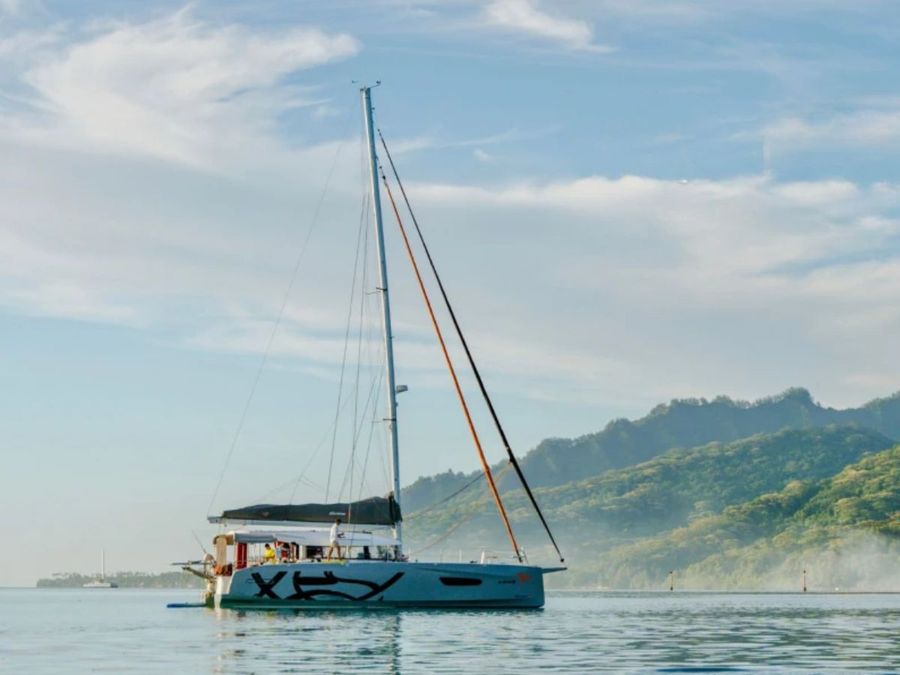
Excess Catamarans has joined as the official partner, with owners of their boats receiving automatic entry and premium registration. That package brings added benefits including webinars, technical inspections, and even a photo shoot on arrival in Polynesia.
Sailing with purpose
The Pacific Puddle Jump has also developed a conscience alongside its sense of adventure. Recent initiatives have seen the rally collaborate with atoll communities to collect used batteries from remote islands and transport them back to Tahiti for proper recycling. Without such an arrangement, small island communities would be left managing hazardous waste with no practical means of disposal. For cruising sailors, it is an opportunity to contribute something tangible to the places they are fortunate enough to visit.
Friendliness, mutual assistance, and a respect for the places sailors pass through have always been part of what makes the PPJ what it is, and these initiatives sit naturally within that broader character.
The rally is also a reminder of just how central the South Pacific remains to the wider cruising world. Every season, yachts from Europe and the Americas converge on this ocean, many of them eventually continuing westward toward New Zealand and Australia, where safe harbours, well-equipped refit yards, and fresh adventures await.
The Pacific Puddle Jump demonstrates that deep-ocean voyaging belongs to no exclusive club. Families, couples, and solo sailors all take part. Their boats range from production cruisers to time-tested bluewater classics. What unites them is not the size of their budget or the length of their racing résumé, but simply the desire to cross the Pacific.
At its core, the PPJ is about people. It is about the sailors who cast off dock lines in Panama, Mexico, or California and commit themselves to the open ocean. It is about the friendships that form on short-wave radio nets, the particular stillness of a dawn watch far from any shore, and the overwhelming satisfaction of sailing into a Polynesian bay after weeks at sea.