Six different winners from seven races. That single figure captures almost everything about the 2026 Tour Voile so far, a competition that has stubbornly refused to hand any crew a decisive advantage over the fleet. Saturday's racing only deepened that pattern.
Friday had offered competitors a manageable, consistent breeze. Saturday was something else entirely. A storm system stalled near the Cotentin peninsula left crews contending with light, perpetually shifting air, and three races, one nine-mile coastal leg and two constructed courses, produced three separate winners. APCC Centre de Formation, CER – Ville de Genève, and La Réunion each claimed a race victory, while Région Bretagne – CMB Espoir held their nerve throughout to preserve their overall lead and secure the Cotentin Grand Prix across the opening phase of the competition.
The tactical demands Saturday imposed were of a fundamentally different order from anything the fleet had encountered the previous day. Pressure oscillated constantly, gusts appeared and vanished without logic, current effects played tricks on boat speed, and wind direction shifted faster than most crews could comfortably adjust to. A lead stretching to hundreds of metres could dissolve in minutes when a rival crew found a pocket of pressure first. There was no comfortable position on the course where a team could simply sail away and stop thinking.
"The brains were overheating today," said Aurélien Barthélemy of La Réunion, and the bluntness of that line captured the day precisely. Victor Le Pape made a point of singling out his team's tactician, Lola, for the concentration she had sustained across the three races: "There were pockets of wind everywhere. She really had to dig deep."
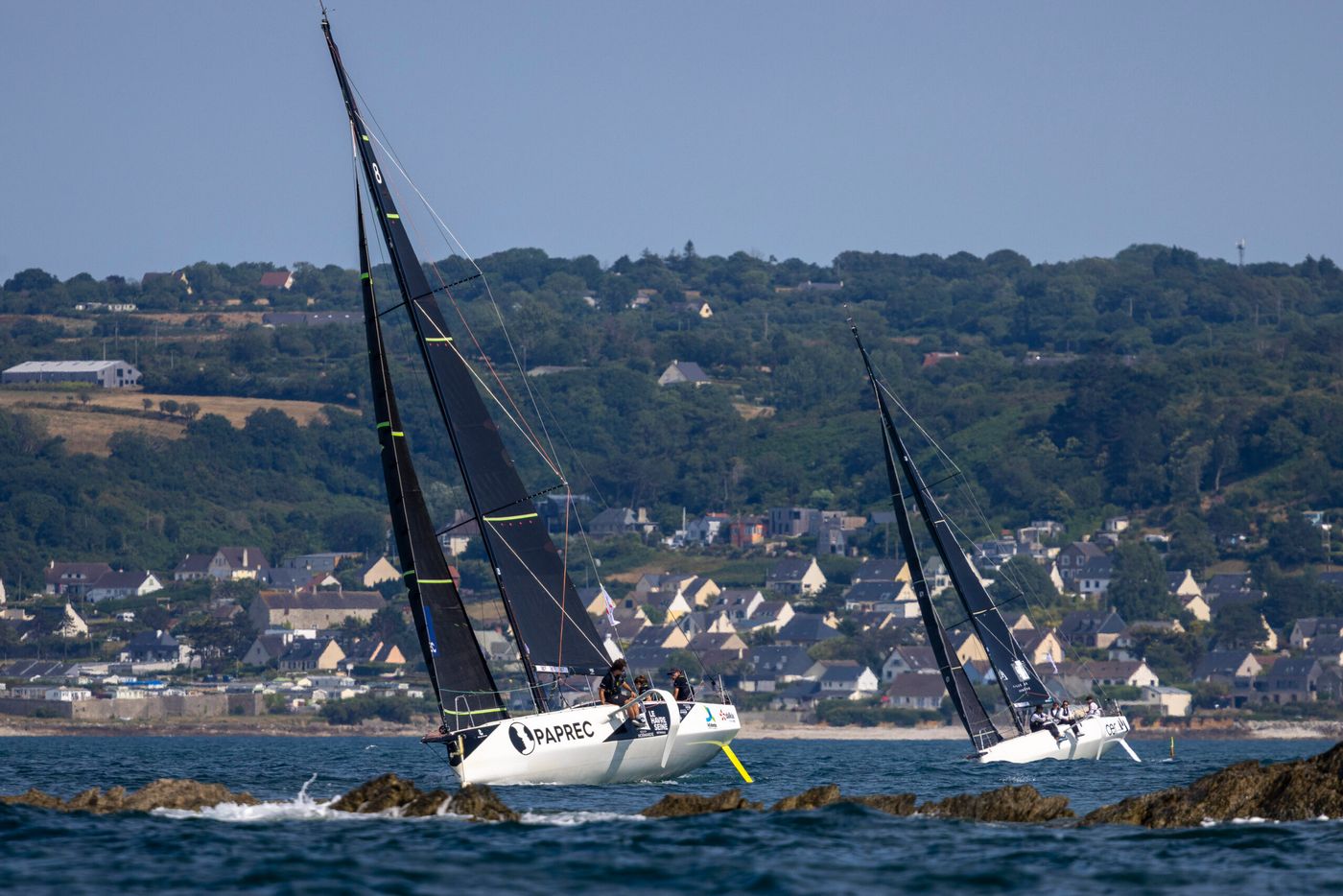
APCC Centre de Formation's race victory came through patience and a willingness to commit where other crews held back. Their start was untidy, but they compensated by taking a tighter line past the rocks leaving the harbour than anyone else was prepared to risk. Enora Percheron described the approach as a process of reading oscillations, chasing pressure zones, and paying close attention to the strong current on the coastal leg. The gamble paid off. "Everyone is capable of leading this race," Percheron said, a statement that felt entirely credible given how the weekend had unfolded.
La Réunion's win was built gradually rather than seized early. Barthélemy was candid in acknowledging that the Figaro racers' greater experience had shown clearly on the coastal leg and his team came up short there. The crew maintained their composure, worked the shifts methodically, and found their way to the front when it counted. CER – Ville de Genève's progression from the back of the fleet in one race to the top in the next was among the most striking storylines of the day. Nils Palmieri put his crew's comfort in oscillating conditions down to their home waters: "We almost race at home in these conditions," he said, pointing to Lake Geneva's familiar daily weather patterns. He was measured about what that meant in the longer term, acknowledging that winning a single race and sustaining consistency across a full campaign are entirely different propositions.
Région Bretagne – CMB Espoir were caught out on the coastal leg initially but clawed back through careful tactical work in the current, adding another solid result to their tally. Le Pape's read of where the competition stands was equally measured: "We're navigating even better than yesterday, finding our marks, really starting to gel as a team. But nothing is locked in. The gaps are tiny and every crew is getting stronger. In two weeks, staying in front will be brutally hard, and that's what makes this Tour Voile so compelling."
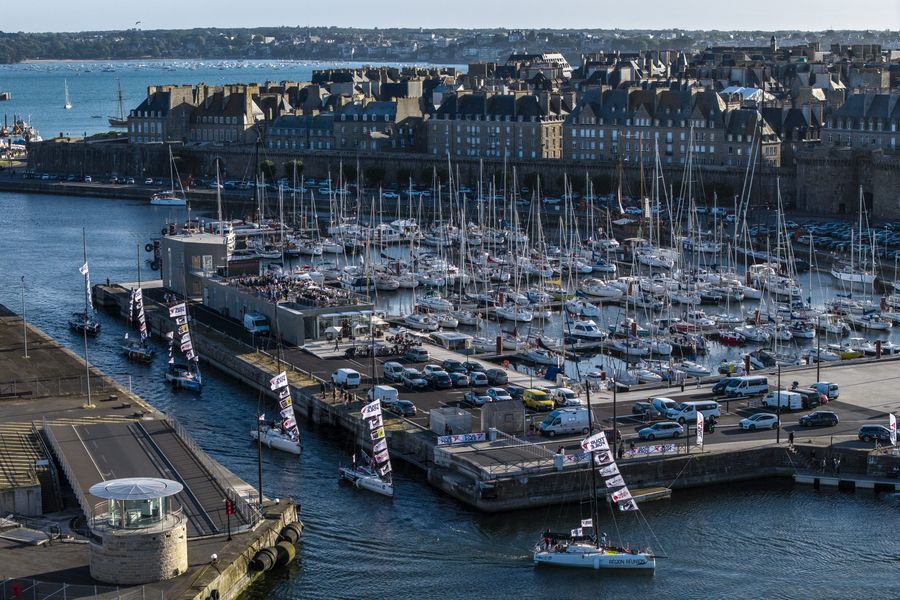
Two days of compressed, intense racing have kept the leaderboard in near-constant motion. From Sunday, the competition shifts into a very different dimension. The fleet departs on a 226-mile rally to Saint-Malo, routed via Needles Fairway at the western tip of the Isle of Wight. A passage of that length asks questions that no coastal course can replicate, and building or protecting a campaign lead over genuine open-water miles is where the real character of the Tour Voile comes into focus. That test is now underway.