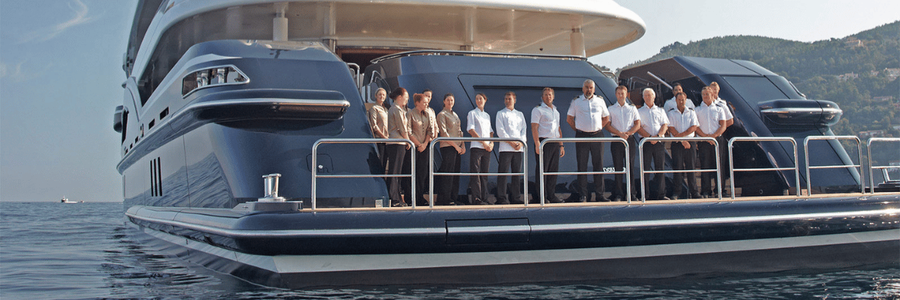
Superyacht crew are pushing back against an industry culture that has long tolerated excessive working hours, harassment, bullying, and poor mental health support. A dedicated forum at The Superyacht Forum this November will give them a formal platform.
The Crew Voices programme was initiated by Kayleigh Liddell from yacht management agency Hill Robinson alongside the Superyacht Alliance Think Tank "Bridge between". The Superyacht Forum is held alongside Metstrade. Liddell, who has a background in Human Resources and has been the driving force of crew services at Hill Robinson for the four and a half years she has worked there, is direct about the stakes. "We need everybody in this industry to understand that it is necessary to invest in crew. This is not a nice thing to do. Investing in crew is a smart thing to do. I really hope that this awareness is going to develop."
The issues are serious. At the Superyacht Stage during Metstrade's last edition, a forum discussion with ISWAN, the International Seafarer's Welfare & Assistance Network, surfaced accounts of crew being sexually harassed, bullied, underpaid, and denied adequate rest or private space. The network "Yacht Pearls of Wisdom" has since published a Female Yacht Crew Survey finding that women are not safe at sea, a problem compounded by the simple fact that there is nowhere to go when a vessel is offshore.
Liddell points to rapid crew turnover as a symptom of the deeper problem. "There are very few yachts where the crew works together like a team of friends," she says, noting that matching people to the right onboard culture is central to her recruitment work. Training is part of her answer, including people management skills built into schemes for captains. She is candid about what senior crew face in practice. "In the years that I have been involved in yacht crew services, I have had to deal with crew and family in cases of death, suicide and rape. This is the shocking reality captains have to deal with."
Captain Kelly Gordon, currently commanding the 143-foot motoryacht Cabo, is equally direct. "Fatigue remains one of the greatest risks in our industry. Long working hours, demanding guest schedules, and limited opportunities for rest can affect judgment, performance, and mental health." She also calls for stronger reporting mechanisms. "Crew should feel empowered to report concerns knowing they will be taken seriously and addressed appropriately."
Both women see guest education as part of the solution. Gordon notes that charter companies have an opportunity to brief guests on crew qualifications before they board, and that guests are often impressed to learn how extensive that training is. Liddell goes further, suggesting charter agreements should include clauses allowing crew to disembark guests at the next port if safety instructions are ignored or crew are disrespected.
"Changing the way that this industry is dealing with crew aboard large luxury yachts, is an effort that should be achieved with all those involved: owners, brokers, charter companies, yacht management companies and industry associations," Liddell says.