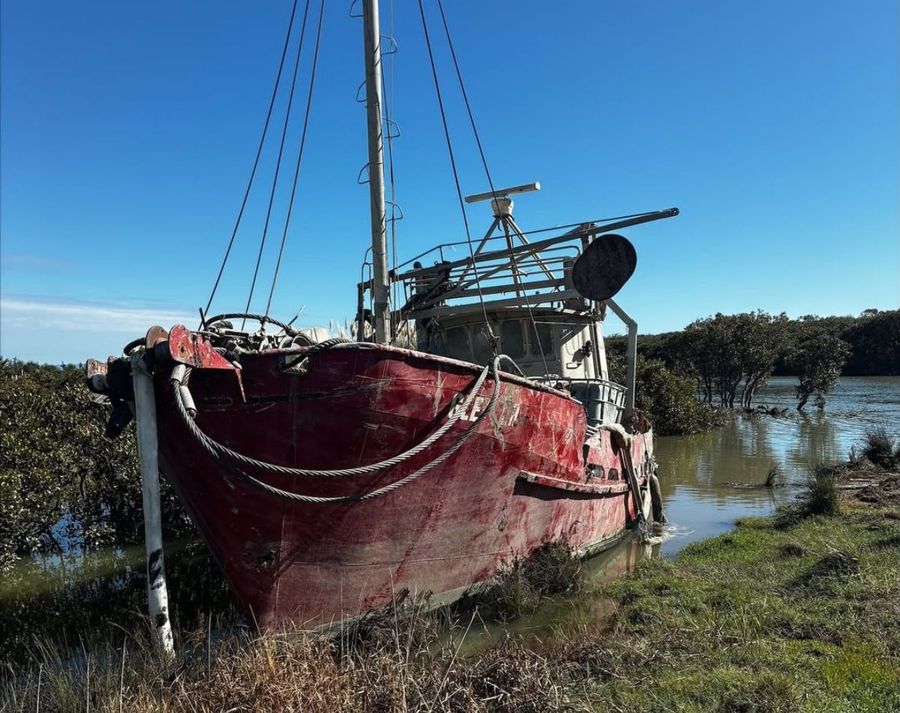
The two-week salvage of MV Gleaner, a 12-metre steel vessel that sank at Shortland Wharf in Thames when Cyclone Vaianu struck on Sunday 12 April, was completed after raising concerns about fuel contamination in an ecologically sensitive coastal area.
The first sign of trouble came on April 16, when a Waikato Regional Council staff member detected a diesel sheen on the water near MV Gleaner. Oil spill booms were deployed alongside the wharf without delay. Regional On Scene Commander Celeste Davies-Calway was clear about what motivated the swift response. "This is an area of significant conservation value," she said. "We are keen to get out there and identify and protect any areas at risk."
A closer assessment the following day softened the initial alarm. By April 17, council staff found the sheen to be very thin and silvery, pointing to a small quantity of hydraulic fluid weeping from beneath the hull where MV Gleaner rested on the mud, rather than any meaningful diesel leak. Nothing about the vessel suggested it had been carrying substantial fuel stores. The absorbent booms remained in place while the council kept communication open with the wharf owner, local iwi, the Department of Conservation, and Thames Coromandel District Council throughout the days that followed.
Salvage work got underway on Wednesday 23 April, with Waikato Regional Council Maritime Services staff and specialist contractors Trojan Marine Services on site from 8am. The team pumped mud and water from the vessel to prepare it for refloating, and MV Gleaner was hauled from the water the following day. No discharge of diesel or other hydrocarbons was recorded at any point during the operation, and no significant fuel stores were found aboard. The council thanked the Thames community, affected iwi, and local businesses for their patience and support during the response.
The history of MV Gleaner itself remains considerably murkier than the salvage effort. Coromandel CFM noted that the vessel has attracted its share of wharf-side speculation. "What makes the Gleaner unusual is what isn't known about her. No owner has come forward, and the absence has done what absences always do in a small town, it has filled with stories. Versions circulating around the wharf include the boat being won in a card game, changing hands informally more than once, and various accounts of how she came to be tied up at Shortland in the first place. None of it is verified, and the council has not publicly named an owner."