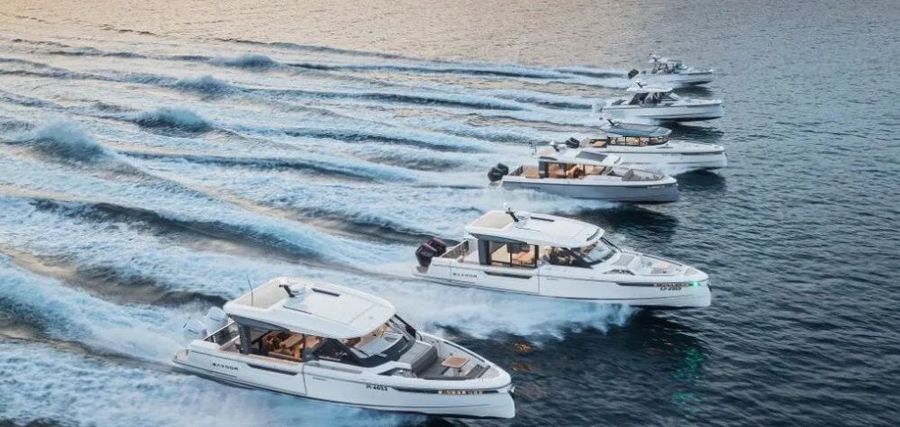
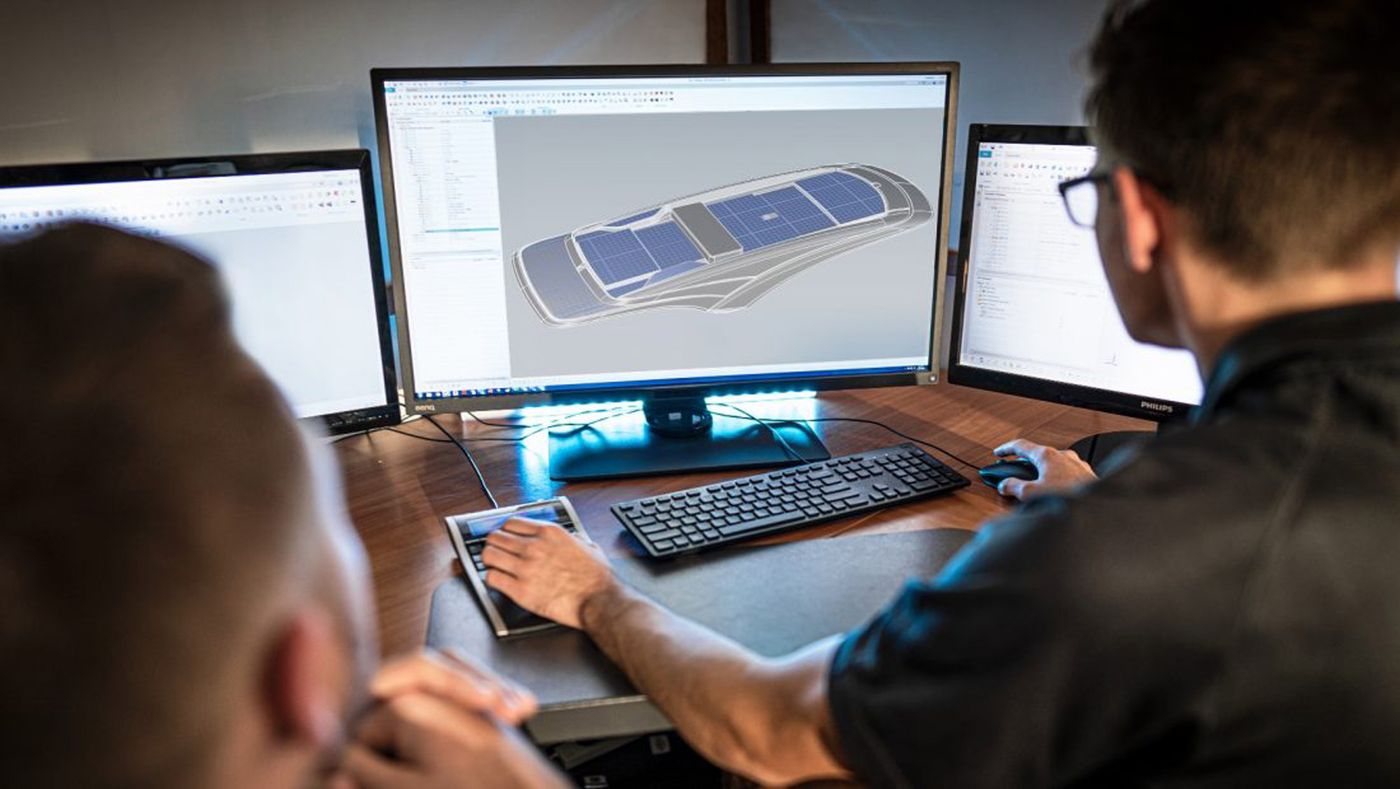
Partnering with nano-composite technology company Praxis, Riviera has integrated solar panels directly into the construction of its motor yacht range, giving owners a path to reduced generator use and lower running costs across models from 39 to 78 feet.
Rather than mounting conventional rigid panels on aluminium frames, the system uses a 2mm-thin nano-composite solar skin bonded into the yacht's hardtop during the moulding stage. All visible layers are optically transparent with a sleek black backing, and the surface follows the curvature of each model's hardtop across multiple planes. Riviera says this delivers approximately 120% more power output from around 90% additional surface coverage compared to conventional marine solar installations.
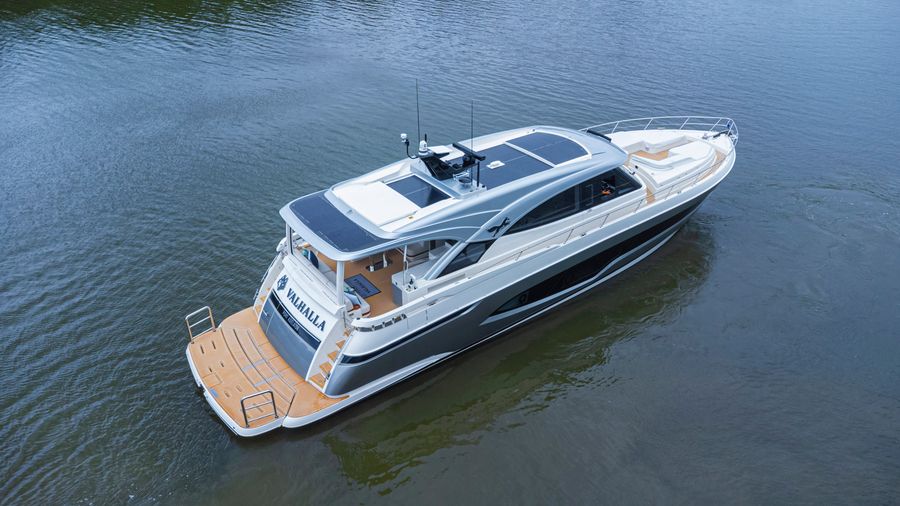
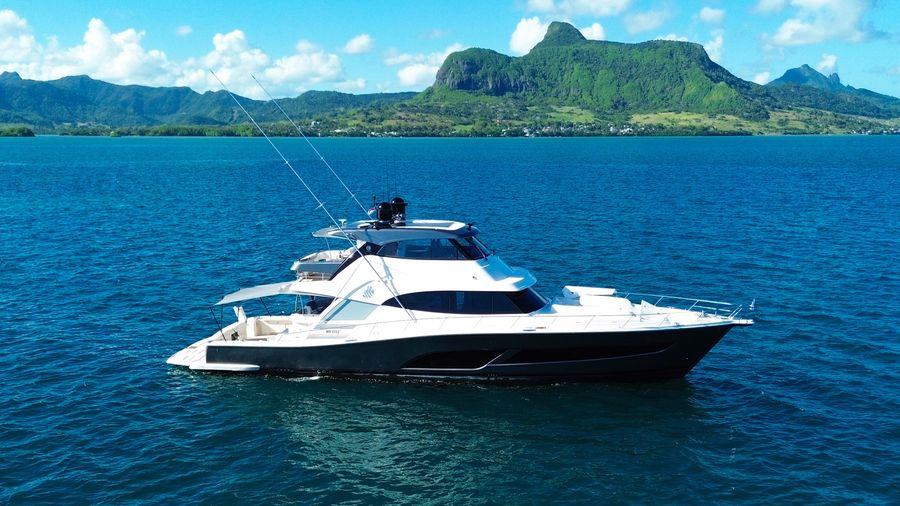
Real-world results are already coming in. A 1.8kW installation aboard a 58 Sports Motor Yacht in New Zealand is generating approximately 10kWh per day, significantly extending time at anchor without running the generator. In Mauritius, a Riviera 72 Sports Motor Yacht fitted with an expanded lithium iron phosphate battery bank has achieved up to three days off-grid without starting a genset, with one owner reporting more than a day and a half of air conditioning powered entirely from stored solar energy.
On an extended passage from Queensland's Gold Coast to Adelaide, a Riviera 6800 Sport Yacht Platinum Edition used the system to maintain navigation equipment, refrigeration, lighting and digital control systems throughout the voyage.
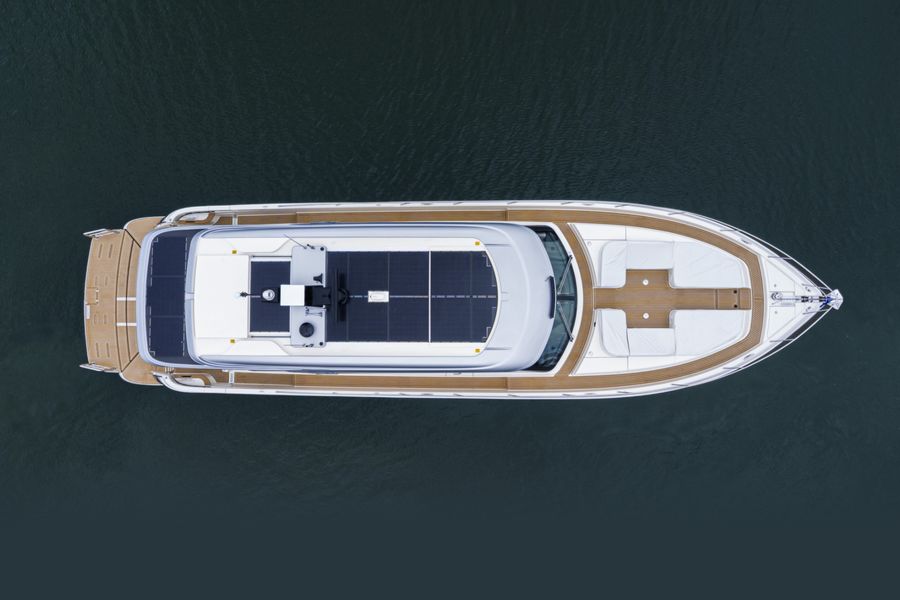
The Praxis panels are 85% lighter than traditional rooftop systems and built from materials consistent with the yacht's own composite construction, making them resistant to salt, heat, impact and offshore movement. They feed directly into the house battery bank via the C-Zone system and are shade tolerant, with different regions of the solar surface operating independently to maintain total output.
Dan Henderson, Design and Engineering Director at Riviera Australia, was clear about what the integration had to achieve. "Solar integration had to meet the same structural and aesthetic standards as the yacht itself. It was essential that this innovation enhance, rather than interrupt, the Riviera design language."
The collaboration began three years ago, with Riviera's design and engineering teams working alongside Praxis specialists to refine curvature, optimise panel placement and fit the technology within the mould-building process. Katie Donaldson, Founder and Executive Director of Praxis, says the shared intent was to push beyond existing standards. "When two innovation-driven industry leaders come together, the goal isn't to follow the standard — it's to redefine it. Riviera and Praxis have combined expertise to expand the art of the possible, seamlessly integrating silent luxury into the marine environment and setting a new benchmark for solar innovation."
Integrated solar is now available as an option across Riviera's new-build specification, with bespoke designs being finalised across the range. Retrofit solutions for existing Riviera yachts are available through Riviera Aftermarket at the company's Gold Coast manufacturing facility.