New sustainability rules are reshaping access to rock lobster fisheries across northeastern New Zealand, with sweeping area closures and revised bag limits designed to rebuild depleted stocks and restore the health of coastal reefs.
Minister for Oceans and Fisheries Shane Jones has announced the package of measures, which covers the Northland spiny rock lobster fishery (CRA 1), sections of the Hauraki Gulf and Bay of Plenty fishery (CRA 2), and the national packhorse rock lobster fishery (PHC 1). All changes come into force on 1 April 2026.
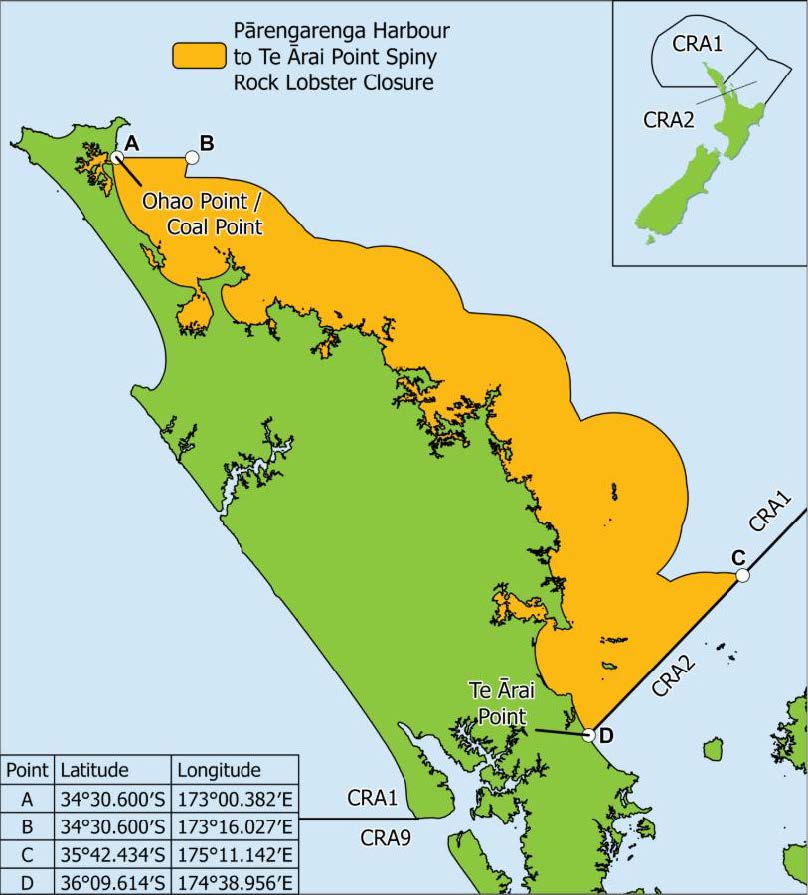
The centrepiece of the announcement is a complete closure of CRA 1's east coast to spiny rock lobster fishing. From Pārengarenga Harbour at the top of the country to Te Ārai Point north of Auckland, neither commercial nor recreational harvesting of spiny rock lobster will be permitted within 12 nautical miles of shore. The Minister pointed to critically low lobster abundance along this stretch of coastline, as well as the spread of urchin barrens linked to the reduction in predator numbers. Urchin barrens develop when sea urchin populations grow dense enough to graze kelp from rocky reefs, leaving degraded habitat with sharply reduced productivity and biodiversity.
Commercial fishing effort in the area had already fallen substantially, the result of an industry-led voluntary closure introduced in response to deteriorating stock levels. The Government acknowledged that step but concluded it was no longer adequate. Meeting obligations under the Fisheries Act and giving lobster populations a genuine opportunity to recover required formal regulation. The closure binds recreational and commercial fishers equally, reflecting both the severity of the decline and the need for a uniform approach to management.
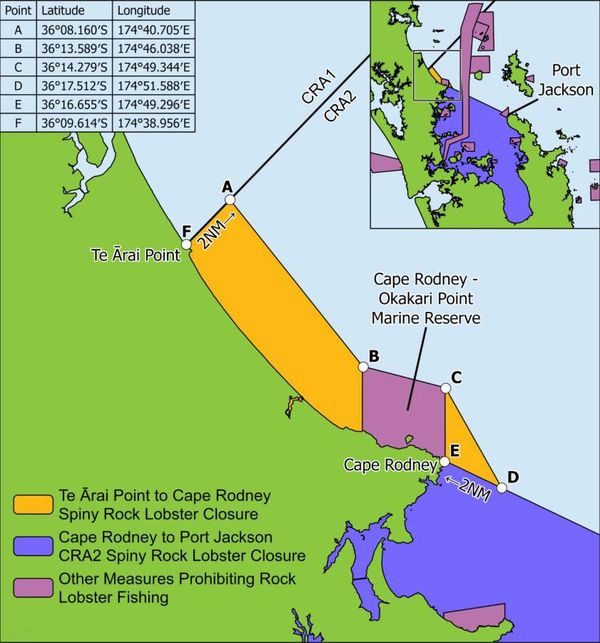
An additional closure in northern CRA 2, covering the coastline and adjacent waters from Te Ārai Point to Cape Rodney, has been confirmed to prevent fishing pressure simply migrating south once the CRA 1 rules take hold. The intention is to protect areas likely to receive the indirect benefits of stock recovery further north, and to avoid accelerated harvesting in those waters. Taken together, the two closures will place the great majority of coastal fishing grounds from Northland to the Coromandel Peninsula out of reach for spiny rock lobster fishers.
Recreational bag limits are also changing. Within CRA 1, the daily limit for spiny rock lobster will fall from three to two per fisher, and when combined with packhorse lobster the total daily take in that fishery will drop from six to five per person. A new national recreational daily limit of three packhorse rock lobster per fisher has been introduced alongside these changes. That decision follows concerns raised by iwi fisheries forums about localised depletion of packhorse lobster, particularly in parts of the far north during periods of heavy recreational effort. Packhorse lobster are themselves predators of long-spined urchins, giving the species a meaningful ecological role in keeping affected reefs in balance.
Recreational spiny rock lobster limits in CRA 2 between Te Ārai Point and Waihi Beach will remain as they are for now. The Minister signalled that fishing behaviour in the wake of the closures will be watched carefully, especially given the concurrent establishment of new marine protection areas in the Hauraki Gulf, and further restrictions remain on the table if pressure shifts noticeably.
A five-year review has been built into the framework to assess whether the closures are delivering the recovery outcomes intended. In the period before April 2026, stakeholders have been urged to fish responsibly given the gap between the announcement and the rules taking effect.
For those who fish the upper North Island's inshore waters, the practical consequences are significant. Grounds that have long been accessible will be closed, limits will tighten in some areas, and compliance will receive closer attention. Underlying all of it is a shift toward ecosystem-based management, where recovering predator populations is viewed as fundamental to the broader goal of reef restoration. How effectively the measures work will only become apparent over the years ahead, but they already represent one of the most substantial interventions in New Zealand's inshore lobster fisheries in recent memory.