Three years of collaboration between luxury yacht builder Riviera and solar technology company Praxis has produced something the marine industry has rarely encountered: a solar energy system so completely woven into a yacht's structure that it becomes virtually invisible.
Riviera has spent more than 45 years establishing itself as one of the world's foremost luxury motor yacht builders, a standing grounded in design excellence, exacting engineering and an unrelenting commitment to craft. The partnership with Praxis is the latest expression of that philosophy, one that promises to fundamentally shift how owners think about energy management aboard their vessels without demanding any sacrifice in appearance or performance.
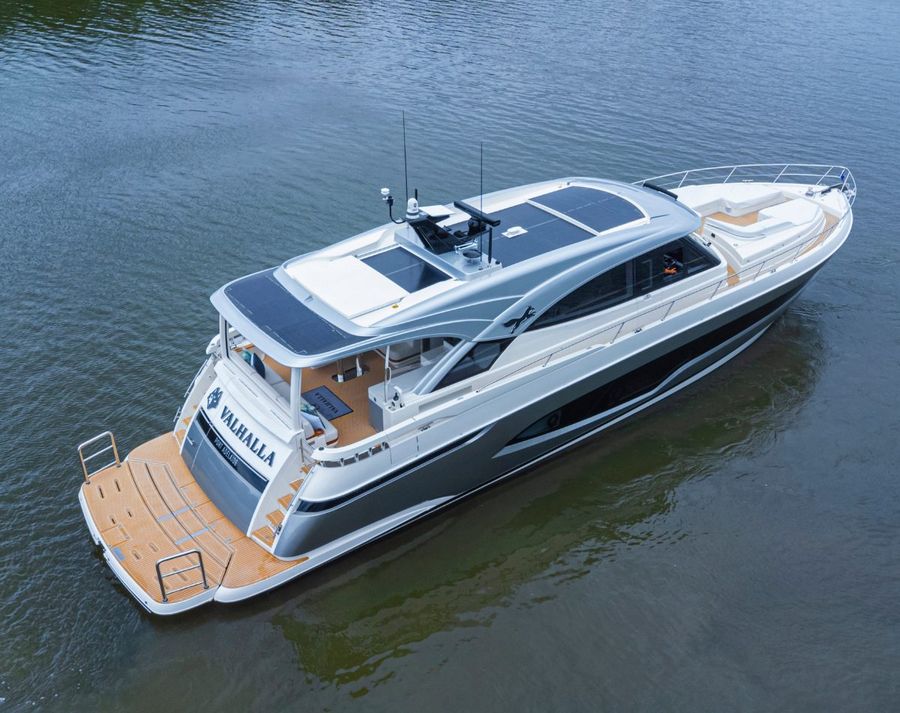
Central to the collaboration is a nano-composite solar skin just 2mm thick, bonded directly into each hardtop during the moulding stage of construction rather than added afterwards as a bolt-on element. Every visible layer is optically transparent, finished with a sleek black backing that sits flush within Riviera's sculpted superstructures. There are no frames, no brackets and no visual interruption to the yacht's lines.
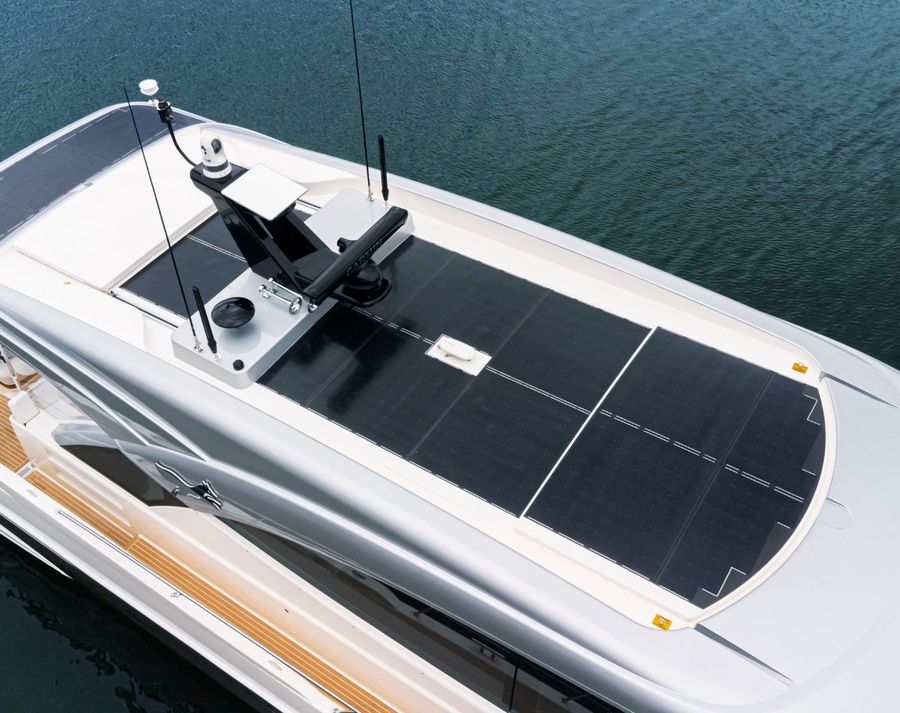
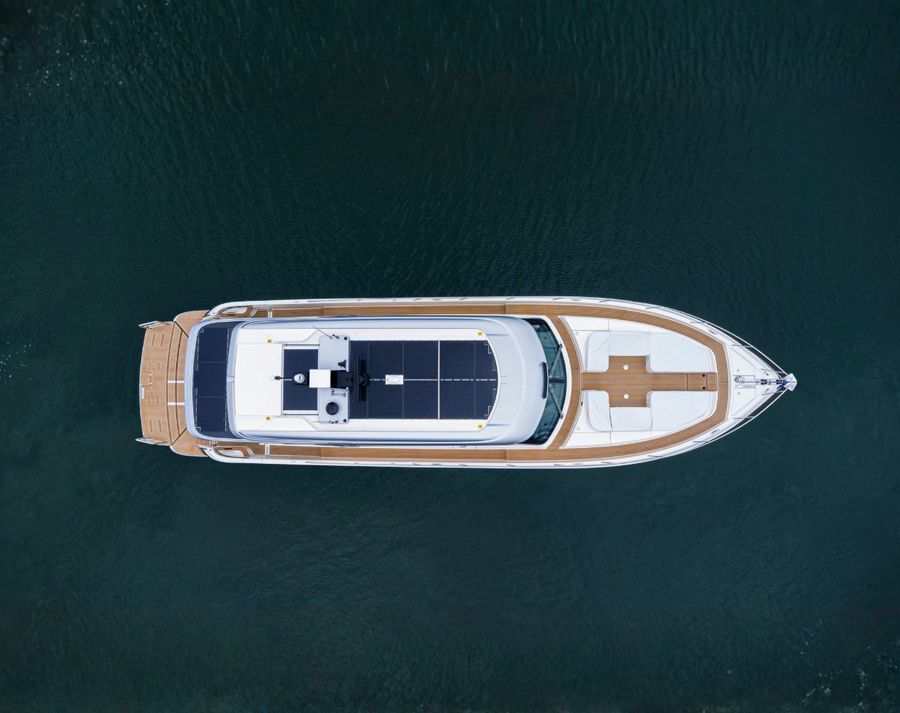
Because the solar surface follows each hardtop's curvature across multiple planes, it makes use of areas that conventional panel arrangements simply cannot access. The figures bear this out: compared with standard marine solar setups, the Praxis system delivers approximately 120 percent more power output from roughly 90 percent additional surface coverage. Each installation is a bespoke energy architecture, purpose-designed for individual Riviera models ranging from 39 to 78 feet, rather than an optional upgrade grafted onto existing models.
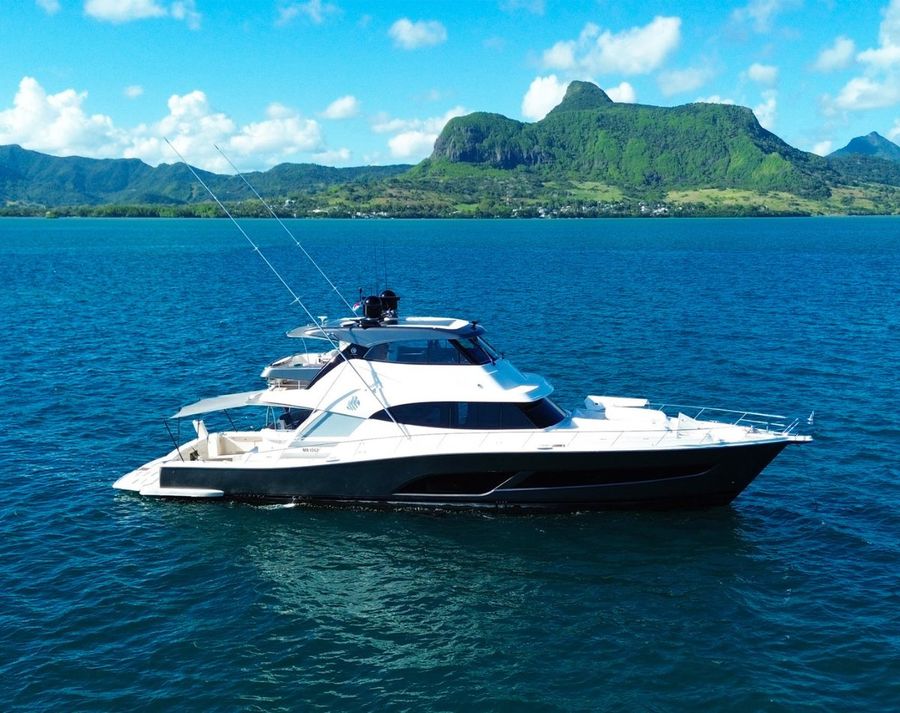
Real-world results have shaped the development process throughout. A 1.8kW installation aboard a 58 Sports Motor Yacht in New Zealand generates approximately 10kWh per day, meaningfully extending time at anchor without the need to run the generator. In Mauritius, a Riviera 72 Sports Motor Yacht fitted with an expanded lithium iron phosphate battery bank can remain off-grid for up to three days without running a genset, and one owner has reported running air conditioning for more than a day and a half on stored solar energy alone.
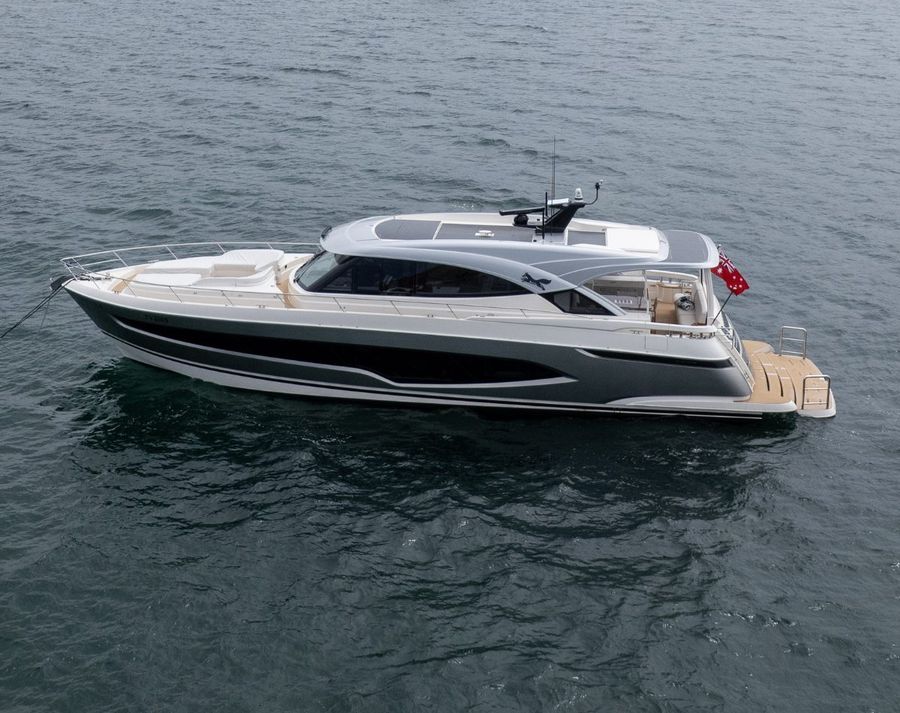
On a passage along the Australian coastline from Queensland's Gold Coast to Adelaide in South Australia, a Riviera 6800 Sport Yacht Platinum Edition equipped with the system kept navigation equipment, refrigeration, lighting and digital control systems running throughout the journey. Power feeds directly into the house battery bank to support critical equipment via the C-Zone system, and the technology is shade tolerant, with discrete sections of the solar surface operating independently to maintain total output even when part of the surface falls into shadow.
For owners, the practical upshot is straightforward: fewer generator hours, lower diesel consumption, reduced operating costs and a quieter, more refined experience on the water.
Meeting the durability demands of the marine environment has been central to Praxis' engineering approach from the outset. The nano-composite construction is developed at a microscopic level to achieve defect-free structural integrity. The panels are 85 percent lighter than conventional rooftop solar systems and built from materials compatible with the yacht's own composite construction, lending them resilience against saltwater exposure, heat, offshore movement and impact. They are fully waterproof and virtually unbreakable, available in matte, gloss or non-skid finishes to suit both new-build and retrofit applications.
Dan Henderson, Design and Engineering Director at Riviera Australia, is direct about the standards the system was required to meet. "Solar integration had to meet the same structural and aesthetic standards as the yacht itself," he says. "It was essential that this innovation enhance, rather than interrupt, the Riviera design language."
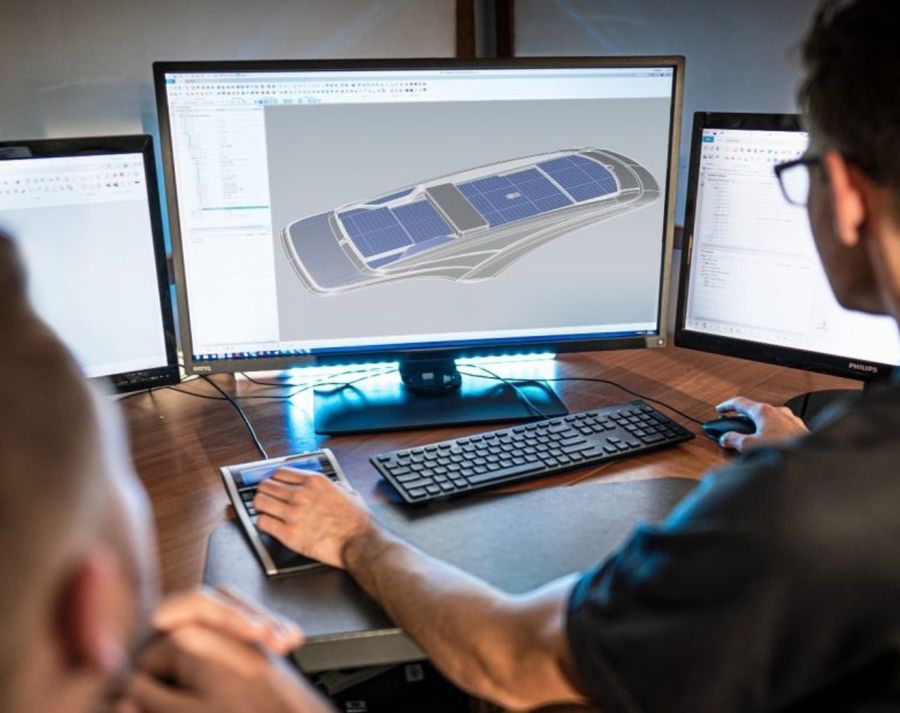
The three-year development process involved sustained dialogue between Riviera's design and engineering teams and Praxis' specialists, working through questions of curvature, panel placement and the technical demands of embedding the system within the mould-building process itself.
Katie Donaldson, Founder and Executive Director of Praxis, framed the broader ambition behind the collaboration directly. "When two innovation-driven industry leaders come together, the goal isn't to follow the standard, it's to redefine it. Riviera and Praxis have combined expertise to expand the art of the possible, seamlessly integrating silent luxury into the marine environment and setting a new benchmark for solar innovation."
The timing reflects a genuine shift in what yacht owners expect. Modern motor yachts function as fully equipped floating residences, carrying climate control systems, advanced digital infrastructure and hospitality-level amenities that place real demands on onboard energy supply. Owner expectations have moved considerably over the past two decades. Marina regulations in some regions are also tightening restrictions on shore power charging, making the ability to replenish batteries while underway a practical advantage rather than a premium consideration.
Riviera is deliberate in positioning the innovation primarily around the ownership experience rather than environmental credentials, though sustainability is an acknowledged factor across the wider marine sector. For Australian owners who regularly cruise remote or off-grid waters, the financial return can be substantial. In markets such as the United States, where passage-making between marinas is more typical, the appeal centres on quieter operation and reduced running costs.
The integrated solar system is now available as a new-build option across the Riviera range, with bespoke configurations being finalised for individual models. Owners of existing Riviera vessels can access retrofit solutions through the Riviera Aftermarket service at the company's manufacturing facility on the Gold Coast.