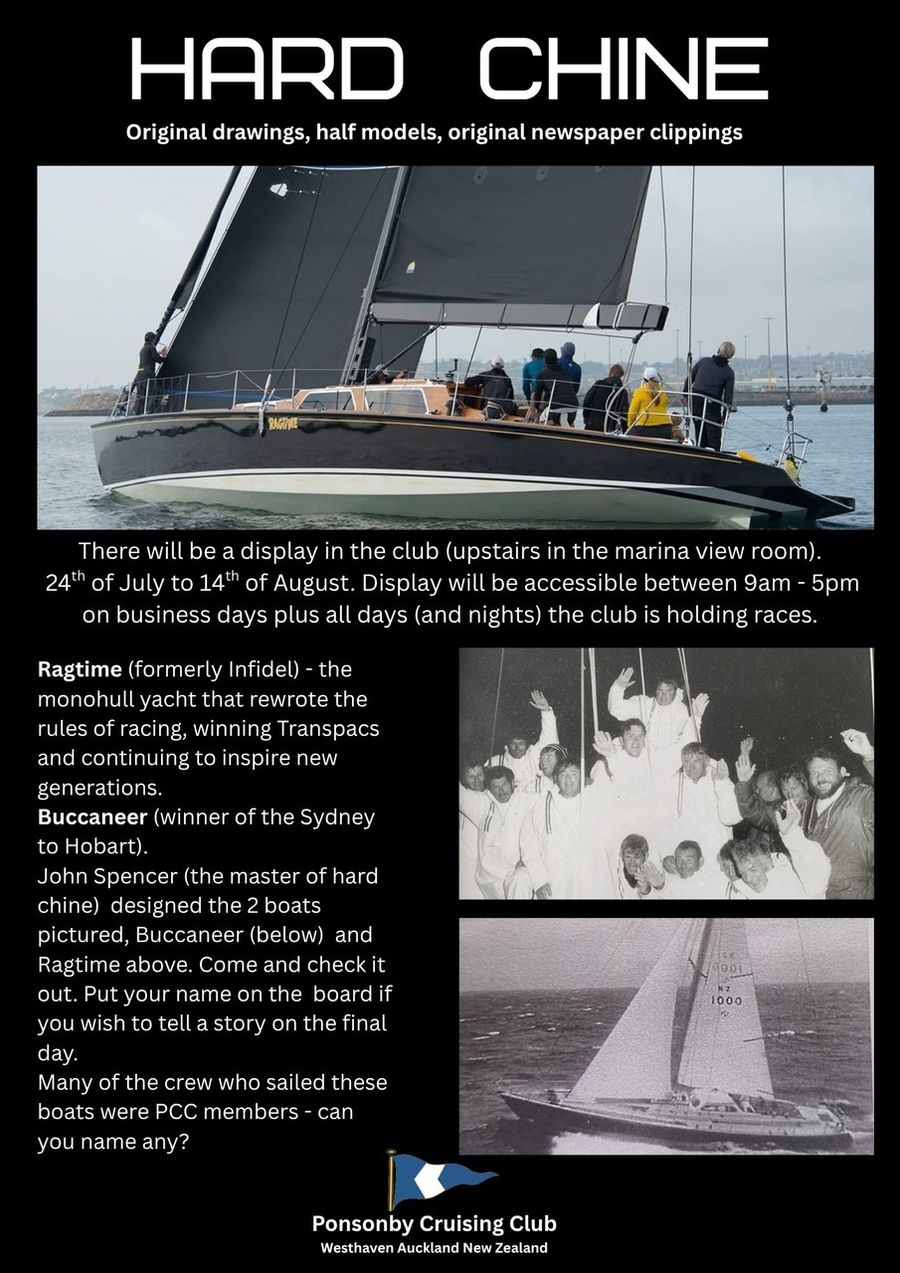
From 24 July through to 14 August, Ponsonby Cruising Club is hosting Hard Chine, an exhibition of original drawings, half models, and newspaper clippings displayed upstairs in the club's marina view room. Members and visitors alike are welcome to explore a collection that reaches back into one of the most creative periods in New Zealand yacht design history.
At the heart of the exhibition is the work of John Spencer, a North Shore boatbuilder and designer who fundamentally changed what people expected from a sailing yacht. Nicknamed the "Plywood King," Spencer operated from a shed in Browns Bay and held a conviction that speed and affordability were not mutually exclusive. His designs were featherlight, inexpensive to construct, and consistently quick on the water.
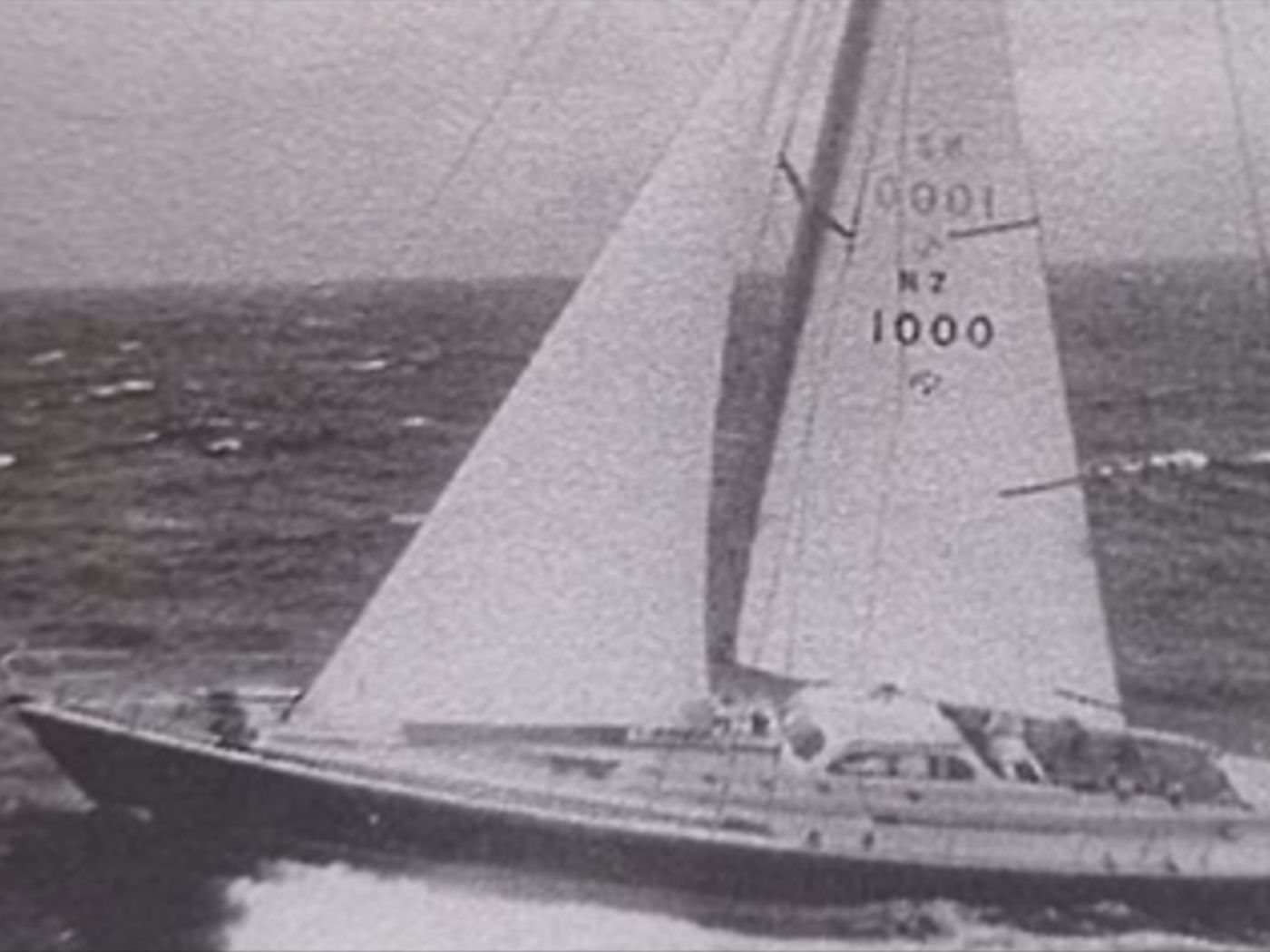
Two of Spencer's offshore designs receive particular attention in the display. Ragtime, formerly known as Infidel, and Buccaneer were both hard-chined plywood monohulls, and both left a lasting mark on the wider sailing world.
Launched in 1964, Ragtime was the first true ultralight displacement boat. Quick downwind, nimble upwind, and stripped of anything unnecessary, she made an immediate impression in New Zealand before crossing to the United States and causing a genuine stir on the offshore circuit. Her victories in the 1973 and 1975 Transpac Races, achieved against yachts that were considerably larger and heavier, became the clearest possible proof of what Spencer's thinking could produce.
Buccaneer represented the next step. Commissioned by Sir Thomas Clark, the driving force behind Crown Lynn pottery, she was a 73-foot maxi designed to contest the world's biggest ocean races. Built as a direct evolution of the ideas that produced Ragtime, she brought Spencer's plywood philosophy to a scale few had previously attempted.
The two yachts upended conventional thinking about hull shape, weight, and building materials. Spencer had little interest in heavy displacement or costly construction. His approach was built on intelligent geometry, stripped-back simplicity, and a readiness to discard received wisdom.
Spencer began drawing boats in his early twenties. His early dinghy designs carried the same hallmarks that would define his career: hard chines, light displacement, and construction from thin plywood sheet that made them fast, manageable, and well within reach of home builders. An entire generation of New Zealand sailors found their way onto the water through boats that bore his influence.
The same logic carried through to his keelboats. Lighter than anything the established designers were producing, and reliably quicker as a result, they demonstrated again and again that the rules were worth questioning.
Spencer's Browns Bay shed became part of local folklore. Residents remember glancing in on their way to football practice and catching sight of plywood taking shape under the hands of one of the country's most inventive minds. His influence has endured well beyond his working years, reflected in the existence of an active online fan community dedicated to his legacy. Boating New Zealand covered his last exhibition, which was held by the Tino Rawa Trust in 2020.
Hard Chine is open on business days from 9am to 5pm, and is also accessible during all club race events. Visitors are welcome to browse the archive, share their own memories and connections to Spencer's boats, and, for those who feel moved to contribute, sign up to speak on the exhibition's final day.