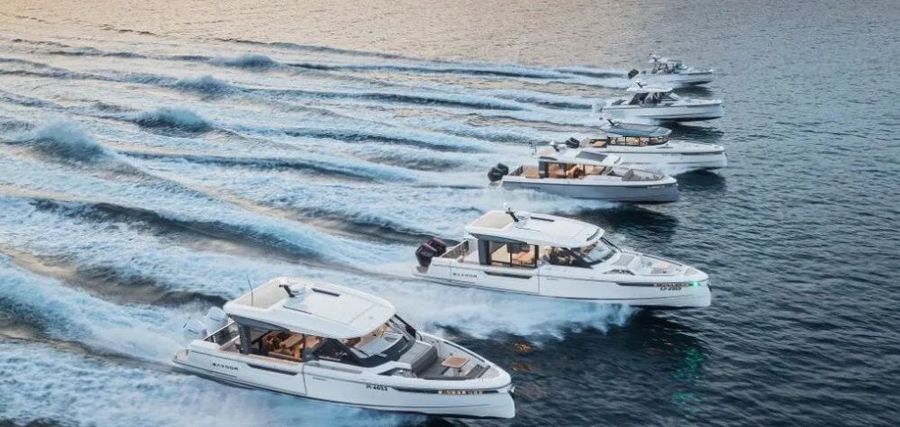
Eight yachts are currently making their way through one of New Zealand's most demanding offshore passages. The Three Kings Offshore Yacht Race covers 500 nautical miles, taking crews north from the Waitematā Harbour, around the Three Kings Islands, and home again. It holds the distinction of being the second longest yacht race in New Zealand for 2026, and the fleet will be followed here throughout the coming days.
Also on the way is a piece documenting a spearfishing expedition to the Three Kings Islands aboard a customised Stabicraft 2100, filmed by Michael Campbell from Epic Mission with the aim of inspiring ocean-based adventure.
There is something about the Three Kings Islands that draws people north. Sitting roughly ninety kilometres above North Cape, they occupy a genuine remoteness that appeals to certain crews and sits well outside the comfort zone of others. Either way, nobody points a bow in that direction without serious thought about weather and navigation. Good information shapes the passage plan. But it only gets you there.
Once something goes wrong, no forecast or chart resolves it.
And things do go wrong, sometimes with almost no warning. Not only out at sea. Even attempting to get ashore, on the rare occasions conditions permit it, carries real hazards. Swell builds fast. What looks manageable from the water can become something impossible to escape once you are on the rocks.
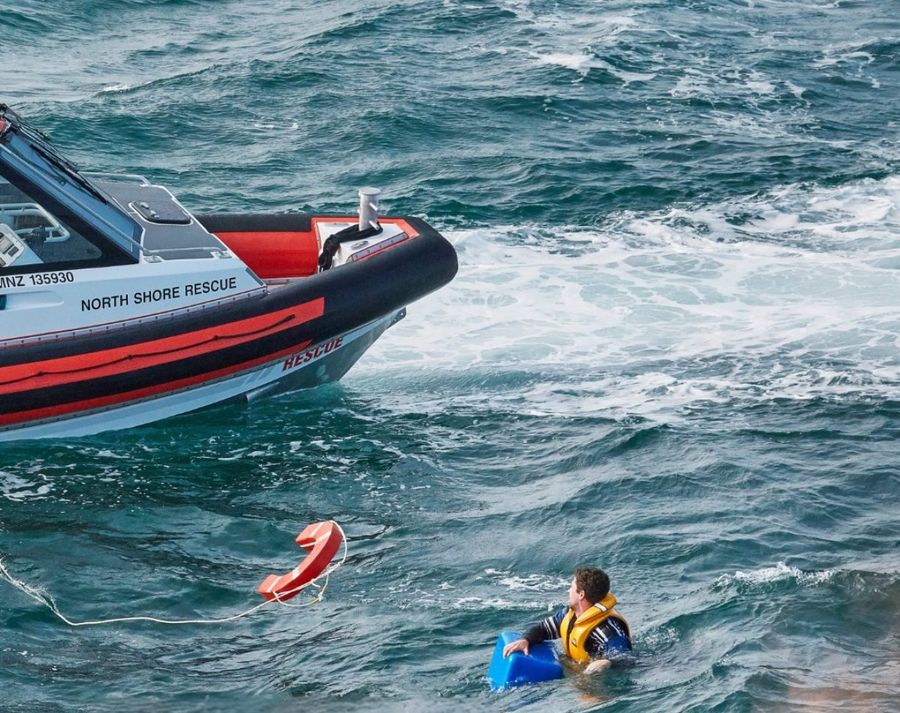
That is the world offshore crews prepare for. It is also the world rescue crews step into when the call comes in.
The moment things go wrong, whether you are still on deck or suddenly in the water, personal safety equipment stops being an item on a checklist. It becomes the only thing that matters. The one piece of gear that must always be on your person is a Personal Locator Beacon. No exceptions.
Going overboard, or ending up in a life raft, are situations that genuinely happen. In both cases, a PLB is what gives rescue services a position to work toward. It converts you from a missing person into a located one. From a search and rescue perspective, that distinction is everything: the difference between sweeping an area and responding to a point on a map.
The same logic applies well beyond offshore racing. Canoeing on Lake Wakatipu on a calm afternoon. Fishing alone off the Coromandel east coast. A float down the Hutt River through Kaitoke Regional Park. Familiar water in routine conditions can shift into something serious very quickly, and proximity to shore offers no protection from that reality.
The same principle extends to Charlotte Porter and her crew, who will row the Atlantic later this year as part of a four-woman team in the World's Toughest Row. A different ocean, a different vessel, but the core reality is unchanged. If something goes wrong, you need a way to be found.
A PLB does one thing, and it does it well. Activate it, and it transmits your position through the Cospas Sarsat satellite network to search and rescue coordination. Your location, your identity, and a clear signal that you need help all move through the system immediately, without requiring anything further from you.
Personal Locator Beacons in New Zealand
PLBs operate on the 406 MHz frequency, which is monitored globally. A distress signal can be detected anywhere in New Zealand waters. Most modern units incorporate GPS capable of pinpointing a position to within a few metres, meaning rescuers arrive at a location rather than begin a search. They are built for the marine environment, waterproof and shock resistant, and many are buoyant, continuing to transmit even if separated from whoever activated them. Battery life is designed for emergencies, typically a minimum of 24 hours. Activation is a single action, straightforward enough to manage under stress or injury.
In New Zealand, the 406 MHz signal feeds directly into the search and rescue system and is acted on by agencies including Coastguard New Zealand and RCCNZ. For Coastguard crews, a registered beacon signal means a position to run to. Without one, they are sweeping an area.
https://www.coastguard.nz/boating-essentials/safety-on-the-water/safety-articles/emergency-beacons
What that means in practice became clear during the 2024 Rolex Sydney to Hobart. Aboard Porco Rosso, in heavy conditions and complete darkness, crew member Luke Watkins was washed overboard. An initial AIS alert was dismissed as an accidental activation. It was only when a second signal, this time from a PLB, came through that the crew recognised the situation was real. By then, the yacht had already sailed well past him.
They turned back and began searching, guided by the beacon signal. At night, in those sea conditions, that signal was what made recovery possible. Luke Watkins was eventually brought back aboard after a prolonged time in the water.
A case documented in a 2023 United States Coast Guard Boating Safety article by Brian Daugherty tells a similarly clear story. Ocean rower Aaron Carotta was alone in the Pacific in a 23-foot boat when his communications failed. Then the boat rolled.
He ended up in a life raft with almost nothing. No vessel, no functioning systems, no support. What he had was a PLB. Within hours, an aircraft was overhead. Shortly after, a merchant vessel was diverted to his position and lifted him from the water, more than 1,400 miles from Tahiti.
Both cases reflect what rescue crews in New Zealand deal with regularly. Calls where time is the critical variable, visibility is poor, and the difference between a fast recovery and a protracted search is measured in minutes. Coastguard guidance makes it plain: a registered beacon turns a search into a response. It gives crews something to move toward rather than a probability zone to work through.
None of that changes based on where you are headed or how straightforward the day looks when you leave. The Three Kings are a vivid example of remote, unforgiving water, but the same risk exists in far more ordinary settings. Conditions change, equipment fails, and accidents happen at places and moments nobody planned for.
The message from Coastguard is consistent. Carry a PLB and make sure it is registered. When something goes wrong, the question is never simply whether you are in trouble. It is whether anyone knows exactly where you are.
A PLB answers that question directly, shifting you from unknown and drifting while others piece together what happened, to a confirmed position with help already on the way.