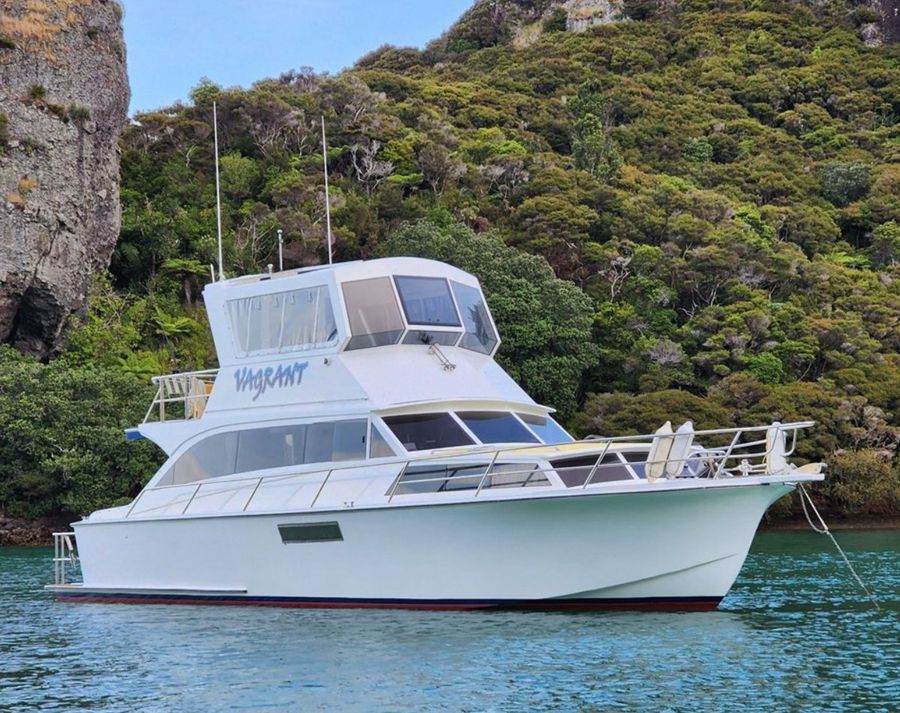
Few designs in New Zealand boating history carry the weight of a Pelin Shikaree. Acquiring one is not simply a transaction. It is a commitment to a living piece of this country's offshore fishing heritage.
Frank Pelin's design first drew attention in 1965, and through the mid-1970s the Shikaree established itself as one of the defining offshore game fishing launches of its era. Pelin's name never achieved the same public recognition as designers such as Farr or Young, yet his standing in the industry was arguably more deeply rooted. A boatbuilder once described him as "everyman's designer," and the Shikaree reflects that philosophy at every turn. These were boats conceived to be practical and purposeful, engineered to endure rather than to impress.
The construction method is central to understanding what a Shikaree actually is. Double-diagonal kauri, sheathed in fibreglass, produces a hull of exceptional toughness. These were not weekend runabouts knocked together quickly for the recreational market. Professional boatbuilders produced them for people who intended to fish hard in genuine offshore conditions, and the fact that so many remain active working vessels more than half a century on speaks directly to the quality of their construction.
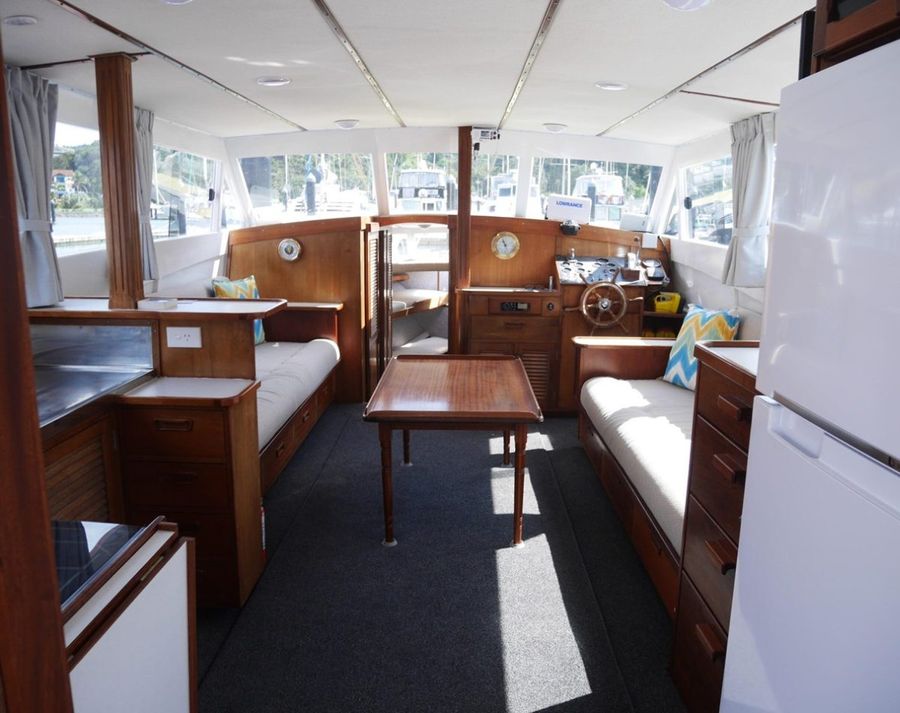
Shikarees come in lengths from 11.6m through to 13.2m, and certain examples have been extended beyond 12.5m over the years. Below decks the accommodation is generous by the standards of any era. Two cabins providing six to eight berths, a full galley with a gas oven and fridge, and a toilet and shower are all typical of the type. Headroom is treated seriously throughout. At least one example on the market offers a full 6'4" of standing height across the entire vessel.
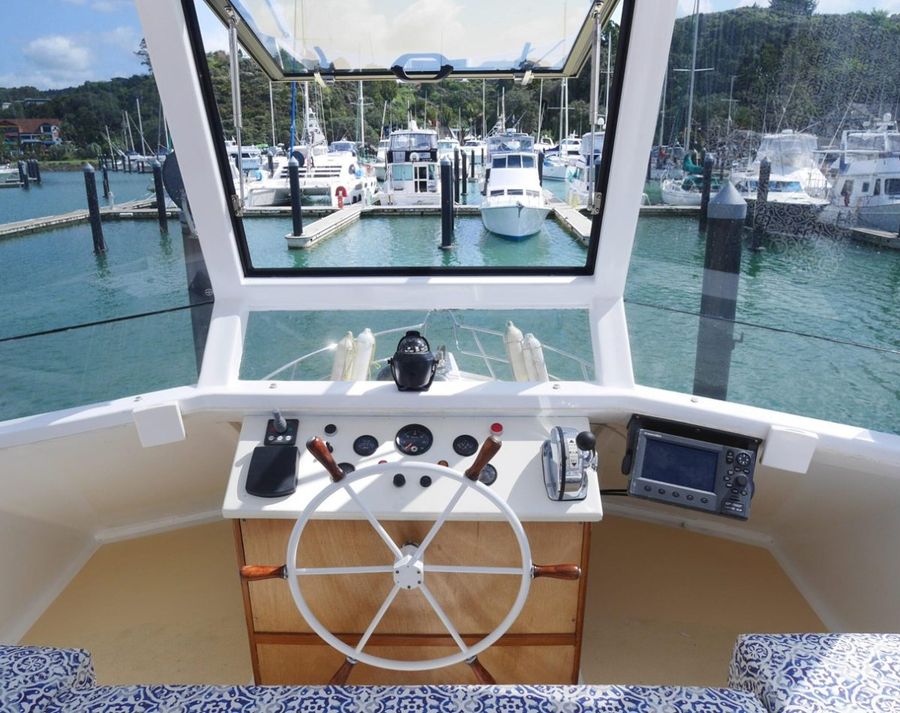
Up on deck, the cockpit reveals the Shikaree's true purpose. Roomy and specifically configured for game fishing, most boats come game-rigged and include a game chair as a matter of course. Flybridge enclosures are common across the fleet, and the better-presented examples carry comprehensive modern electronics packages.
Power arrangements differ from boat to boat. Twin Ford Dover diesels were a popular original fitment, delivering cruise speeds of between 8 and 12 knots. Further up the market, twin Cummins 6BTA 315hp diesels feature in better-specified boats, and the top-end examples are driven by a Caterpillar 375hp single. Shaft drive is standard across the fleet.
Buying a vessel of this age demands careful attention. Kauri is a resilient timber, but it rewards conscientious ownership and suffers under neglect. Any inspection should examine the fibreglass sheathing closely for delamination, with particular focus on the keel and any sections that have been modified or lengthened. On engines of this vintage, a thorough service history carries considerably more weight than hours alone, and prospective buyers should insist on maintenance records and regard a professional survey as essential rather than optional.
Pricing reflects the genuine opportunity these boats represent. Well-used 12.5m examples are currently asking around $45,000, while a well-presented and fully equipped 13.2m vessel is listed at $159,000. For an offshore-capable game fishing launch with substantial accommodation and a track record measured in decades, that range of prices represents compelling value.
Pelin Shikarees do not come to market often, and the reasons their owners hold on to them are not hard to understand. Built to work hard and built to last, these kauri classics are still delivering on both counts, fifty years after the first of them took to the water.