Aboard the Scow: A New Zealander's passage on one of offshore racing's most radical yachts
On Sunday 9 August UK time, Monday morning in New Zealand, Wellington-raised sailor Oakley Marsh steps aboard one of offshore racing's most radical yachts, joining Palanad 4 for the RORC Round Britain and Ireland Race, a non-stop, 1,805-nautical-mile circumnavigation of the British Isles that starts and finishes at Cowes. Go Boating New Zealand spoke with Marsh ahead of the start.
He sails as one of eight aboard the Sam Manuard-designed Mach 50, a boat that has spent the first half of 2026 turning the 50-foot IRC class on its head. Go Boating New Zealand has followed Marsh's 2026 European campaign from his first Figaro start through Le Défi Paprec and this year's Tour de France à la Voile bid; this week, ahead of the biggest fully crewed offshore start of his season, we caught up with him again.
Three conversations with Marsh, three boats, and each time the stakes have climbed. The first, Le Défi Paprec, found him ahead of a two-handed entry-level campaign. The second, Tour de France à la Voile, had him racing in a team full of youth sailors. This time, the RORC Round Britain and Ireland Race, there's no ambiguity: Marsh is stepping aboard a yacht built to win.
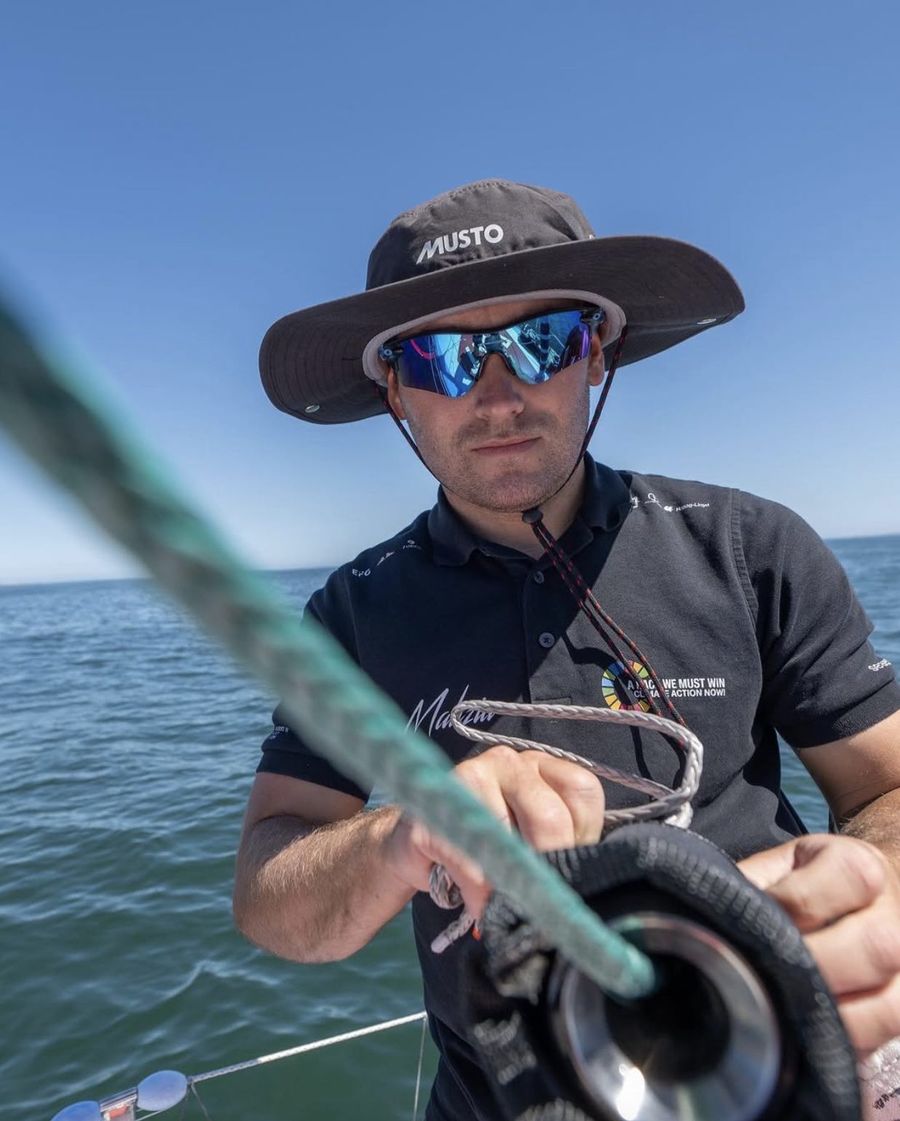
"It's been a busy season for me doing offshore racing," Marsh said. "Fortunate to get the call-up to race on Palanad 4, obviously about making a name in the offshore racing scene, and to do this Cowes race, so super excited."
The making of a berth
Nothing about Marsh's route to this start line has been accidental. Raised on the Wellington waterfront and shaped early by the Royal Port Nicholson Yacht Club's youth programme, he completed a sailmaking apprenticeship at Doyle Sails and graduated from the Royal New Zealand Yacht Squadron's Mastercard Youth Training Programme in 2021, right as COVID stalled the domestic scene he'd spent years building into. Europe came next. A technician's role during the build of Team Malizia's IMOCA came first, then sailmaking for the French America's Cup team in Barcelona, then an Admiral's Cup campaign with Team Jolt in the UK. This year he moved into the Figaro circuit properly, most recently finishing runner-up in Le Défi Paprec, beaten by eighteen seconds alongside German co-skipper Jens Meier.
The Palanad 4 seat came through the same network that's shaped his career in France all year.
"Through a network of people, obviously," Marsh said, of the call-up. "Moving to France was a big thing, and then being involved in the offshore racing scene in France, it's a pretty big scene and everyone is kind of connected in this world. If you have a good attitude and results, then it's only a matter of time before you get the call-up to race on a good boat."
An eight-hand crew, no fixed positions
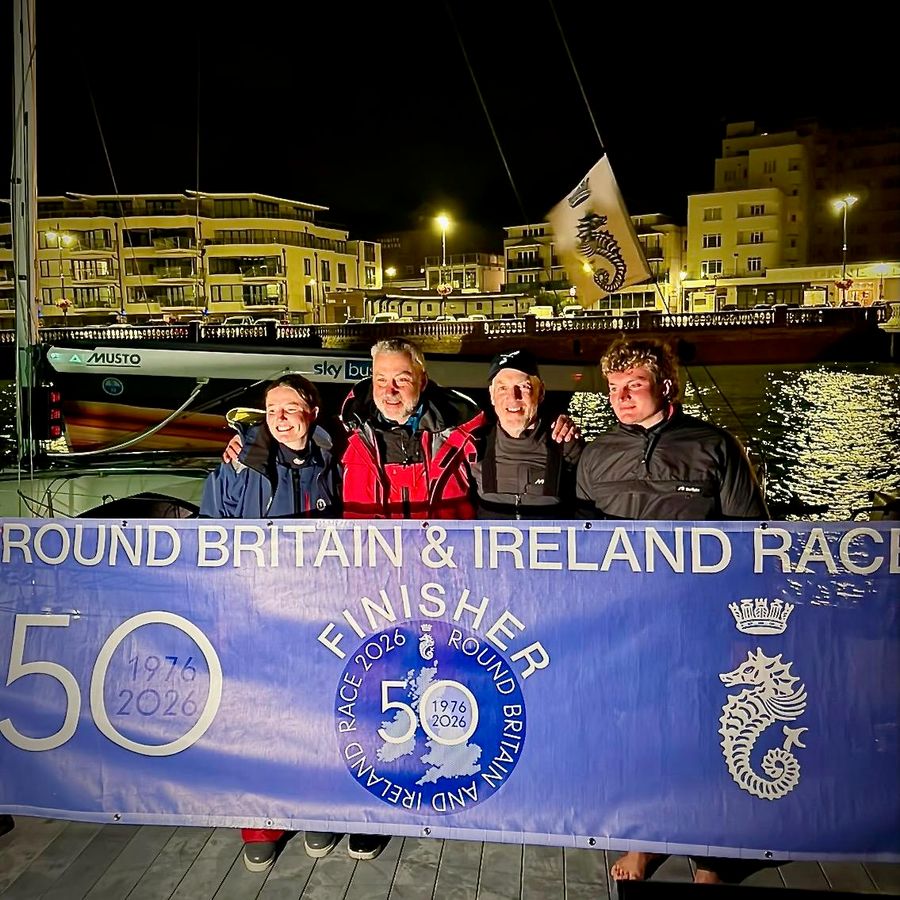
Palanad 4 sails with eight aboard, led by Antoine Magre, whose father Olivier commissioned the yacht and has sailed her to several of this year's results. Marsh joins an experienced, well-travelled group: Frenchmen Erwann Le Mene and Jean-Philippe Saliou, the latter part of the crew that won January's RORC Transatlantic Race; Cornish sailor Joss Creswell, who leads RORC's Gryphon Project, the programme opening pathways for international sailors into the Figaro circuit; and Irishman James Murphy and Spaniard Pablo Santurde, both veterans of Magre's earlier Class40, Palanad 3.
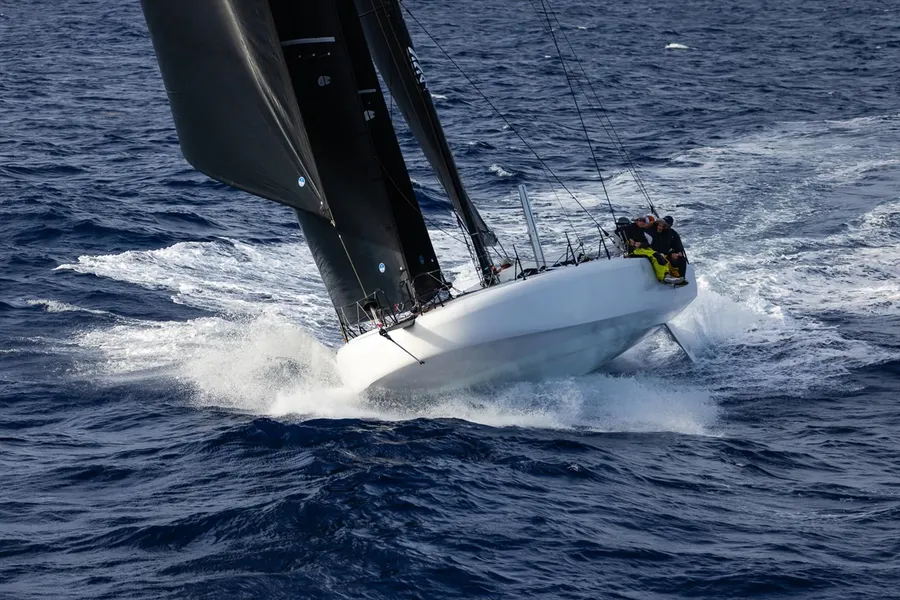
What matters more than the names is how the boat is sailed. There's no designated bowman among them. Every sailor rotates through every station, the helm included, split four-on-four across the watch system.
"There's not a set bowman. Every sailor is doing every part of the boat, that's the mentality behind the team, which is really cool," Marsh said. "Everyone's got experience, and everyone's bringing different experience to the team. It's a really nice way of doing things, and everyone will get to drive."
Marsh talks about Magre with the respect of someone sailing alongside a skipper who knows every decision behind the boat. "He's been involved in a bunch of different racing programmes, and he's built some amazing boats. Being on board, he knows the bow inside out, and the way it should perform and work in the water."
The hull that stops conversations
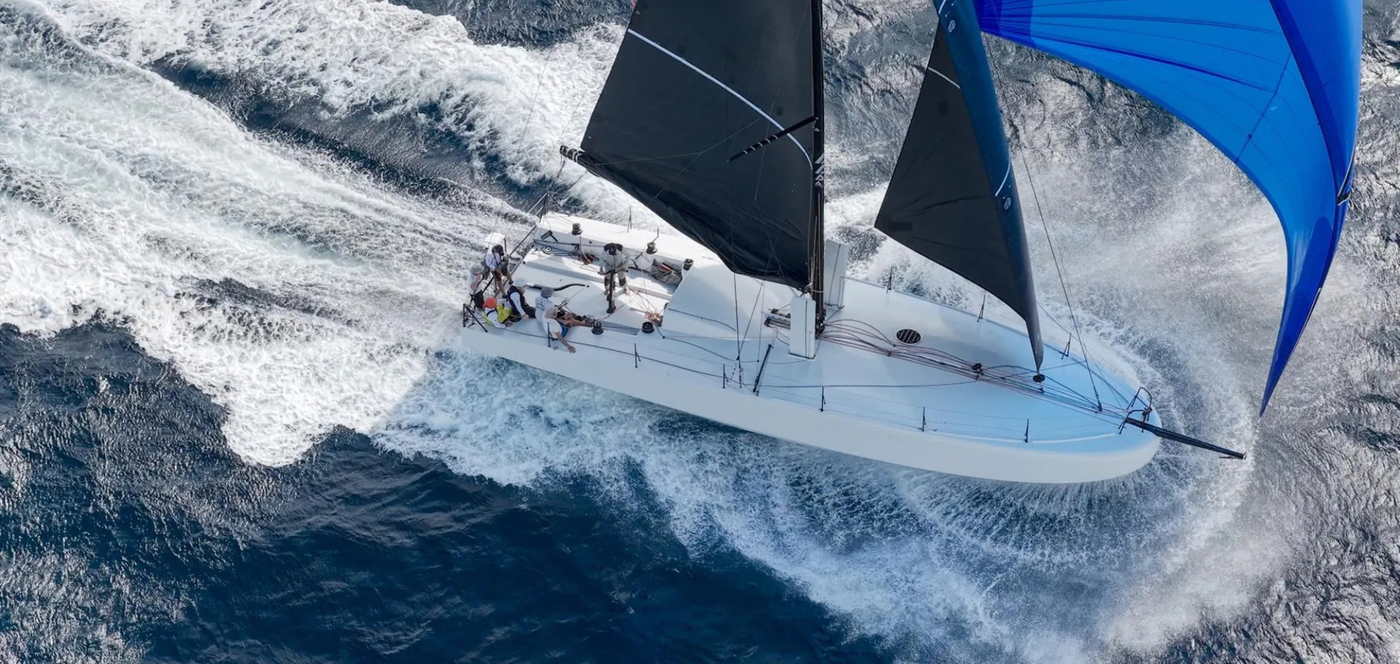
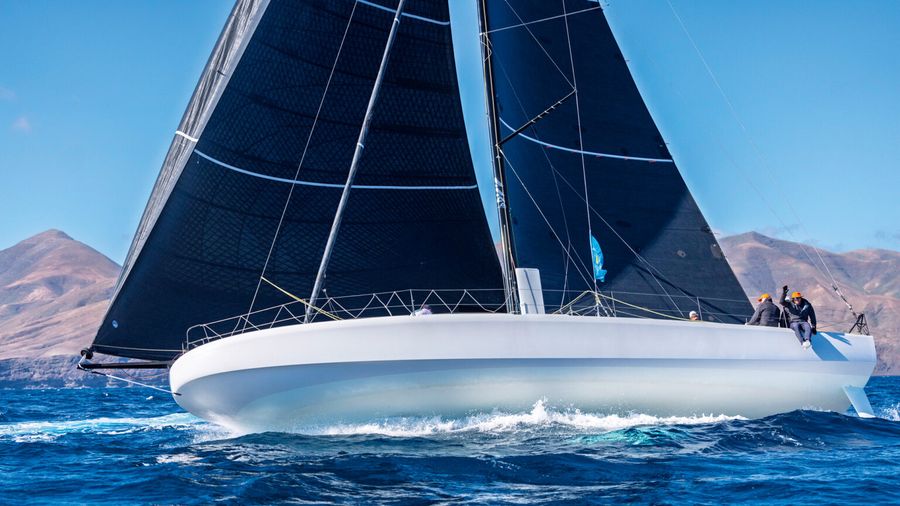
Palanad 4 draws a crowd wherever she ties up, and it's not hard to see why. Where a conventional offshore yacht meets the sea with a fine, knife-like entry, the Mach 50 does exactly the opposite: a wide, round-shouldered scow bow, engineered to ride progressively higher as boat speed builds rather than plough through it. Naval architect Sam Manuard has described the concept as something close to a 50-foot Mini Transat prototype, built on pure hull-form stability rather than lifting foils. A powerful canting keel works alongside twin daggerboards, letting the crew shift ballast to windward while adjusting for leeway as conditions change.
Marsh doesn't need architecture-speak to make the point.
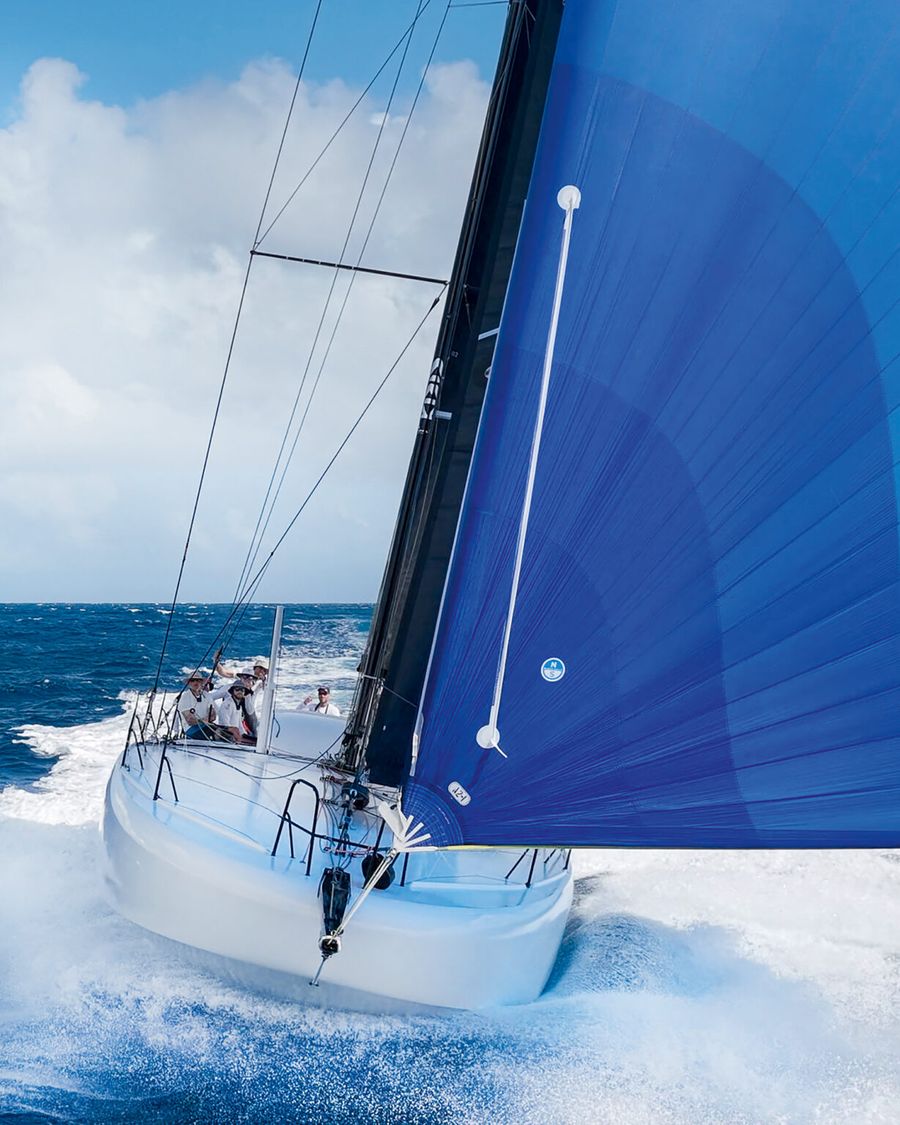
"It's called a scow bow," he said. "It's a boat with a lot of volume, quite round, not pointy at all. Some say it looks like a crocodile, or a bar of soap. Instead of ploughing through waves, it kind of rides over them, and the faster you go, the more the bow lifts clear of the water. It's going completely away from the conventional style of offshore yachting, where you're getting pounded with water the whole way. The idea is that this design is much drier, much safer, and actually faster."
The twin daggerboards, he added, "provide a little lift, which is quite nice. The whole setup is impressive."
Launched by JPS Production with only her third outing on the water before a competitive debut at the 2025 Rolex Fastnet Race, Palanad 4's results since then have been difficult to ignore: overall victory in January's RORC Transatlantic Race from Lanzarote to Antigua, an elapsed time of 8 days, 5 hours, 55 minutes and 50 seconds, followed by IRC Zero class honours at the RORC Caribbean 600 and, as covered previously on this site, overall victory in the Aegean 600. Asked how many Mach 50s currently exist, Marsh didn't hesitate. "There's only one, which is this boat. So far, they're calling it the Mach 50."
A different kind of test
The Round Britain and Ireland Race asks something different of Palanad 4 than anything she has faced this year: a long, tactical grind past Land's End, the Fastnet Rock, St Kilda and Muckle Flugga, then a beat back down the North Sea and through the Dover Strait, with no time limit and no stopping. Antoine Magre has been open about where his design comes into its own, above 15 knots of true wind, a threshold this course cannot guarantee. Marsh, meanwhile, is leaning on a season of accumulated offshore miles.
"Feeling really confident going into this, especially with the results I've had this year," he said. "Going from a much smaller ten-metre boat, racing double-handed, to sailing a fully crewed 50-foot race boat with a few more team members and a much, much larger racetrack. It's a 1,800-mile race, the scale of the event is massive."
Palanad 4 lines up in IRC Zero against two much larger, higher-rated rivals for outright pace: Johnny Vincent's Volvo 70 Pace (formerly Group Armour) and Jens Kellinghusen's Ker 56 Varuna VI, both fancied for line honours.
Marsh said. "We'll have to see how we line up against them."
Not the only New Zealander at the start
Marsh isn't sailing alone in representing New Zealand this year. Four-time Volvo Ocean Race winner Stu Bannatyne joins Pace as a watch captain, alongside fellow watch leader Neal McDonald and navigator Jules Salter, marking his first Round Britain and Ireland Race despite one of the most decorated round-the-world records in the sport. "This has been on my bucket list for a long time," Bannatyne said, of finally lining up for the race aboard a boat he rates highly.
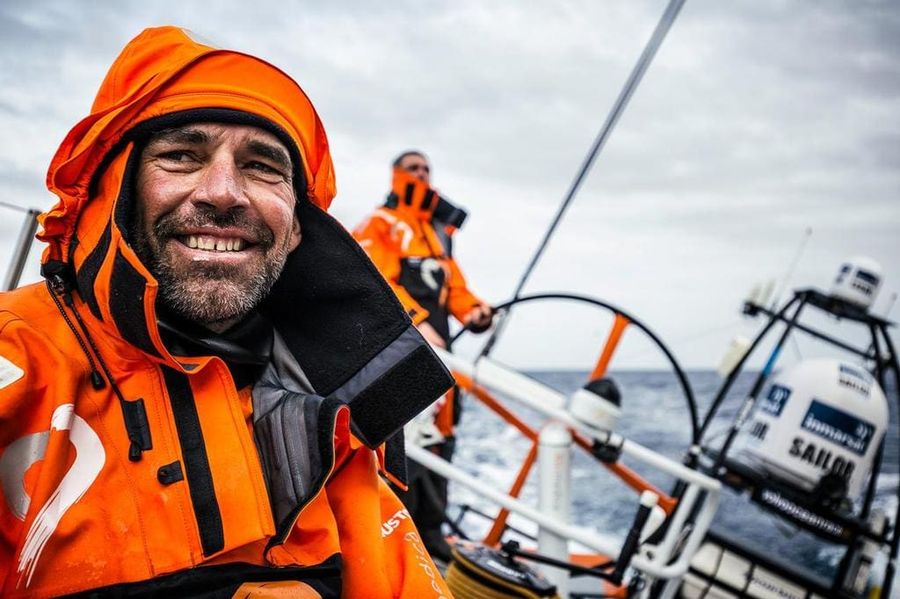
Across the full fleet, they are the only two New Zealanders in the 33-boat entry. The field otherwise runs heavily British, with French, German, Dutch, American and Manx entries filling it out.
What comes next
There's little rest on the other side of this one. As soon as Palanad 4 crosses back over the line at Cowes, Marsh returns to the Figaro Beneteau 3 for L'Aventura, a new double-handed ocean marathon that closes out the 2026 Championnat de France Élite de Course au Large as its fourth and final leg, carrying the championship's heaviest weighting, Coefficient 3. Running from 19 August to 13 September and spanning close to 3,000 nautical miles, the race departs Port Bourgenay in France for a technical circumnavigation of Madeira before finishing the roughly 1,600-nautical-mile first leg in Lagos, Portugal. A shorter return leg of around 785 nautical miles then carries the fleet back to Île d'Yeu, off France's Atlantic coast. Marsh sails it double-handed alongside an English skipper.
For now, though, it's Round Britain and Ireland. Palanad 4 carries Starlink aboard, so a live update mid-course isn't out of the question this time.