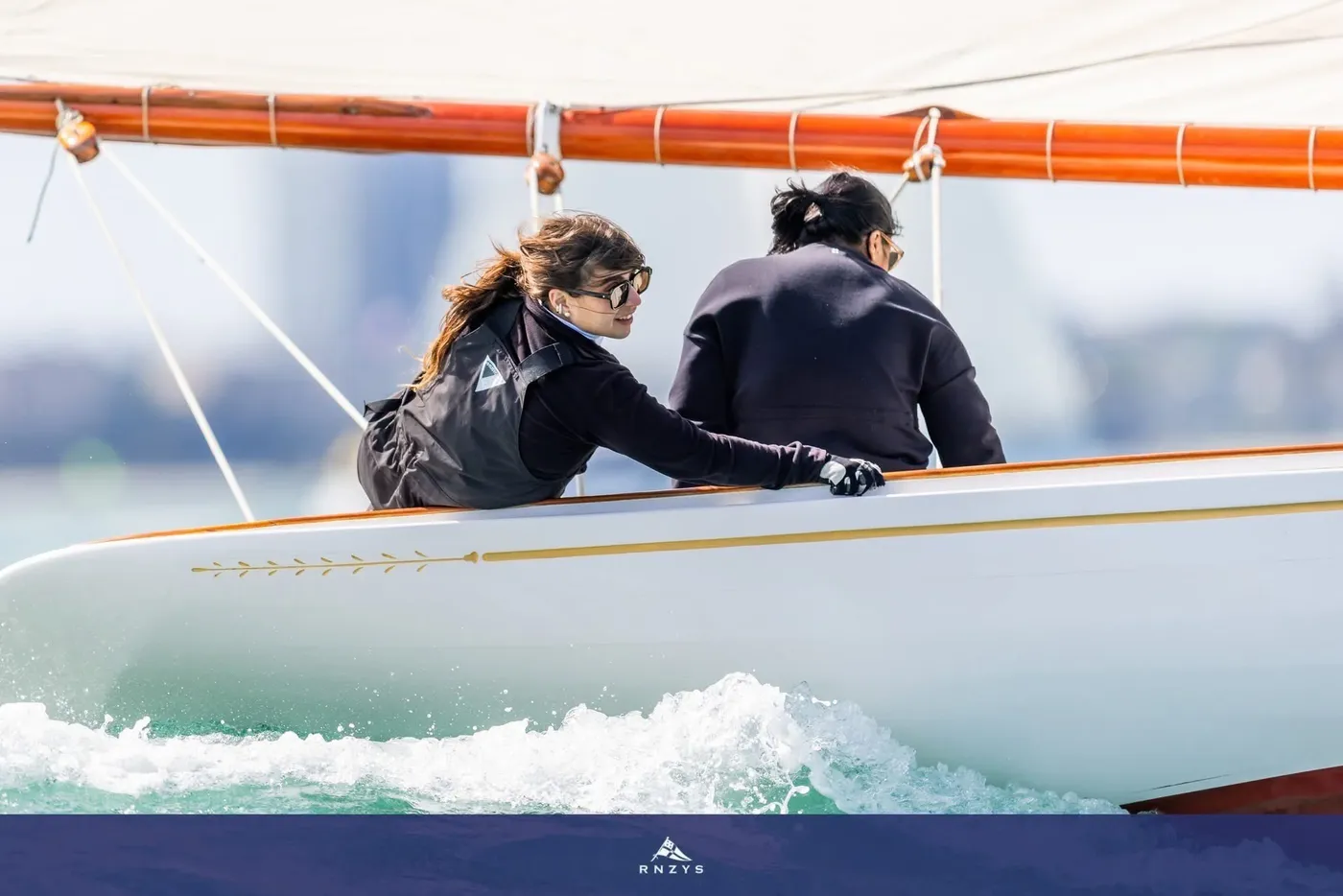
Four years ago, Catalina Leiva had never set foot on a sailing boat. Then she joined the Tino Rawa Trust's Rawene for the Duder Cup on the Waitematā Harbour, and everything shifted.
She found herself on the mainsail with no idea what she was handling. "I was on the mainsail. I had no idea what it was but it was a big sail. I just needed to do it right and trust the person trying to teach me." That first regatta was the beginning of something lasting. Today she is a core crew member aboard Rawene and a committed participant in Auckland's classic yacht racing community.
Classic yachts make particular demands on their crews. Long overhangs, varnished timber, heavy canvas and lines running in every direction, these boats carry real momentum through the water and reward smooth, considered handling. A gaff or bermudan rig loads up quickly in a gust, and timber hulls track through a seaway in ways that take genuine time and attention to understand. There is no shortcut. Catalina learned through doing, guided by skipper Bob Still and by crew members who know both Rawene and the Waitematā intimately.
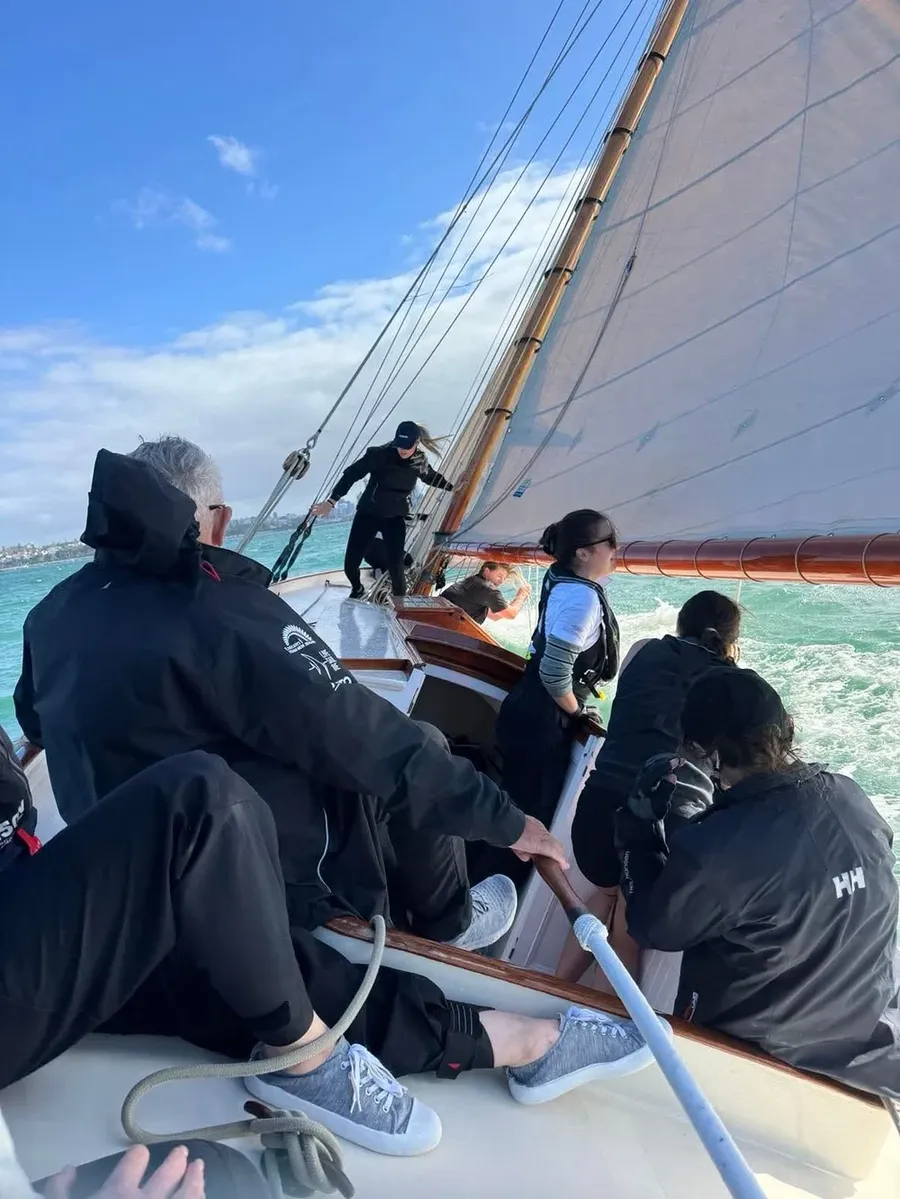
The trust she placed in that experience comes through clearly in how she talks about Still. "Bob could sail Rawene with his eyes closed," she says. "It's been a novelty, and I just needed to perform."
Racing classic yachts runs at a different tempo from modern high-performance fleets. The work is physical, communication between crew is essential, and a well-timed move on the mainsheet can decide the outcome of an entire leg. For Catalina, much of the appeal lies in exactly that hands-on quality, alongside the sense of stewardship that comes with sailing vessels carrying genuine history.
Her sailing extends beyond the classic racing calendar as well. She has completed the 119 nautical mile PIC Coastal Classic three times aboard Mustang Sally, also skippered by Bob Still. Even so, it is Rawene, with her character and heritage, that continues to shape Catalina's development as a sailor.
As Auckland's classic fleet looks ahead to upcoming regattas and festivals, her story is a reminder of what makes traditional yacht racing genuinely accessible. Experience is always welcome aboard these boats, but enthusiasm is equally valued. Sometimes the most direct way in is to step over the rail and take the mainsheet in hand.