Brock, Sam, and Braden arrived at the water with one thing in mind. No mixed bag, no lure casting, just a big yellowtail kingfish. That clarity of purpose shaped every decision they made from the moment they left the dock.
Departing Gulf Harbour aboard a Kingfisher 510 Powercat, the trio pushed north toward Cape Colville, covering a solid run of exposed water before reaching their chosen ground. The area sits in the channel between the Coromandel Peninsula and Great Barrier Island, a stretch where tide pushes hard across reef, ledge, and broken bottom. That movement concentrates baitfish, keeps the current honest, and draws predators to the edges where structure meets open water.
Kingfish work these kinds of margins well. They hold tight to the bottom and the reef faces, moving fast when something worth chasing comes through.
The first order of business was bait, and Brock put together a solid collection of small fish quickly. The target was anything in the 10 to 15 centimetre range, the kind of baitfish that swims convincingly and draws attention from bigger predators. Kept alive and towed behind the Kingfisher 510 Powercat, these small fish did what no artificial lure can fully replicate. They responded to current and pressure naturally, behaving exactly as a fleeing baitfish should. In a place like Cape Colville, where the fishing is dictated by structure and moving water, that authenticity is the difference.
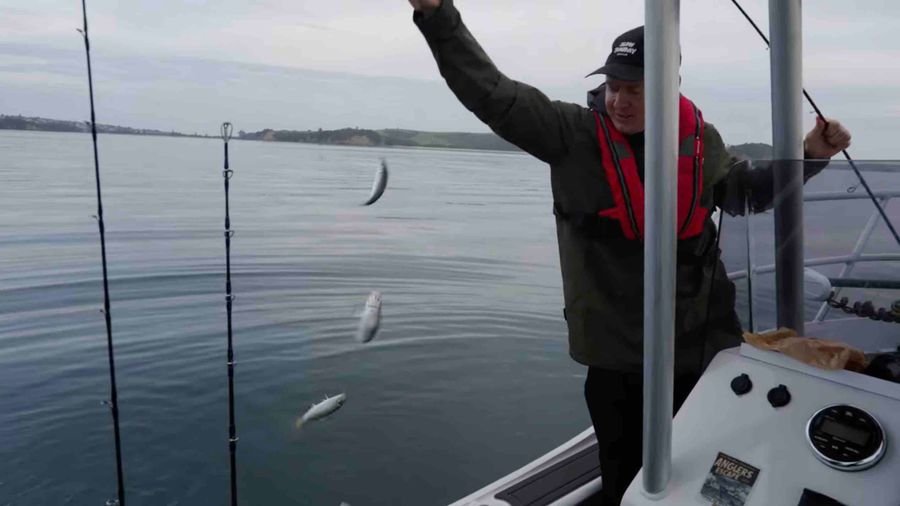
The baits were rigged cleanly and sent back into the strike zone. From there, the approach became a matter of discipline and patience.
Things shifted when one of those small live baits was taken by a kahawai. Rather than writing it off as lost, the team made a decision that lifted the whole session. The kahawai was kept alive and re-rigged as the new offering. Bigger kingfish tend to overlook small prey when a more substantial meal is available, so by stepping up to a kahawai, the crew effectively filtered out the smaller fish in the pack and presented something that would appeal to exactly the size of kingfish they were after.
The kahawai went back in the water and the wait continued.
As activity built around the structure, the signs were encouraging. Kingfish were moving through in numbers, and there were strikes and missed hookups as fish hit around the bait. Some connections did not hold. Others ended abruptly as fish found the bottom and used it. The crew kept their composure and held the live bait in the zone.
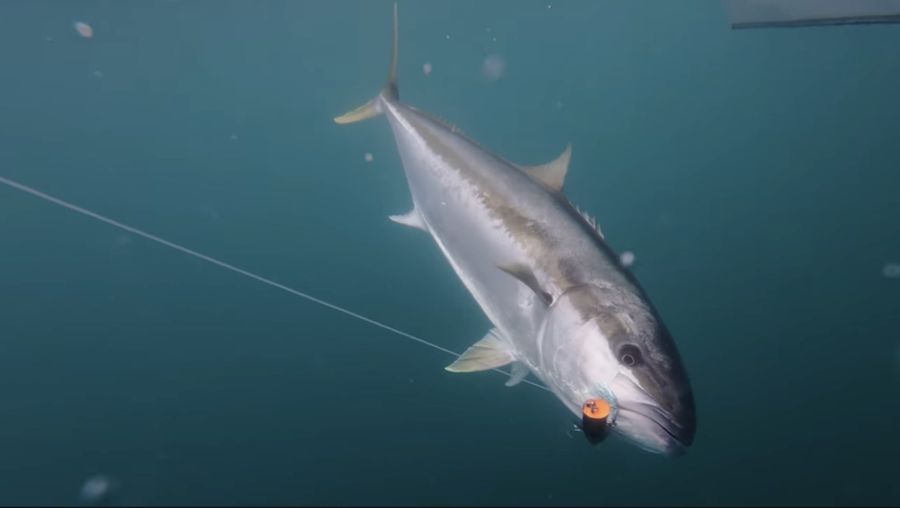
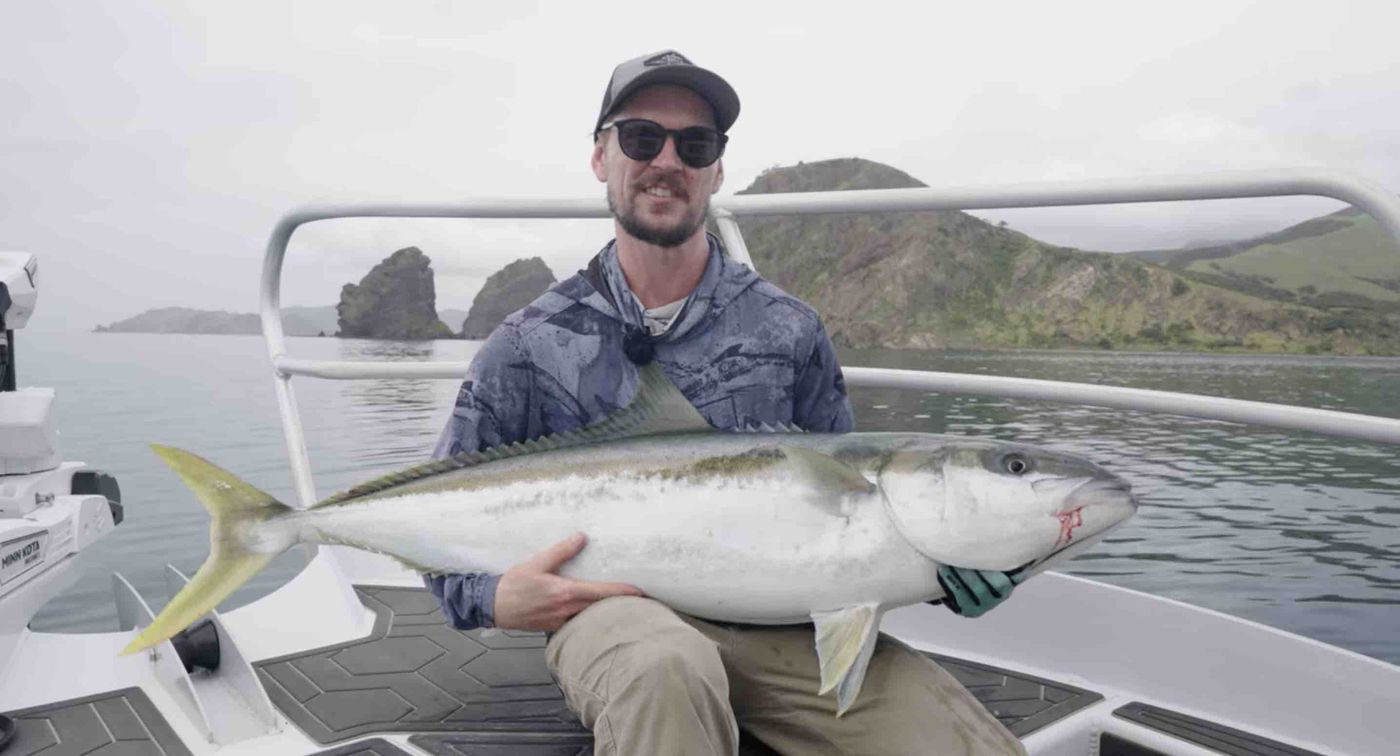
When the solid hookup finally came, Sam took the rod. The fight was a steady, grinding affair against both the fish and the ground beneath it, the kind of battle Cape Colville kingfish are known for. Eventually the fish came to the boat. It was exactly what they had made the run for, a heavy, healthy yellowtail kingfish in prime condition. It was kept, with enough meat to feed more than one household.
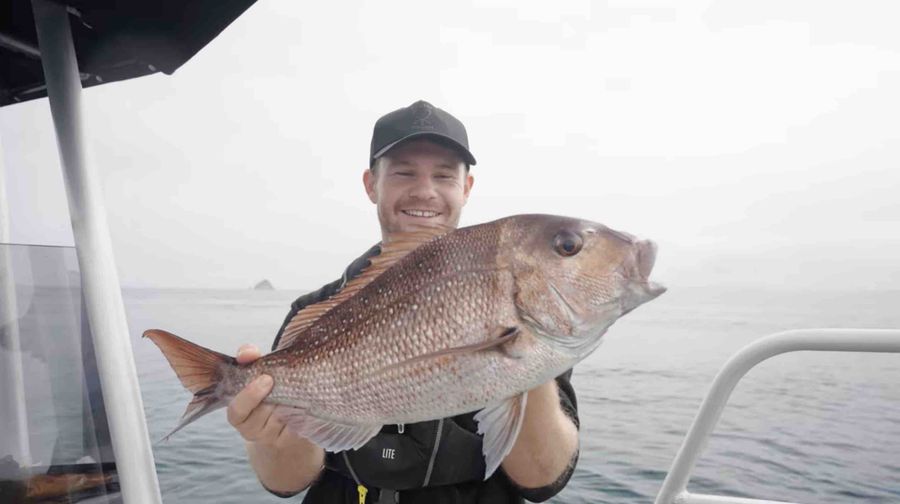
Late in the session, Braden added a quality snapper to the catch. The motivation was refreshingly straightforward. Sam's wife had asked for snapper for dinner. Request noted, request fulfilled.
What this trip demonstrates is the value of fishing with a clear plan and sticking to it. The ground was selected because of the current and the structure it creates. The bait choice matched the conditions. The move from small baitfish up to a kahawai was a deliberate escalation, not a lucky accident. Cape Colville tends to reward that kind of thinking. Live bait consistently outperforms other methods there, and the bigger fish often require a willingness to wait and adapt.
On this occasion, the plan came together precisely as the team had hoped, with Sam, Brock, and Braden heading home aboard the Kingfisher 510 Powercat with a heavy kingfish and a snapper to go with it.