
Five Australians and one New Zealander are set to be transported to Western Australia on a government aircraft within days, with the group moving directly into a quarantine facility upon arrival.
Federal Health Minister Mark Butler announced that "national quarantine arrangements" would be activated, giving the federal government authority over the states in managing both the quarantine process and the repatriation of those involved.
"This is a complex operation that often involves a couple of different countries and we'll be in a position to provide further updates once those flights are finalised," Butler said.
"An order will then be made for those passengers to be subject to quarantine arrangements at the Bullsbrook Centre for National Resilience, which is just north east of Perth, next door to RAAF Base Pearce."
Because hantavirus can carry a potentially lengthy incubation period, Butler indicated the quarantine could stretch beyond the initial three weeks.
"Obviously we will be monitoring advice about what should happen beyond those three weeks.
"There is an incubation period of 42 days potentially for this virus, but that incubation or the risk of transmission obviously drops off after the first few weeks. So we'll be seeking further advice from our chief health officers."
Butler made "no apology" for the decision, describing it as "one of the stronger responses you'll see around the world."
On landing at RAAF Base Pearce, passengers will be transferred immediately to the adjacent Bullsbrook Centre for National Resilience. Butler outlined the dual responsibilities that shaped the government's thinking.
"I want to stress that our primary responsibility as a government, obviously, is to keep our community safe and healthy," he said.
"We also have a responsibility to those passengers to bring them home and to protect them from any risk, no matter how small, of potentially transmitting the virus without knowing it."
Testing will be conducted at the facility throughout the quarantine period, with samples forwarded to the Doherty Institute in Melbourne for analysis.
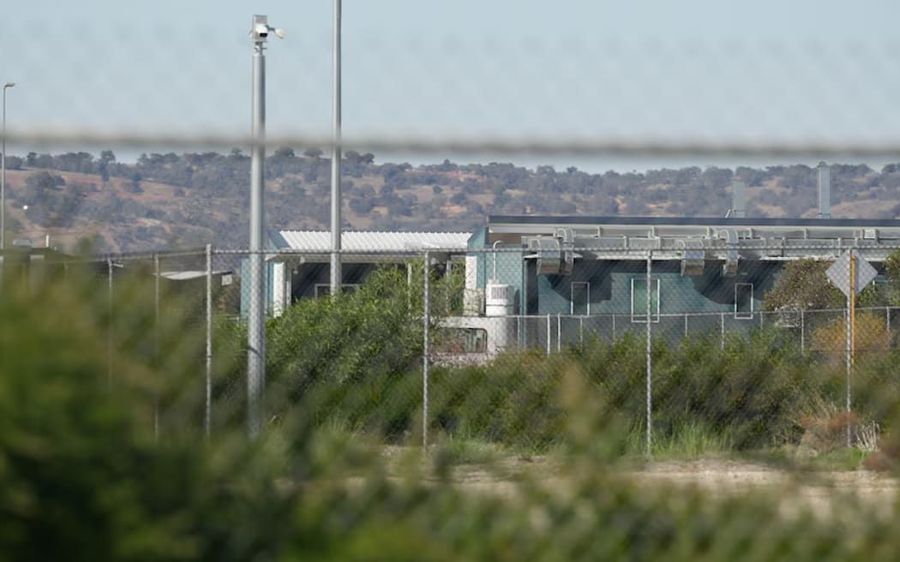
The Bullsbrook Centre for National Resilience was established toward the end of the Covid-19 pandemic and will operate under a joint arrangement between the federal government and the WA health department. Butler described the decision as a "precautionary approach" and noted the centre was "set up precisely for this purpose, to keep our community safe."
None of the passengers are currently displaying hantavirus symptoms, and Butler acknowledged the situation would be deeply difficult for those involved.
"This is obviously being a really terrible situation for all of them and my sympathy goes to them, there's no question of that.
"We want to do everything possible to make sure this is as comfortable a trip and quarantine period as is possible."
Butler declined to discuss the costs associated with the quarantine operation.
The World Health Organisation notes that human-to-human transmission of hantaviruses is rare, and experts have moved to calm concern about the possibility of a wider outbreak. Glenn Marsh, an infectious diseases expert from the CSIRO's Australian Centre for Disease Preparedness, was direct in his assessment.
"Don't freak out at all, it's not the next pandemic," he said.
"This isn't a virus we really need to worry about at this point. It's something we need to keep our eye on… but this virus doesn't transmit easily between people."
Butler acknowledged that while the virus does not carry "pandemic potential", the situation remains serious.
"Transmission is very difficult human-to-human, but that does not mean that there is not a risk of transmission," he said.
"Transmission of this virus can have very, very serious, including deadly, consequences."
Hantavirus is typically contracted through contact with infected rodents or their urine, droppings or saliva. Professor Marsh noted that unlike Covid-19, it is not highly infectious and does not spread readily between people.
"People are more aware of the potential of the next pandemic [and] having lived through a pandemic, people don't want to do it again.
"We've seen outbreaks before of this virus and many similar viruses… that have not made the media at all.
"We have never had a human case for hantavirus in Australia… this isn't the start of the next pandemic."
According to the World Health Organisation, symptoms typically emerge anywhere from one to eight weeks after exposure. The specific symptoms depend on the strain involved, but can include fever, headache, muscle aches and gastrointestinal complaints. Fatality rates vary considerably by strain: some forms kill up to half of those infected, while others carry mortality rates of between one and 15 percent. No specific antiviral treatment or vaccine currently exists, and the particular strain of hantavirus contracted by the passengers aboard the ship has not yet been determined.
Those held at the facility will have no contact with the wider population during their stay. Professor Marsh also pointed to the potentially extended window before symptoms appear.
"The time it takes for people to show symptoms can be quite long, up to eight weeks even," he said.
"We also know that people aren't really infectious to other people unless they're showing symptoms."
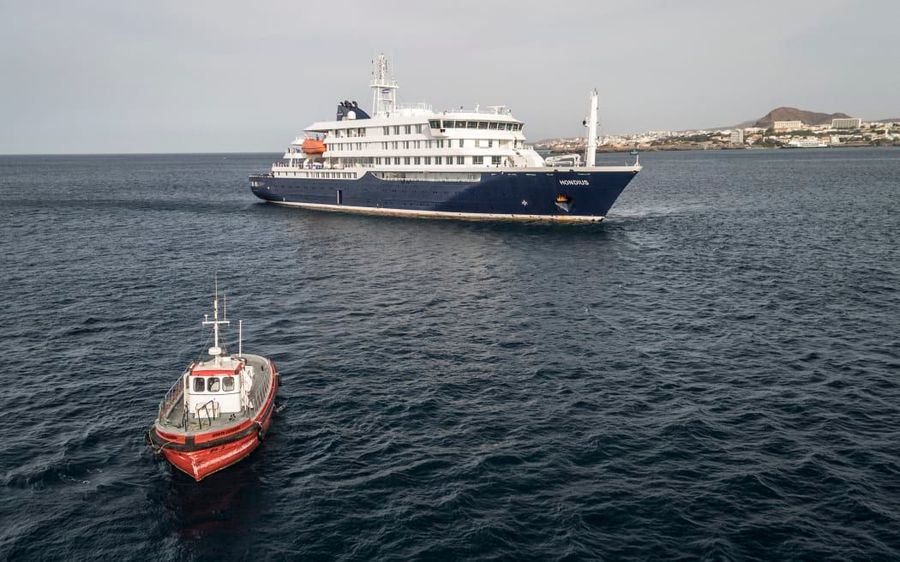
The outbreak is suspected of causing the deaths of three people aboard the cruise ship MV Hondius. The vessel was carrying 88 passengers and 61 crew, according to the Oceanwide Expeditions website.
A passenger died on board on 11 April. His body and his wife were disembarked at St Helena, an island in the South Atlantic, on 24 April. On 27 April, Oceanwide Expeditions was notified that the man's wife had also died. Both passengers were Dutch, according to the Oceanwide Expeditions website.
On that same day, 27 April, another passenger required medical evacuation to South Africa and remains in an intensive care unit in a critical but stable condition. A further death followed on 2 May, when a German passenger died on board the ship.