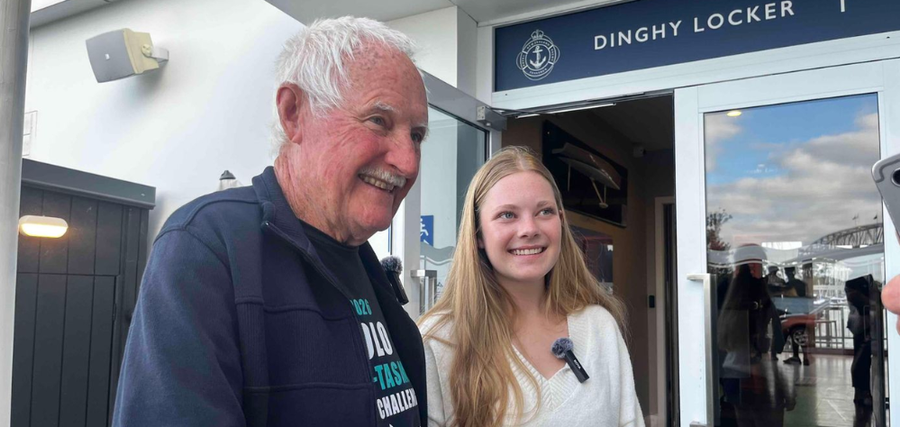
Tom Whidden has spent most of his working life making boats go faster. He sailed eight America's Cup campaigns with Dennis Conner, raced in five Cup matches and won three. He also rose to the top of North Sails.
And he keeps buying Grand Banks.
His latest is NorthLight, a Grand Banks 85 delivered in 2025. It is his fifth boat from Grand Banks Marine, after two Eastbays and two Grand Banks 60s.
Whidden and Grand Banks CEO and chief designer Mark Richards have something important in common. Both learnt their trade in top level yacht racing. Whidden spent decades in the America's Cup. Richards raced in the Cup too, before going on to skipper Wild Oats XI to nine Sydney Hobart line honours victories.
Whidden told BOAT International that Richards' sailing background was part of the appeal. “I like Mark Richards' boats because he approaches powerboat design very much with a sailor's mentality.” You don't have to look far into a modern Grand Banks to find it.
The company calls the result V WARP®.
Long range cruising traditionally involved a fairly obvious compromise. If you wanted range, you slowed down. Seven or eight knots could take you a very long way. Start pushing into double figures and fuel consumption usually began making the decisions for you.
Richards wanted a Grand Banks to do both. His answer wasn't simply more horsepower. He went after resistance and weight instead, drawing on his background as an ocean racer, shipwright and boatbuilder.
The Grand Banks 60, launched in 2017, brought that thinking together. V WARP now runs through the Grand Banks range and the Eastbay 60.
Start with what is in the water
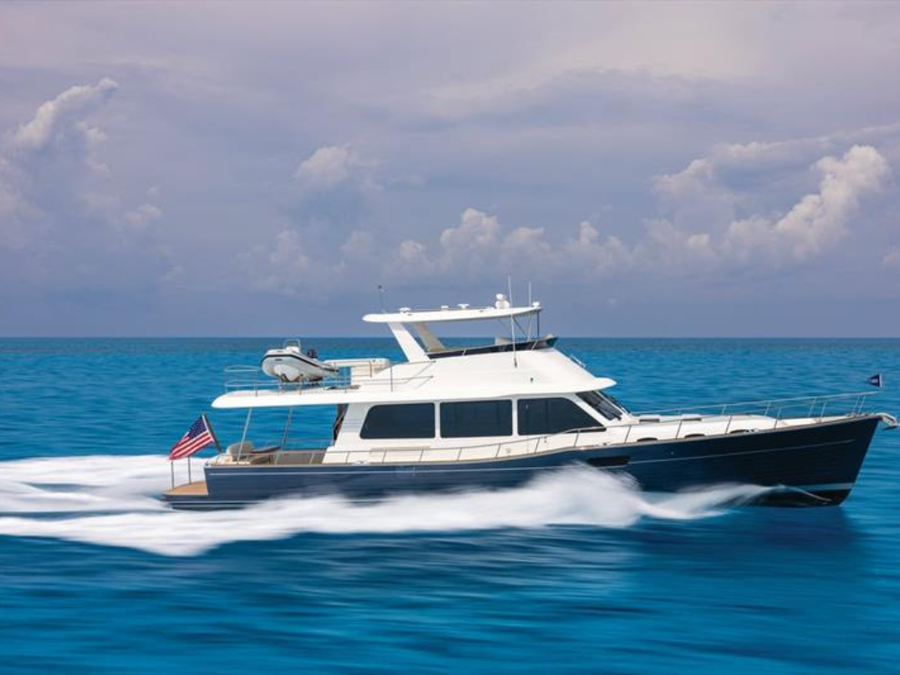
The hull is noticeably fine forward. This provides a differentiator, with many modern cruisers having become progressively fuller in the bow. Carrying beam forward creates interior volume, which is valuable when buyers expect large cabins and more living space.
There is a price for that volume. The hull still has to get through the water.
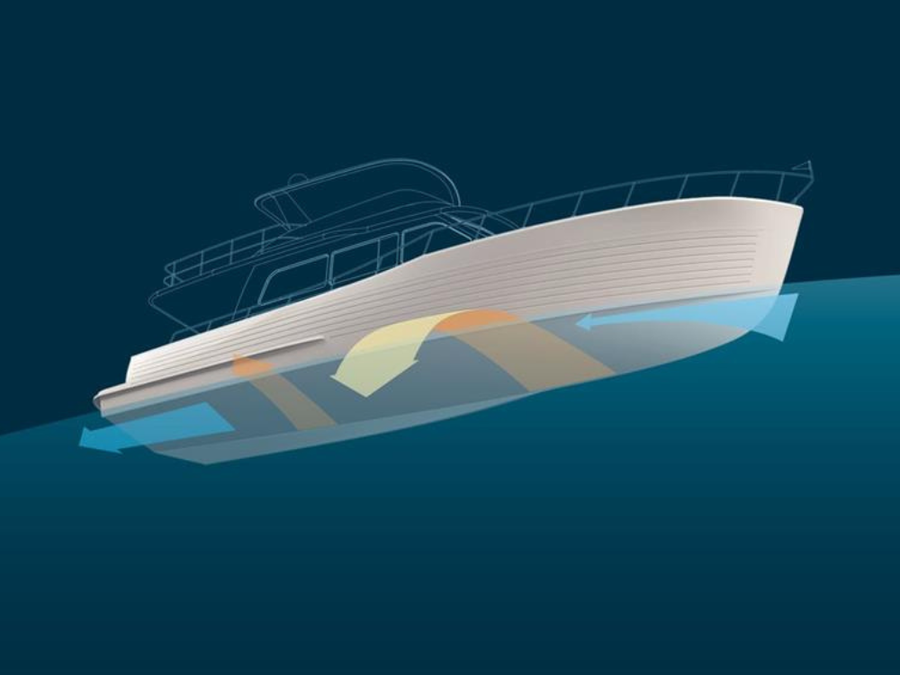
Richards took a different approach. The V WARP hull has a fine entry, curvature through its midsection and little deadrise by the time it reaches the transom. Grand Banks describes it as a warped semi displacement hull. The shape is intended to reduce drag while still developing the lift and stability needed as speed builds.
Weight distribution is part of the same job. Instead of relying on horsepower to push a heavy hull onto the plane, the boat is designed to make the transition without a dramatic change in attitude. Grand Banks says its running angle stays at around five degrees across a broad speed range.
The payoff is fuel burn. Less resistance means less power is required for a given speed. On a boat intended to cover serious distances, the skipper can then make a useful choice between stretching the range or getting somewhere sooner.
That combination caught Whidden's attention.
Taking weight out of the right places
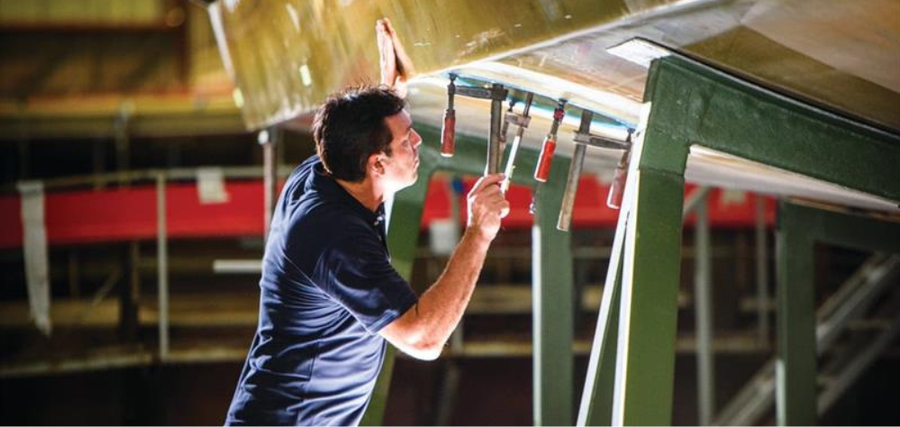
Grand Banks uses carbon fibre extensively in the deck, bulkheads and superstructure. Taking weight out high in the boat lowers the centre of gravity. Less overall weight also gives the engines less boat to move.
Grand Banks uses pre cut, unidirectional carbon fibre, orientating the fibres around the loads they need to carry. The company has also worked with composite specialist Gurit on its engineering. It's familiar territory in yacht racing, where designers have spent decades removing weight without giving away stiffness or strength. Richards brought the same thinking with him.
The bulkheads tell part of the story
Grand Banks also builds its bulkheads differently. Rather than using conventional plywood bulkheads, the yard infuses composite bulkheads and laminates them directly into the hull. The deck and superstructure then become part of the same stiff structure.
It takes longer to build this way. Yet, Richards considers it time well spent: “The advantage that V WARP Technology gives us is unlike anyone else's in the history of powerboating.”
Five boats later
Whidden was talking publicly about Grand Banks well before the 85 arrived. While he owned a Grand Banks 60, he described it in a company testimonial as his fourth Grand Banks. He and his wife would spend 30 to 40 days aboard each August. He talked about the boat being sea kindly and fuel efficient. Just as importantly, he said his wife felt safe aboard. Richards received some of the credit.
“But the stuff Mark Richards has done has made them even better,” Whidden said. “He's raised the game.”
Whidden has since put his money behind those words. Two Eastbays. Two Grand Banks 60s. Now an 85.
For someone who has spent a career around high performance sailing boats, the progression is interesting.
V WARP doesn't depend on one extraordinary piece of technology. Look at the boat as a whole and the thinking is fairly easy to follow. Give the hull less work to do. Keep unnecessary weight out. Put strength where it is needed. Then make the whole structure work together.
Those principles aren't new. A racing sailor would recognise every one of them. Richards just used them to build a better Grand Banks.