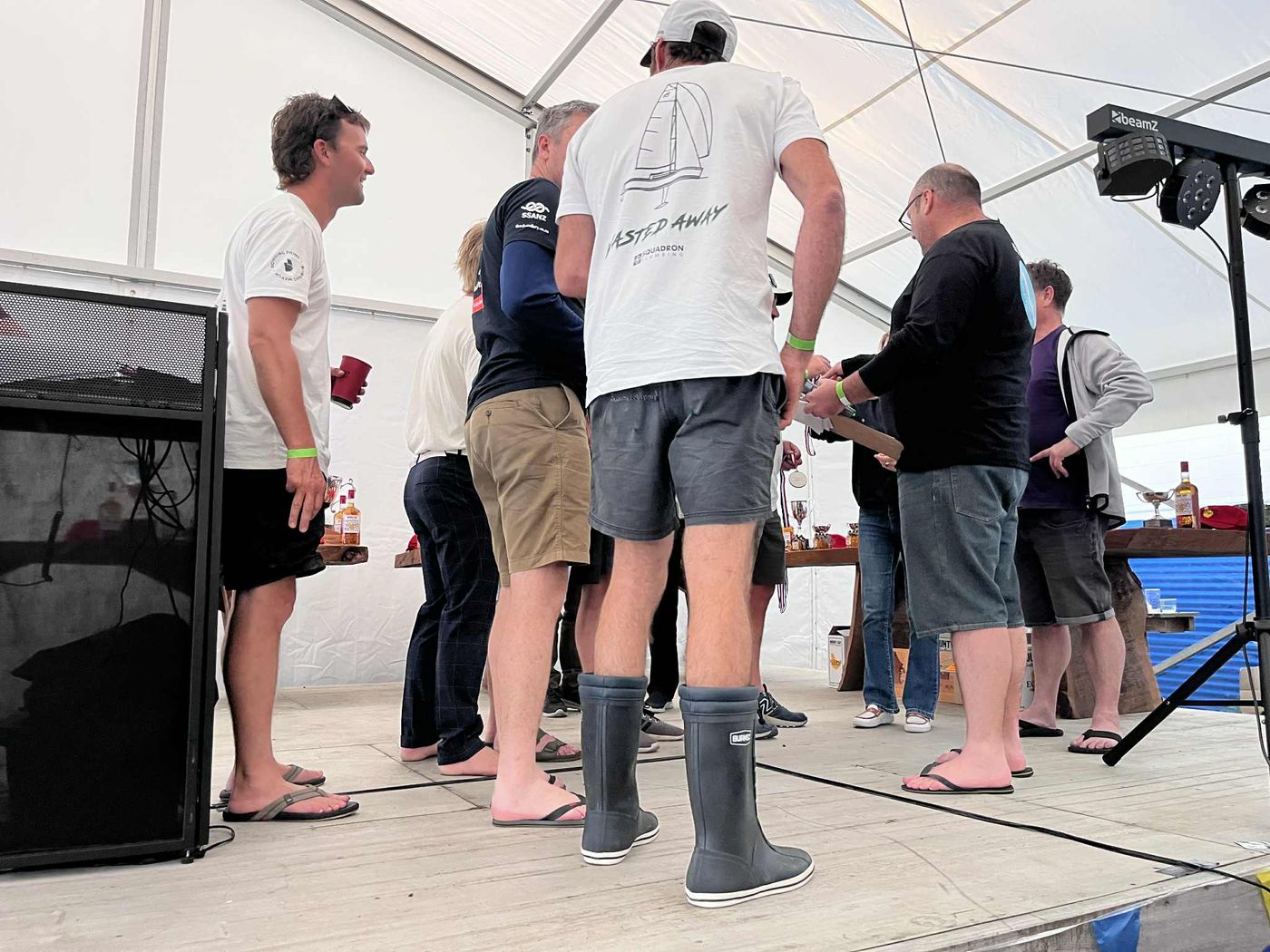
At the 2025 PIC Coastal Classic prize-giving in Russell, more than a few skippers were still wearing their sea boots as they collected their awards. After a demanding passage and a big night ashore, that detail said something quietly true about Kiwi boating culture: practical, unfussy, and built for the job.
Burnsco are loyal event partners of the 2026 PIC Coastal Classic, and those boots would have been a satisfying sight for them. The connection between good footwear and good seamanship is one the boating community has been working out for decades, often the hard way.
For a long time, the humble gumboot was the footwear of choice at boat ramps across the country. Fred Dagg's Gumboot Song came close to a national anthem, and the farmer's staple somehow found its way onto almost every wharf and slipway in New Zealand. It made a kind of sense. Gumboots were cheap, waterproof, and already in the shed. But their shortcomings on the water are serious. Fall overboard wearing a pair and they fill within seconds, becoming dead weight around your legs. They are almost impossible to kick off, especially when you are tangled in wet-weather gear. The gumboot had its era, and the sea boot has taken its place.
The lesson can arrive suddenly. Our boat was once berthed at Catalina Bay, the former RNZAF seaplane base on Auckland's upper Waitematā. In the 1940s, flying boats would land there and taxi up concrete ramps into the hangars. Those same ramps survive today, coated in decades of accumulated slime and barnacles that turn them into something resembling green ice at low tide.
It took a single launch to understand the problem. Nearly everyone in our crew came close to going flat on their backs before we had even reached the water. While we were scrambling and grabbing for handholds, a couple of regulars strolled past in sea boots, crossing the same ramp as though it were dry pavement on a warm afternoon.
We had come from a marina berth and had never given footwear a second thought. That morning changed things. Sea boots grip in conditions where almost nothing else will, and they keep you upright when the margin between steady and sliding is measured in millimetres. The fact that crews from the PIC Coastal Classic were still wearing theirs hours after finishing the race points to something worth noting: they are not just safe, they are genuinely comfortable. Soft inside, firm underfoot, and at ease across long hours on and off the water. The same thinking carries through to options designed to drain quickly if you end up in the water, a practical step up from the gumboots drying by the back door.
For those who prefer something lighter, white-soled, waterproof deck shoes offer confident footing without holding water. The principle connecting all of it is the same. The right footwear keeps you upright, dry, and out of trouble before anything more serious has the chance to develop.
The 2025 PIC Coastal Classic was a reminder that safety does not only live in the big, visible gear. It lives just as much in the smaller decisions: the right boots for the ramp, a working lifejacket clipped on without thinking, and the quiet habit of common sense. Launching from somewhere like Catalina Bay, sea boots are not optional. Crossing the Hauraki Gulf, a good deck shoe or sea shoe earns its place. Either way, you will be better equipped than Fred Dagg's flu-ridden farmer ever was.
Gumboots will always carry a place in the New Zealand boating story. They are rugged, unpretentious, and unmistakably part of who we are. But they belong on land now. Sea boots carry the same spirit forward, just with rather more grip.
So the next time you are eyeing a slippery ramp and feeling the urge to hum a verse of Fred Dagg, remember:
“If it weren’t for your gumboots, where would ya be?”
Just make sure yours say Sea Boots on the side.