Few things in boating generate as much genuine interest as a well-regarded name being revived with serious intent. The return of the Caribbean 40, developed under Bill Barry-Cotter's guidance and produced within Maritimo's manufacturing infrastructure, is precisely that kind of revival. Not a nostalgia project dressed up as something new, the boat has been reconceived from the ground up, with the original's reputation serving as a starting point rather than a blueprint.
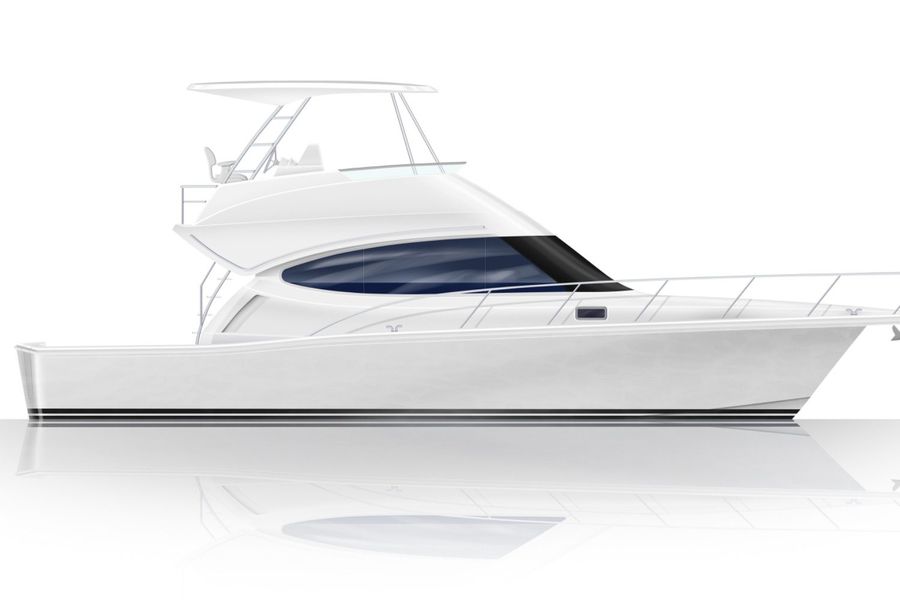
The first Caribbean 40 built a solid reputation as a genuinely versatile offshore platform, one that worked equally well for family cruising and serious sportfishing. That dual identity has been carried forward into the new generation, but it arrives with a level of sophistication the earlier hull was never capable of delivering. The result sits at a compelling point between considered evolution and thorough redevelopment, drawing on a proven heritage without being bound by it.
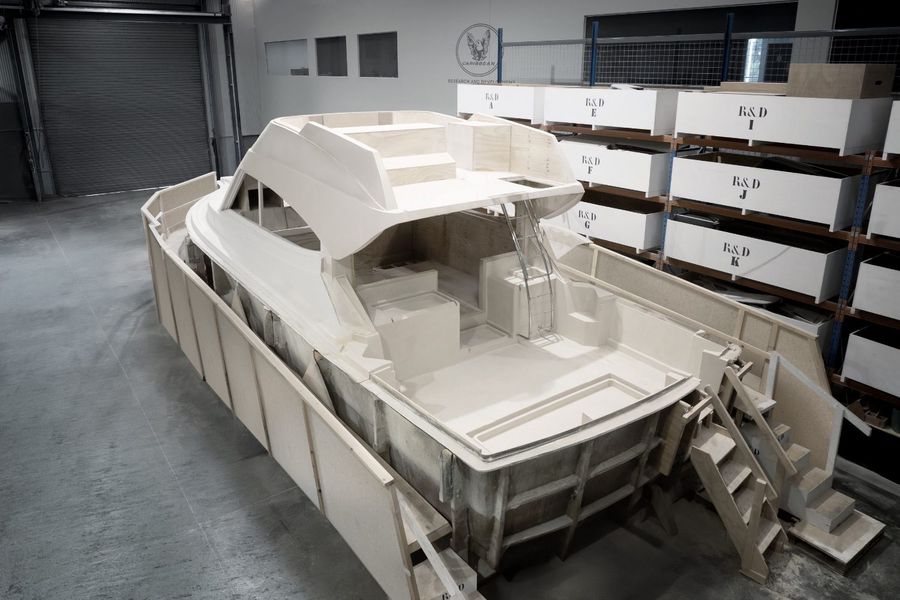
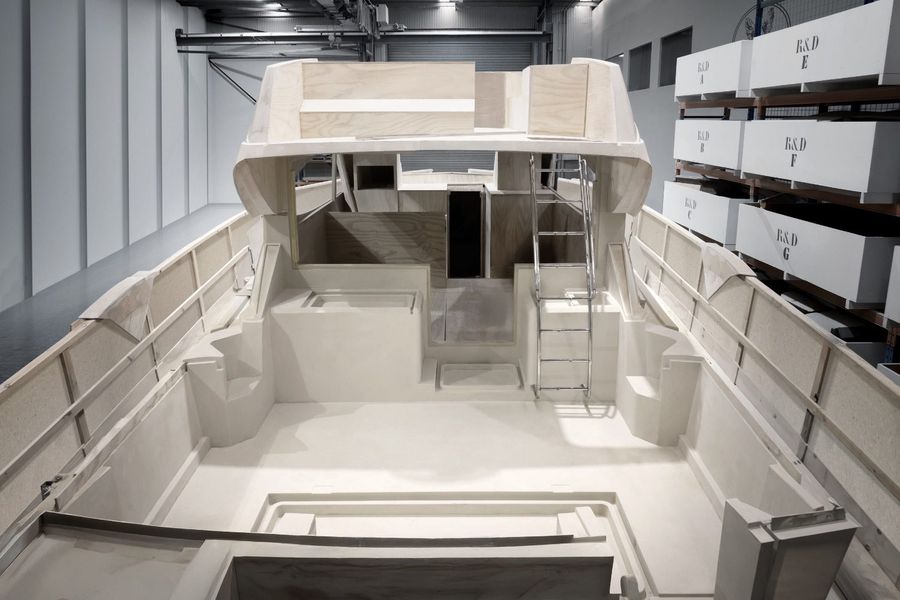
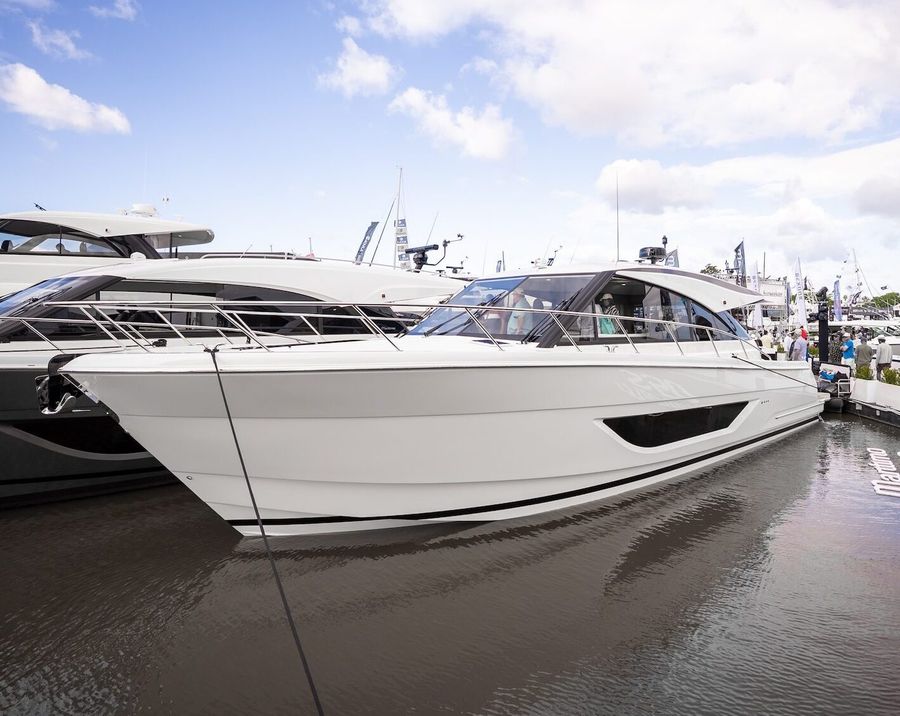
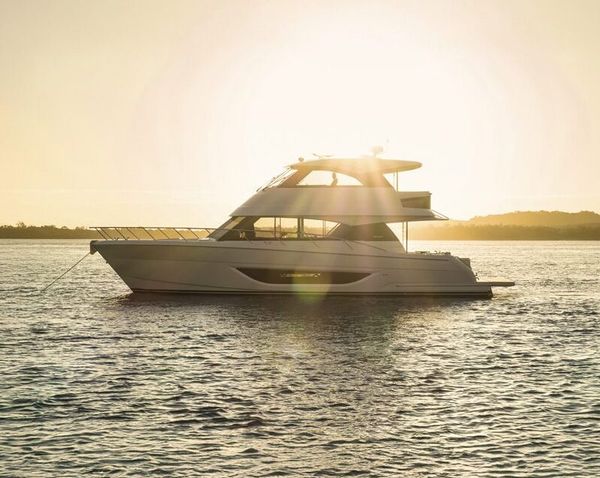
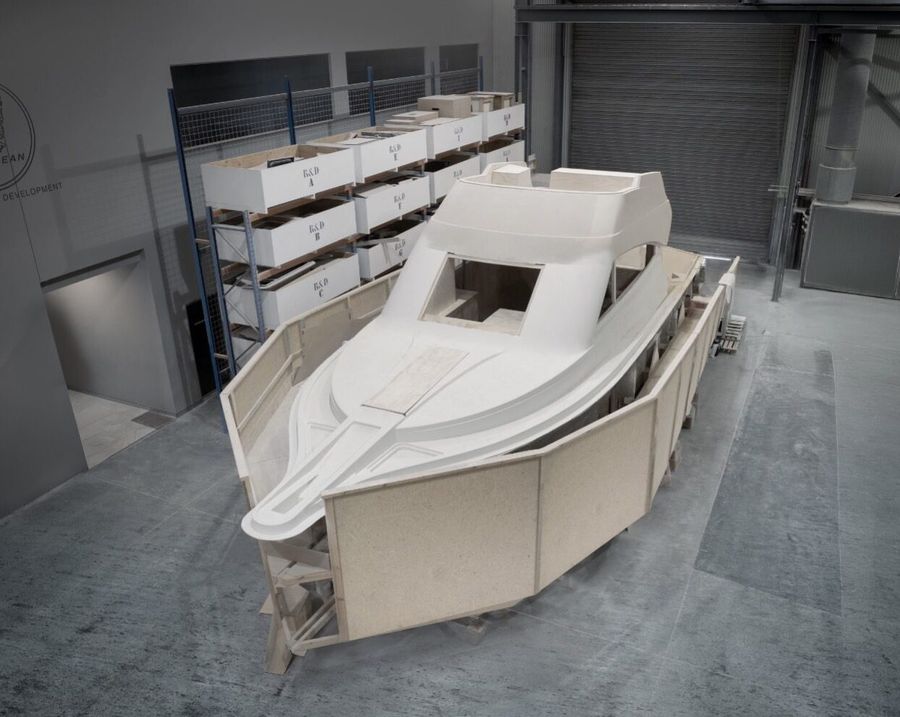
From the outside, the changes are immediately apparent. The purposeful offshore stance that made the original recognisable is still there, but the lines are sharper and more resolved. Most noticeably, the flybridge no longer reads as a separate element sitting atop the deckhouse. It integrates with it, producing a profile that feels coherent from stem to stern. Beneath the topsides, the more consequential changes are structural. Advanced internal liners have been introduced throughout the accommodation and engine spaces, delivering improved rigidity, better alignment, reduced transmission of engine noise into the cabin, and meaningfully stronger safety margins. Long-term durability is expected to benefit from this construction approach as well.
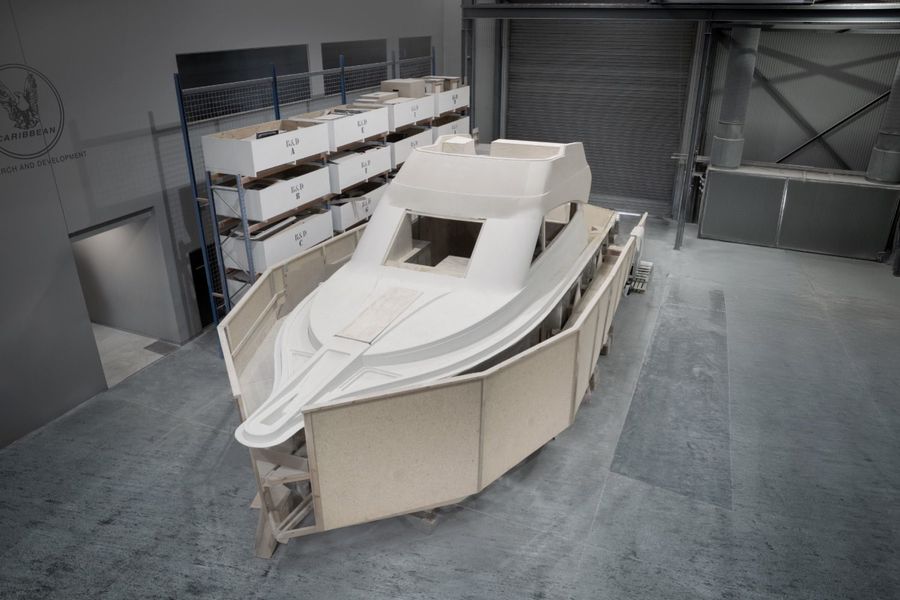
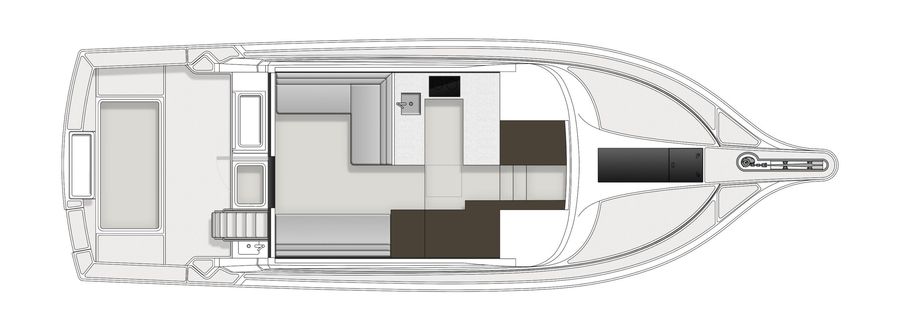
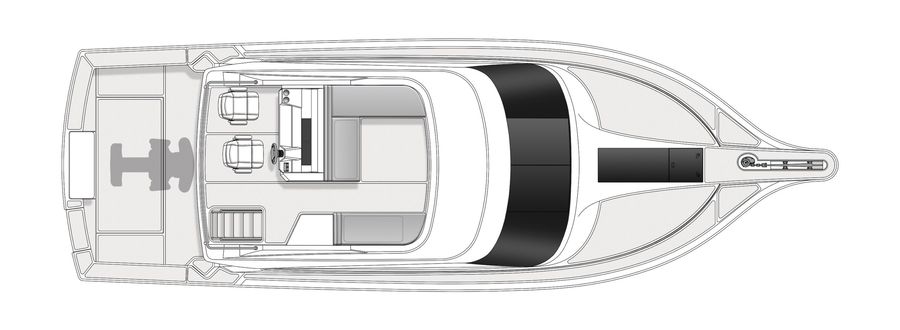
The interior layout reflects careful thinking about how people actually live on a boat during a passage or an extended stay at anchor. The galley has been moved forward to the main saloon bulkhead, where it gains a proper standing fridge, a generous food preparation surface, and storage that makes intelligent use of vertical space rather than squandering it. A U-shaped banquette to port converts into sleeping accommodation for four, bringing the total berth count to six. On the foredeck, owners can choose between setting the space up as a relaxation area or configuring it to carry a tender via the integrated davit system.
The cockpit has been thought through as a space that can transition between entertaining and fishing without asking owners to choose one function over the other. A large lazarette, a dedicated freezer, and modular storage that can accommodate bait wells, a barbecue, or tackle storage give the cockpit real flexibility depending on what the day demands. Bridge access has also been redesigned, moving away from external ladders in favour of a hatch arrangement that improves both safety and weather protection. The helm station is entirely new in its layout, featuring twin chairs and a demountable hardtop engineered with road transport in mind from the outset.
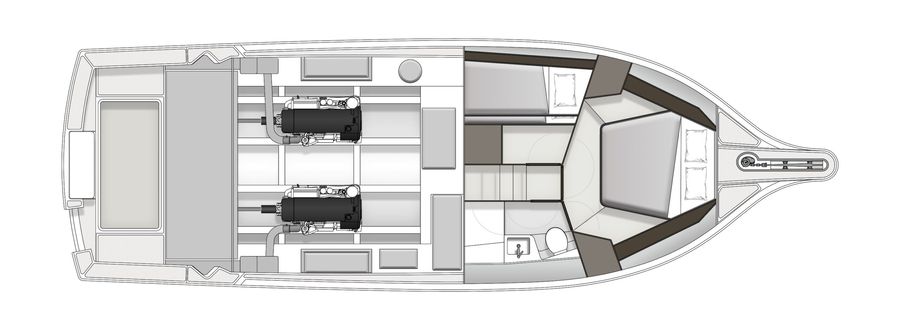
The Caribbean 40 displaces 14 tonnes and carries 2,300 litres of fuel. Standard power comes from twin Volvo-Penta D6 engines producing 440 horsepower, paired with ZF 85A gearboxes. Owners with extended coastal passages or a tournament fishing programme in mind can specify higher-output engine configurations.
For New Zealand buyers, Maritimo's involvement in production carries practical advantages that go beyond the build itself. The manufacturer's established quality control systems and manufacturing processes bring a consistency of finish that strengthens the case for long-term reliability, and regional service support becomes a considerably more straightforward proposition as a result.