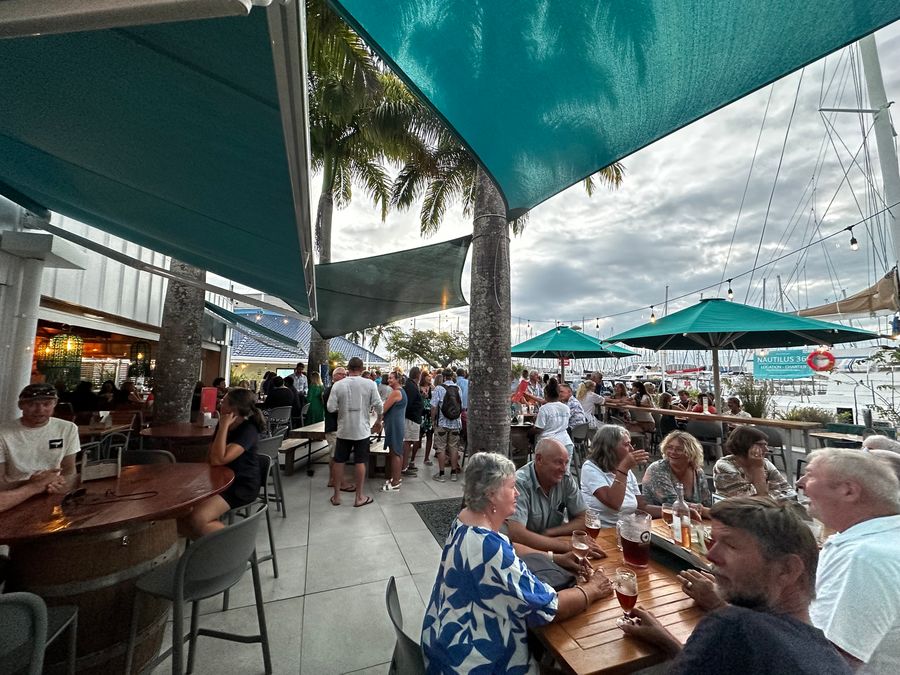
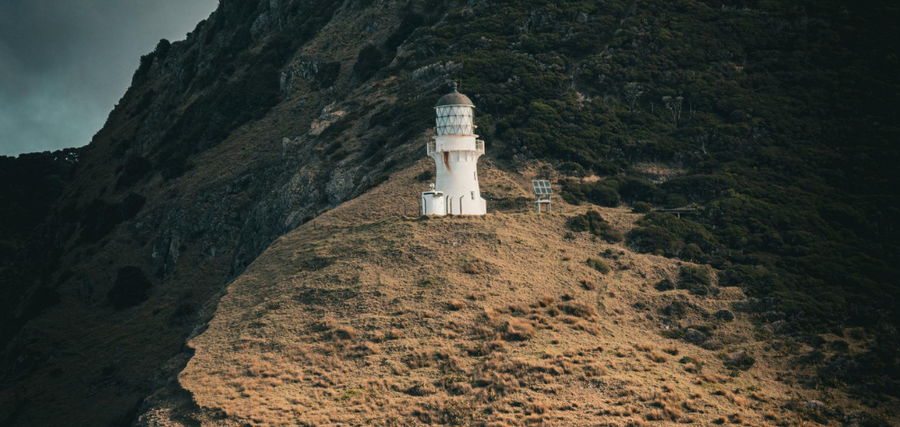
Anyone who has anchored in Deep Water Cove for a dive on the Canterbury wreck has had the Cape Brett Lighthouse sitting on the skyline above them. Few realise the tower still holds its original lens, clockwork and the only intact mercury bearing left in the country.
Deep Water Cove (aptly named for its deep water) lies inside Maunganui Bay, just west of Cape Brett, and offers useful shelter for boats entering the Bay of Islands from the south. Local hapū Ngāti Kuta and Patukeha sank the former navy frigate HMNZS Canterbury there in 2007 to create an artificial reef, part of a wider effort to restore the fishery.*
From the anchorage, the 4.4km walk to Cape Brett Hut takes about two and a half hours. The lighthouse is another 15 minutes along the track.
By the early 1900s, the waters off Cape Brett formed the most dangerous unlit section of New Zealand's northeast coast. Ships had been coming to grief there since 1808, when the schooner Parramatta was driven ashore in a gale. The shipping industry had pressed for a lighthouse at Cape Brett for decades before the Marine Department acted.
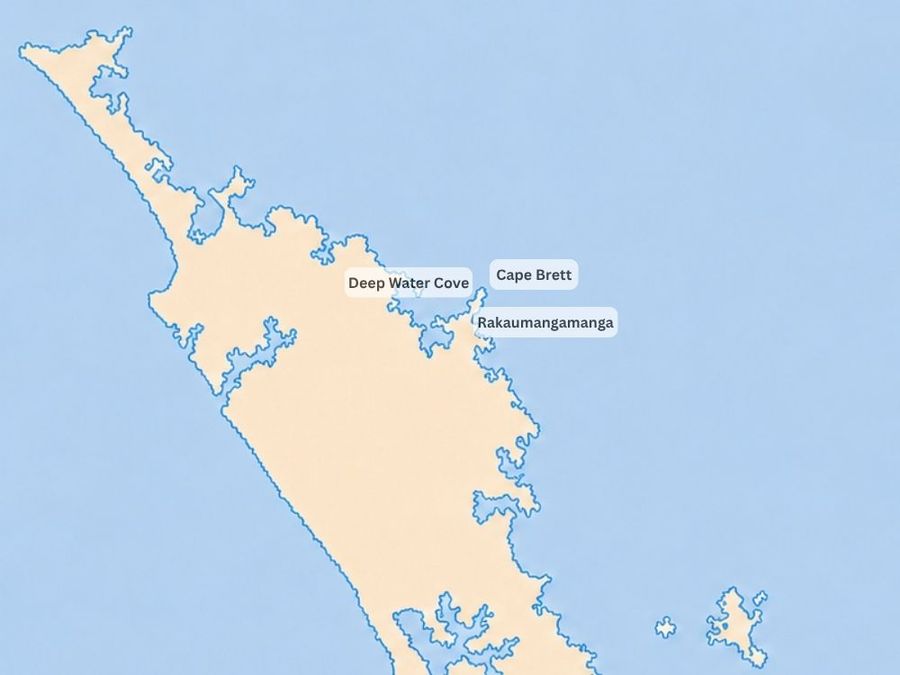
Māori voyagers used the slightly more inland Rakaumangamanga as a navigational landmark long before the lighthouse was built. Its name means "the many branched tree", while local tradition associates its seven peaks with seven waka from Hawaiki. Accounts of those voyages describe light reflecting from the cliffs and helping guide crews towards land.
The Cape Brett Lighthouse was first lit in February 1910. Robert McIver was its principal keeper, assisted by Frances Earnest Lee.
Cape Brett's four tonne lens rotated on a mercury bearing rather than conventional rollers. As mercury is more than 13 times denser than water, a trough only 25cm deep could support the assembly. A keeper could start it turning with a light push. Cape Brett was the first New Zealand lighthouse to use a mercury bearing, and it remains the only one where the clockwork, weights and mercury float have all survived in place.
For almost seven decades, three keeper families lived on the headland. They operated the light each night, grew food, fished and taught their children at home in a small schoolhouse built in 1909.
Among them was the Jamieson family, who arrived in 1937 for a three year posting. The war kept them at Cape Brett for almost a decade, and their years there are the subject of a feature in this month's Wilderness Magazine, which recounts the children's swims to Piercy Island and their lessons at the settlement's small school.
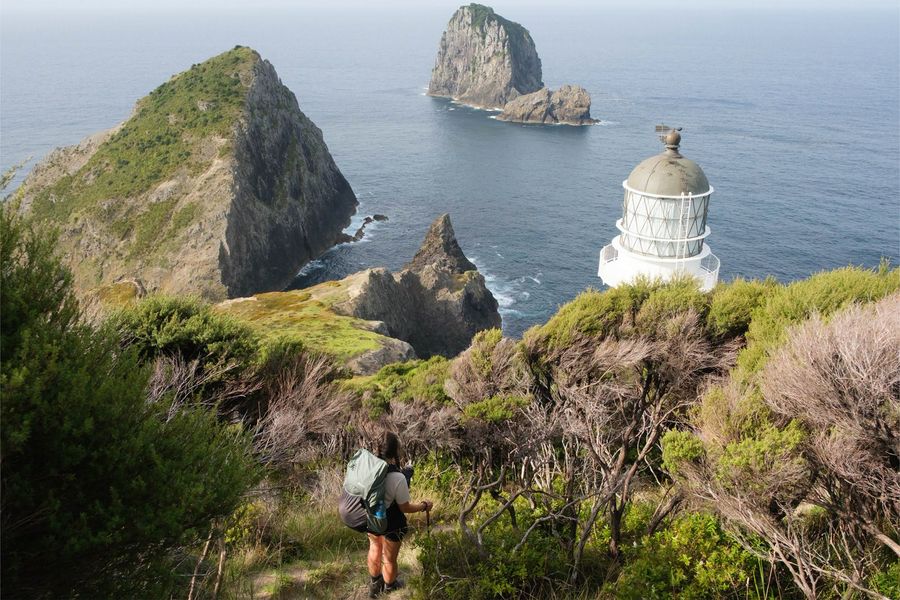
The original light was retired on 5 October 1978 and replaced by an automated beacon. The former assistant keeper's cottage became a DOC hut in 1995. Five years later, the New Zealand Historic Places Trust stopped plans to demolish the tower. The Cape Brett Lighthouse is now listed as a Category 1 historic place by Heritage New Zealand.
* A rāhui prohibiting the taking of fish or shellfish except kinawas was placed over Maunganui Bay the following year after.