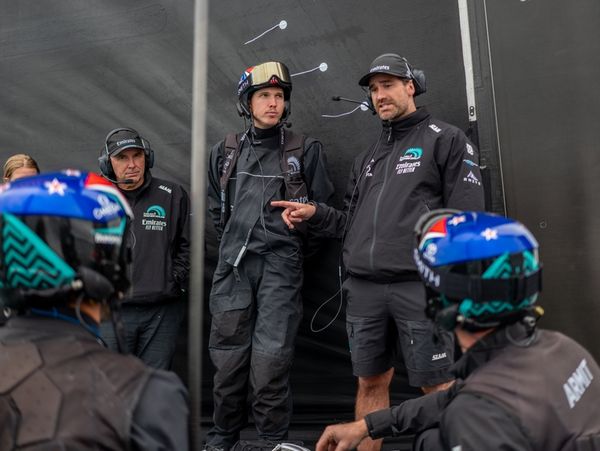
Emirates Team New Zealand's sailors are putting in long hours aboard Taihoro on the Waitematā, training, testing and refining performance ahead of the Louis Vuitton 38th America's Cup in Naples in 2027. But the sailors are only half the story. Behind them sits a coaching and performance team analysing every session, turning observations, data and experience into something the sailors can actually use on the water.
Coaching at this level comes with an odd problem. The athletes themselves usually know more about how the boat behaves than anyone watching from shore.
The AC75s now reach speeds of up to 55 knots, and the technology behind them has moved on considerably. But the basics of yacht racing haven't changed: read the wind, find the shifts, make the right call, get the boat around the track as cleanly and quickly as possible.
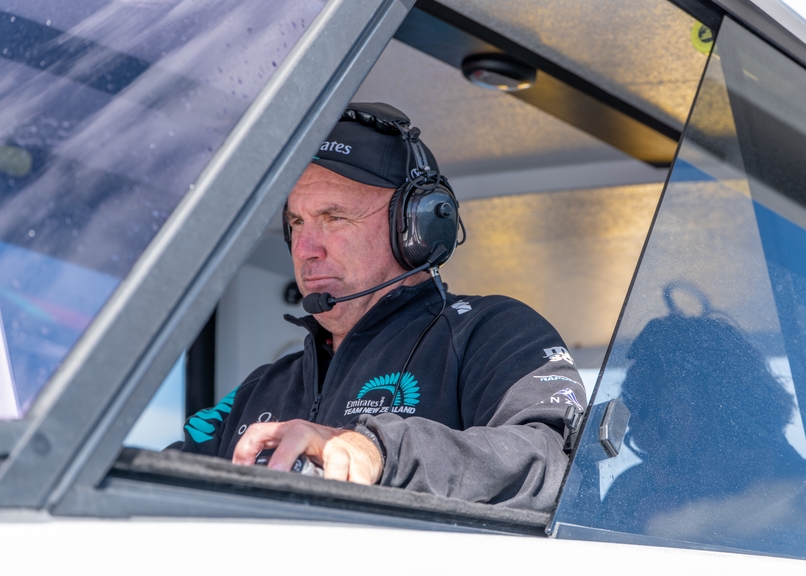
Sam Meech knows that balance well. He joined Emirates Team New Zealand after an Olympic sailing career that included a bronze medal for New Zealand in the Laser at the Rio Olympics in 2016, and he was part of the sailing team through the Louis Vuitton 37th America's Cup. For him, moving from athlete to coach has felt like a natural step. "The sailors are generally the ones with the most experience," he explains. "So really as the coach, you're just trying to facilitate the sessions and get the best out of the sailors."
Ray Davies offers a different kind of depth. This is his eighth America's Cup campaign, and his sailing résumé stretches across numerous classes of boats, including winning the Volvo Ocean Race in 2001/02. He's best known as a tactician and strategist, on the water and off it, which gives him a useful vantage point as a coach, able to see the picture from every angle.
"My philosophy behind the coaching is to simply present the facts," he says. "The sailors know when they can do things better or when they've made a mistake. They don't really need to be told." The real job, he says, is making sure the team has quality video, data and analysis on hand, so sailors can quickly work out what happened and what to change.
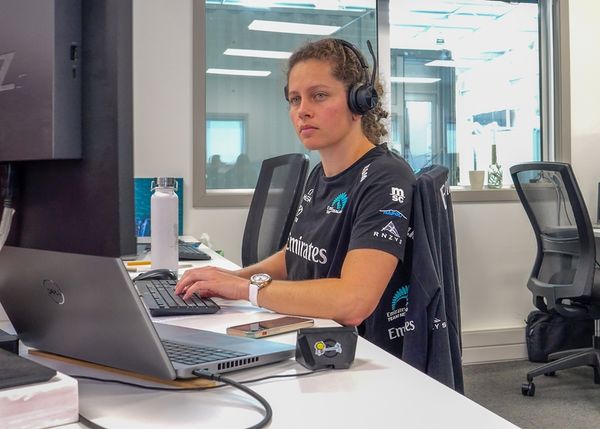
Collecting data is the easy part. Working out what it actually means, and saying it in a way sailors can use mid-session, is harder.
That's where Elise Beavis comes in. A performance engineer who joined the team as an intern ahead of the 35th America's Cup, Elise now works across the technical sailing and performance side of the programme. She's an accomplished sailor in her own right too, having won the Women's World Championship in the Waszp class, which gives her a genuine feel for high-performance foiling.
Her work involves analysing the fundamentals of how the boat is performing and presenting the findings to the sailing team as a whole. Training moves quickly, and feedback needs to be delivered fast enough for the sailors to apply it while the session is still underway.
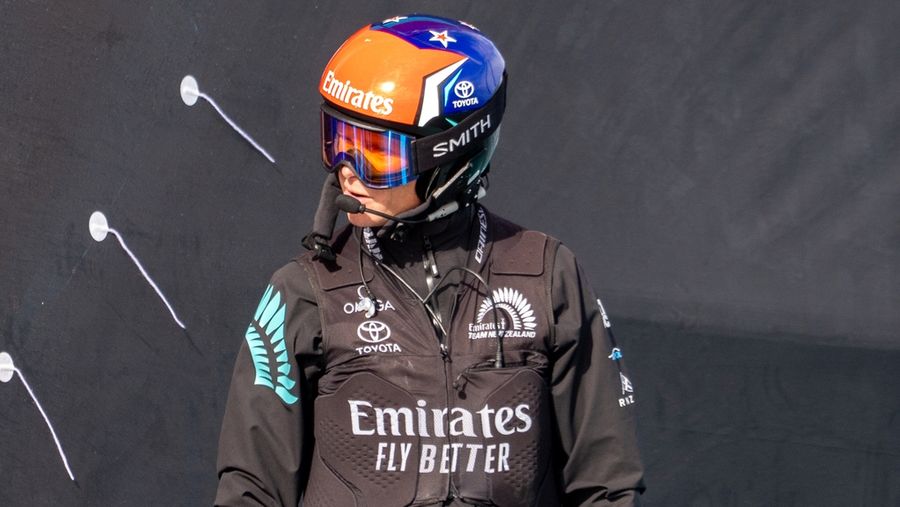
Chris Draper adds yet another layer. Three America's Cup campaigns and an Olympic bronze medal in the 49er sit behind him, and he combines time sailing Taihoro with coaching experience carried over from the Louis Vuitton 37th America's Cup.
Because he knows the AC75 from the inside, Chris can translate technical information into how the boat genuinely feels to sail, and pass that on to the design team in terms they can use. In a sport decided in fractions of a second, knowing what to communicate, and when, matters almost as much as the information itself.
Technology has its own part to play. Emirates Team New Zealand's simulator has evolved significantly across successive campaigns and now offers an increasingly realistic environment for sailors to practise challenging scenarios and manoeuvres in a controlled setting.
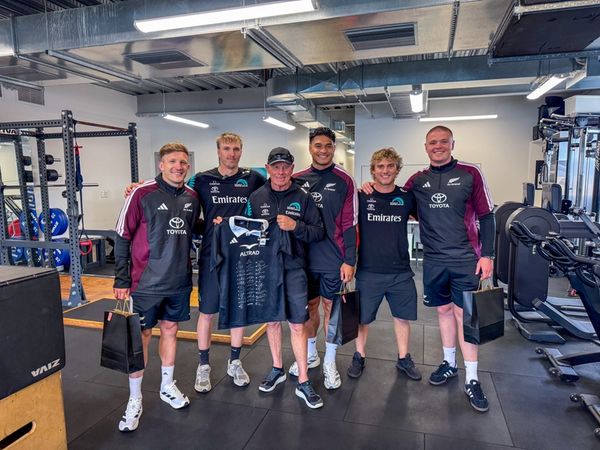
Before the team flew out to Europe for its Northern Tour, there was an unexpected visitor list at the base. Members of the All Blacks, including Damian McKenzie, Wallace Sititi, Anton Segner and Gilbert Enoka, came through to try the sailing simulator and get a sense of what flying an AC75 actually demands.
Ray found the crossover striking. Two high-performance environments, both constantly hunting for small improvements, both willing to adapt their approach when needed.
Rugby and sailing make very different physical demands. But professionalism, teamwork, data, technology and keeping a strong human connection within the group matter in both. The underlying principles of preparation, communication and continuous improvement turned out to be remarkably similar.
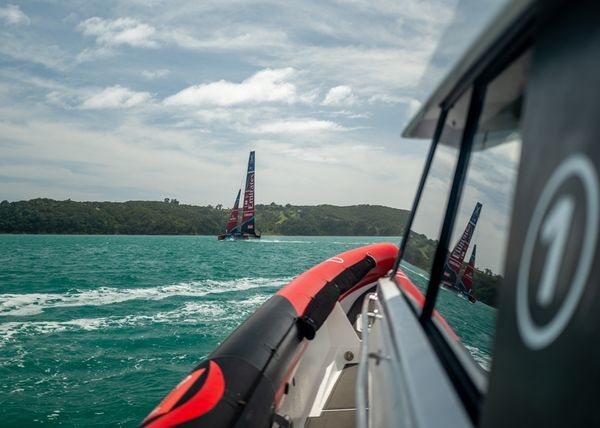
In the end, it comes down to the racecourse. For Emirates Team New Zealand, that means Naples. Reading the wind, picking the shifts, making split-second decisions, controlling the opposition and nailing the start, all of it will count. At speeds over 50 knots, close-quarters match racing leaves very little room for error.
As Ray puts it: "You don't have to win by heaps, but you just have to win."
When the margins are that tight, the ability to communicate, understand and make the right decision can make all the difference.