There is a category of award that exists purely to honour the finest craft and design work produced for superyachts. The BOAT Artistry and Craft Awards sit in that space, celebrating a standard of making that belongs, almost by definition, to a world most of us encounter only in print.
When we took delivery of our Jeanneau Sunkiss 49, the boat came with exactly one decorative object: a race photograph commemorating Clear Communications' sponsorship of New Zealand Endeavour during the Whitbread Around the World Yacht Race. It didn't last. On a boat of that scale, sentiment is a luxury that quickly loses the argument to practicality, and every surface has to earn its place.
That experience does prompt a genuine question. Where does art actually belong on a boat?

Some years back I attended a series of talks by Don Norman, the author of The Design of Everyday Things. At one point he produced a lemon squeezer, not an expensive item, but an extraordinary one: angular, geometrically strange, more suggestive of an H.G. Wells tripod than anything intended for a domestic kitchen. By functional measures it was a failure. By almost every other measure it succeeded spectacularly. Norman's argument was that genuine playfulness in an object changes something fundamental about your relationship with it. It lifts the thing out of the purely utilitarian. You find yourself describing it to people who weren't there.
That idea kept returning as I worked through this year's award winners. The pieces that stay with you aren't necessarily the most expensive or the most technically flawless. They tend to be the ones that carry visible evidence of the hands that made them, that deepen with use rather than simply wearing out, that grow more suited to their surroundings over time rather than less. An old timber hull has a quality of communication that a fibreglass hull simply doesn't possess.
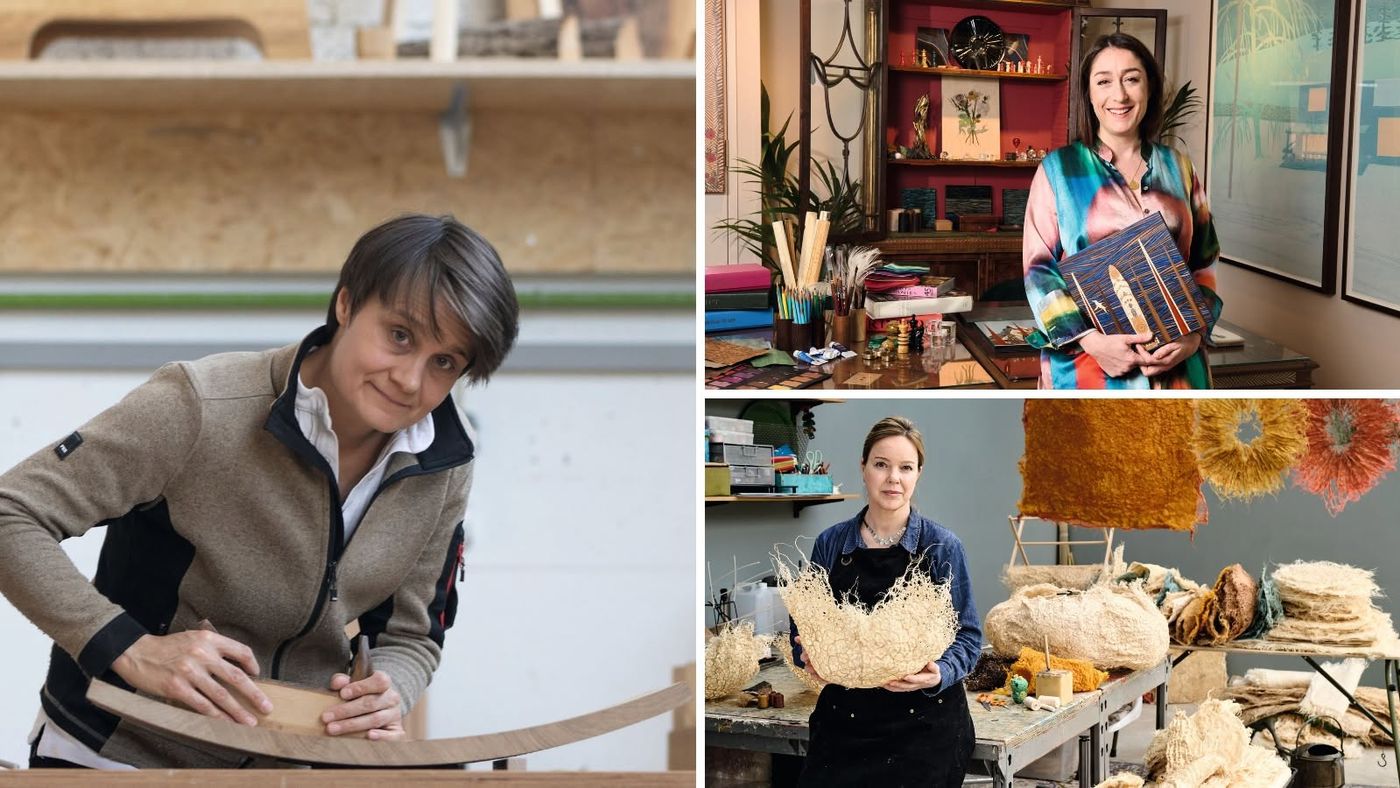
Eva Mechler's sinks aboard the Alia Yachts 50-metre ALY501 make that case compellingly, and in a wet area at that. Carved from smoked sweet chestnut and finished with plant-based oils, they represent an unconventional material choice for a marine bathroom, where timber expands and contracts with every change in humidity and demands consistent care. Mechler made the choice with full awareness of that, working from the conviction that synthetic materials, however practical, are incapable of developing character. In ten years, those sinks will feel more at home in that vessel than they do today.
Alexandra Llewellyn took the backgammon board, a format that has remained essentially unchanged across millennia, and reimagined it as a circle for the 79.5-metre Feadship Valor. Twenty-four points correspond to twenty-four hours, twelve sections echo the zodiac, and constellations in silver wire and mother-of-pearl are inlaid into figured timber, with a hand-drawn water motif carried continuously around the board through marquetry. Two further boards complete the commission: Eat or Be Eaten, conceived as a marine tournament game, and a solitaire board in ancient bog oak incorporating sharks and rays. Every piece was engineered to remain structurally stable at sea.
Zena Holloway came to object-making by way of three decades as an underwater photographer. Watching coral bleach year after year and fish populations decline, she reached a point where recording what was disappearing no longer felt like enough of a response. The wall lights she made for the Cantiere delle Marche explorer yacht Nasiba are grown rather than manufactured, willow roots and mycelium gathered from a riverbank and guided into their finished form. The material had a life of its own before it ever became a fitting.
Tokyo metalsmith Yoshinori Nagashima received a Judges' Commendation for a hand-forged cutlery commission produced through Winch Design. The scope of the work alone is arresting: 600 pieces across 14 original designs, each one prototyped and tested by hand before any production run began. Stainless steel, a material associated with industrial process, was worked to a point where it no longer felt like it was. The finished pieces live in a galley drawer on a superyacht and are picked up three times a day.
None of this translates directly to life on a 15-metre sailing yacht. The constraints are real and they don't negotiate. But that doesn't invalidate the underlying idea. A measure of art, a touch of playfulness, a single well-chosen object can find a place on almost any boat. Unless, of course, weight is the deciding factor. At that point, the conversation becomes something else entirely.