
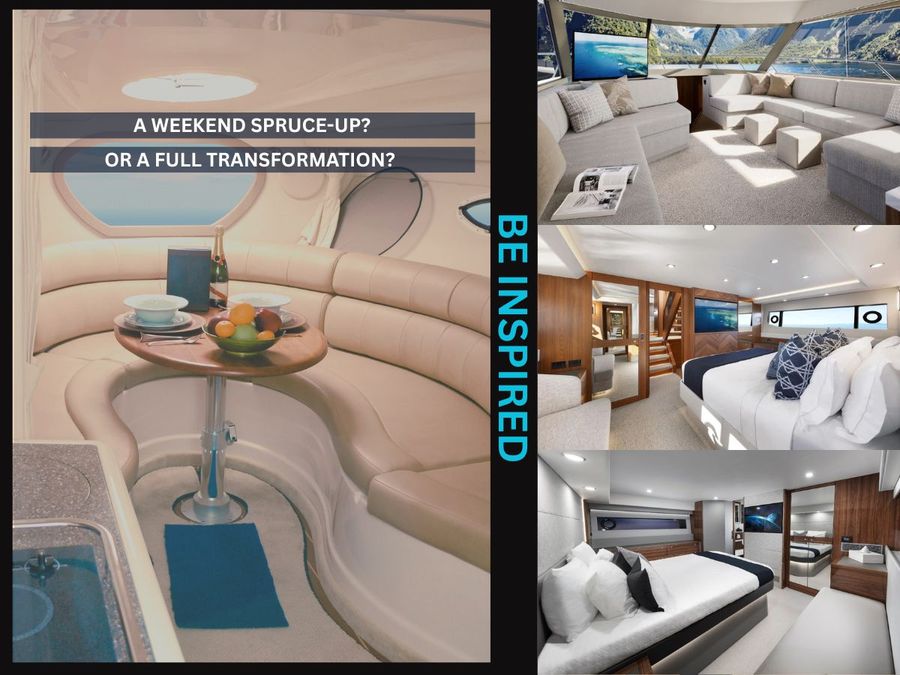
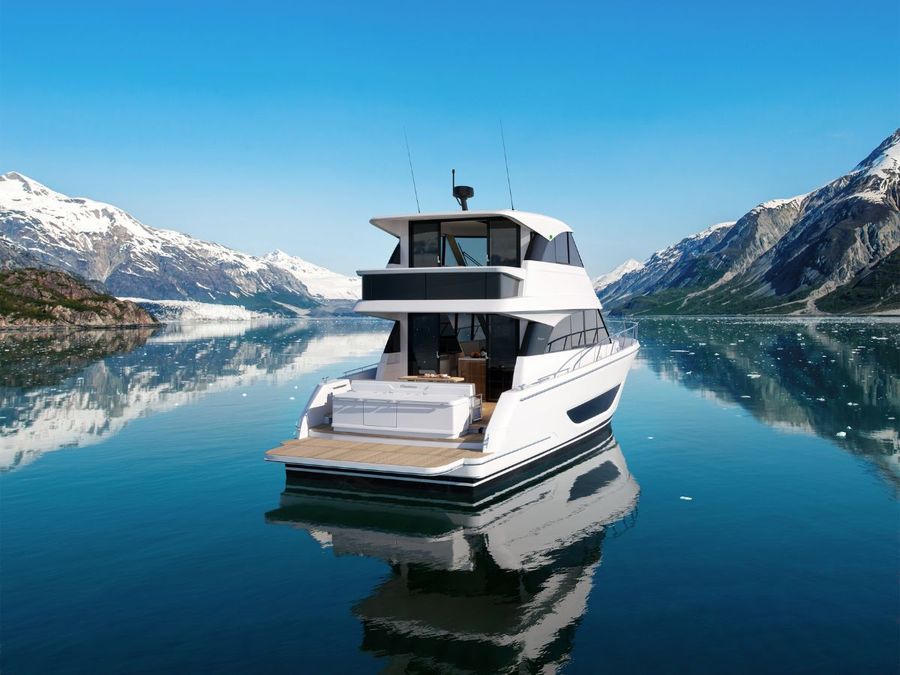
When planning this piece, I assumed most newer yachts would need little interior attention. With their sharp lines, contemporary finishes, and open layouts, boats like the new Maritimo S60 seem to arrive ready-made. Why change what already feels right?
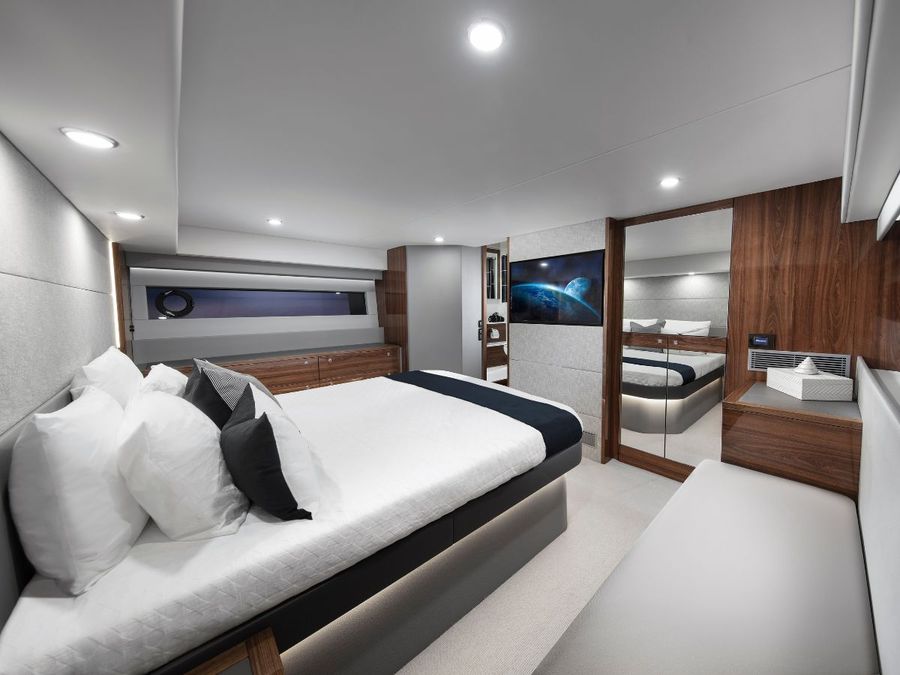
Thinking back, though, I could easily recall modern yachts whose owners had made them distinctly their own. That observation shifted my thinking and, with it, the scope of this article. Whether your boat is a well-worn classic, an older production vessel (mine falls squarely in that camp), or a bespoke launch, there are endless ways to refresh her. How far you take it, from a simple tidy-up to a full interior transformation, comes down to your budget, your schedule, and how much change you're after.
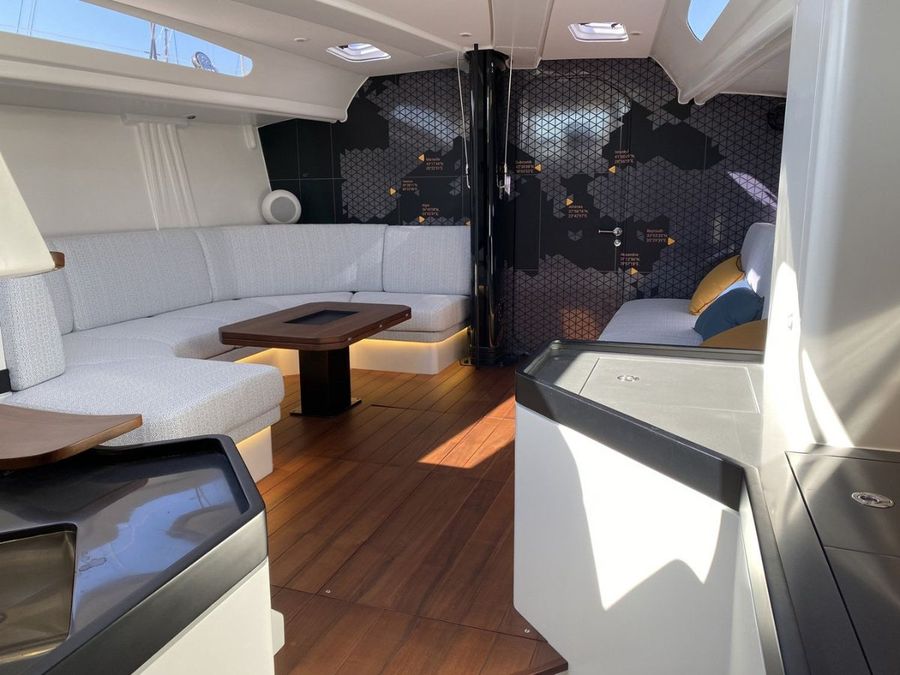
Consider KUUJJUAQ, a Marten 72 launched in 2008, designed by Reichel/Pugh and built by New Zealand's Yachting Developments. A carbon fibre vessel that bridges the gap between offshore racer and luxury cruiser, her living spaces were overhauled in 2022 into something with the polish of a high-end magazine shoot: minimalist, refined, and surprisingly spacious for a performance yacht.
Not every refresh demands structural work. Sometimes the most effective changes are the smallest. When my husband and I bought our 1980s Jeanneau 45, the first thing I did was pull down every curtain. The saloon opened up immediately, brighter and lighter than I had imagined possible.
Clear the decks before you start
Before settling on colours or fabrics, begin with a thorough clear-out. Salt residue, dust, mould, and accumulated gear diminish even beautiful interiors.
Interior design firm Pocketspace Marine describe this step as an "interior audit": a methodical review of what's working, what needs replacing, and what's simply taking up room. Sensible storage systems, baskets, labelled containers, and vacuum-sealed bags, bring visual calm and recover useful space. The process also tends to reveal issues you hadn't noticed, from leaking chainplates to sun-degraded trim.
Repaint, rework, or restore?
The timber question tends to be the first major fork in the road. Painting joinery in a lighter colour, typically white, can lift a dark interior noticeably, but it carries risks. I once read of a couple who repainted the cabin doors of their older production yacht, only to find that prospective buyers, years later, assumed the paint was hiding water damage.
If the woodwork is structurally sound, re-oiling or re-varnishing, combined with lighter fabrics, can achieve a similar effect without raising questions. Yacht designers Judel/Vrolijk & Co suggest a low-commitment trial: temporarily fixing non-woven wallpaper over panels to get a sense of a lighter look before making any permanent decisions.
Design trends shaping yacht interiors
The strongest interior refreshes work with a boat's existing character rather than against it. Even so, it helps to understand the broader direction design is heading.
Light and space
A few considered changes can make a striking difference to how spacious a boat feels. Painting ceilings a shade lighter than the walls draws the eye upward, while tone-on-tone palettes in sea blues, sandy beiges, or soft greys feel contemporary without being busy. Mirrors, properly secured, reflect light into darker corners. Swapping heavy curtains for slim hatch covers simplifies the visual field and lets natural light work harder.
When my husband and I bought our 1980s 45-foot Jeanneau sailing yacht, the very first thing I did was take down all the curtains. They weren't needed, and without them, the whole space immediately felt lighter, brighter, and more open.
Materials and finishes
Marine-grade fabrics such as Sunbrella or treated linens now come in lighter shades that hold up to spills and UV, making them a sensible choice for family boats. Layering different textures, timber joinery alongside linen cushions, wool throws, and leather accents, adds depth and warmth without overcrowding a space. Some owners are turning to reclaimed timber, marine wallpaper, or light-toned Formica panels as a way to modernise dark-wood interiors without reaching for a paintbrush.
Sustainability and biophilic design
Eco-conscious materials are increasingly finding their way aboard, among them bamboo, recycled glass, and vegan leathers. Natural finishes and ocean-drawn colour palettes connect the interior to the water outside, both visually and in feeling.
The interior and exterior of Kaeā, an Elite 13.8 Sedan reviewed in early 2025, was designed by Kim Forkert of Hamilton-based Parkhurst Design. Writer Lawrence Schäffler captures it well: "[y]ou feel a real sense of elegance in these cabins – the rich, dark oak joinery contrasting with the plush, off-white carpets on the floor and cabin sides. It's a theme that continues throughout the interior, orchestrated by décor specialist Kim Forkert (Parkhurst Design in Hamilton)."
Technology and smart living
Technology can now be integrated without dominating a space. Italian firm Gallinea's Nautys range, presented at the Venice Boat Show in 2025, folds lighting, speakers, and phone charging into height-adjustable tables, making them well suited to smaller saloons. The same company has developed a fire-safe charging box for battery-powered water toys such as Seabobs, a useful reminder that safety needs to be factored in whenever modern systems are added to an older vessel.
[IMAGE:4]
Wellness and relaxation
Wellness features are becoming less of a luxury and more of an expectation. Yoga mats sized to stow beneath a berth, compact saunas fitted into unused lockers, spa-style heads with rainfall showers, and aromatherapy diffusers can turn even a weekend passage into something that feels like a proper escape.
Aesthetics and design language
Clean, uncluttered interiors with neutral palettes continue to lead, though there is a noticeable movement back toward richer, warmer tones: walnut, mahogany, and deep greens. Curved furniture and cabinetry create a more natural, flowing feel. Personalisation matters more than ever, with cultural motifs, artisan pieces, and objects collected during an owner's travels making an interior genuinely individual.
The interior design team behind Maritimo's luxury motor yachts, Niamh Brennan and Sonya Romeo of The Textile & Design Studio, who featured in our recent article Maritimo Interior Design, have developed a structured approach to personalisation. Each owner selects from Oak, Teak, or Walnut timber species before choosing from four base colour themes: Dune, Haven, Oyster, and Cove. Soft furnishing options are then layered in, drawing from palettes inspired by iconic Australian locations: Kimberley (earthy), Balmoral (monochrome), Hamilton (denim blue), and Hayman (navy).
Romeo notes: “Dune and Cove embrace classic beige and taupe. Haven and Oyster lean toward cooler greys. We offer matching leather and vinyl options to complete the look while supporting resale value.”
Read more about The Textile & Design Studio below.
Practical considerations
How the boat is used should drive the refit. Racing yachts call for hard-wearing fabrics and fittings that won't shift underway; liveaboards can lean into comfort. Boats heading to the tropics need UV-resistant materials throughout, while those sailing in cooler climates benefit from insulation and warmer tones.
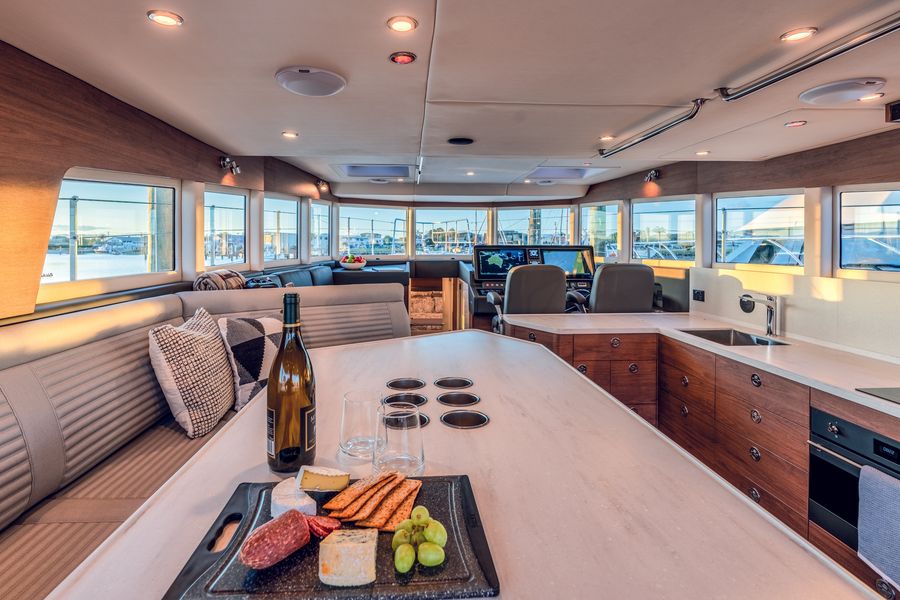
The Pacific 62, reviewed in Boating New Zealand in April, offers a useful example of how thoughtful design pays dividends. Custom cabinetry puts every centimetre to work, and built-in bottle and cup holders keep the saloon table tidy and secure when conditions deteriorate. Practical and polished need not be at odds.
Decor and styling
Finishing touches are where personal taste can really come through. Cushions, rugs, and throws are easily switched between seasons. Nautical references, a brass clock, a framed chart, lend character without tipping into cliché. A touch of greenery, real or artificial, brings the space to life, provided it's secured well enough to survive a passage.
Balancing old and new
Restraint pays off. The details that define your boat's era, a curved companionway ladder, original brass portholes, or a saloon table marked by years of meals at sea, are worth keeping. Modern additions will sit better for having something considered to work alongside.
Settle on the scope early: is this a cosmetic refresh or something more structural? Map out the time you have, whether weekends or a haul-out window, and put high-impact, low-disruption changes first. Lighting, upholstery, and wall finishes tend to deliver the most visible results for the least disruption.
A labour of love
Giving an older, classic, or even a modern yacht a fresh interior is as much about honouring its story as it is about updating its look. The most successful results respect what came before while making space for the present, lightening a 1970s saloon without stripping out its timber warmth, or fitting a technology-integrated table into a 1930s launch without breaking its character.
A compelling real-world case comes from Sailing Magic Carpet, the well-known YouTube channel following the adventures of Maya and Aladino. Their current boat, Magic Carpet II, is a Cape George 36 built in 1982 in Port Townsend, Washington. The hull and ballast originated with Cape George Marine Works, and the original owner completed the remainder of the build. After years of cruising, the interior had begun to show its age, prompting the pair to undertake a careful refurbishment. They kept faith with the yacht's heritage while making her more functional for liveaboard life, introducing fresh fabrics, better storage, and subtle design changes that brightened the saloon without sacrificing the warm, traditional atmosphere that defines a Cape George. Even a well-built classic with good bones can benefit from thoughtful, measured updating.
When it's done well, the result feels less like a makeover and more like a revelation, as if the boat had always looked this way.
10 quick upgrades for your yacht interior |
|---|
| 1. Swap out the curtains Heavy drapes can make a cabin feel smaller and block light. Try slim hatch covers or Roman blinds in a light, UV-stable fabric. On our 1980s Jeanneau, removing the curtains instantly opened the space and made it brighter. |
| 2. Change the lighting Replace yellowed halogens with warm-white LED strips or downlights. They’re energy-efficient, cooler to run, and instantly modernise the mood. Sailing Magic Carpet’s saloon refit used LED rope lighting to soften shadows and highlight timber grain. |
| 3. Upgrade your upholstery Fresh cushion covers in marine-grade fabrics like Sunbrella can change the entire look of a saloon. Pick tones that work with your joinery — sandy beige for teak, slate grey for walnut. |
| 4. Refinish the timber A simple re-oil or satin varnish brings depth and life back to tired woodwork without losing its character. The Cape George 36 Magic Carpet II kept her original grain but gained a richer, warmer tone. |
| 5. Add mirrors in the right places A small, well-placed marine-safe mirror can make a compact head or saloon feel twice the size. Just remember to secure it with brackets or adhesive pads. |
| 6. Update soft furnishings Throws, rugs, and scatter cushions add comfort and colour. Change them seasonally — blue and white in summer, richer earth tones in winter. |
| 7. Modernise the galley hardware Swapping old taps, drawer pulls, or cabinet handles for stainless or matte black fixtures is a quick, affordable way to lift the look. |
| 8. Build in multi-use storage Custom cabinetry, like the Pacific 62’s bottle holders built into the saloon table, keeps clutter at bay and makes every detail feel considered. |
| 9. Introduce greenery A low-maintenance plant (real or faux) in a secured pot brings freshness below decks. Succulents work well for liveaboards, while faux trailing plants add softness to bulkhead shelves. |
| 10. Refresh the bedding Crisp, colour-coordinated bedlinen in the cabins makes overnight guests feel welcome and adds a boutique-hotel feel. Layer with a lightweight throw for summer or a quilt in cooler months. |